



Why Visual Mess Feels Like Mental Failure
February 22, 2026
When you look at a messy desk or a cluttered room, you might feel like you failed. This feeling is common. Visual clutter makes your brain work harder because it must sort many things at once. That drains your focus and energy.

The link between outer mess and inner stress is stronger than you might think. Your brain may see clutter as unfinished work. Every object out of place can feel like a task that needs attention. Over time, these small signals add up and create pressure.
Knowing why mess affects you can help you stop feeling guilty. This short guide explains the simple science behind visual clutter and why a messy space can feel like a mental problem, even when it is not.
Understanding Why Visual Mess Feels Like Mental Failure

Your brain is always taking in what you see. When a room is messy, your brain must work harder to sort all the things. This extra work can cause stress, make you feel tired, and make it harder to control your emotions.
The Psychology of Clutter
Clutter is like "visual noise." Your brain tries to notice and think about many items at once. Even if you do not try, your mind still checks, sorts, and decides about what you can see.
Simple effects of clutter:
- More small decisions, which can feel tiring
- Harder to focus on one task
- Feeling less in control of your space
- Problems finishing tasks or projects
The more things your eyes find, the more your brain works in the background. That is why a messy room can make you feel worn out or like you failed mentally, even if you did not do anything hard.
Cognitive Overload from Disorganized Spaces
Visual clutter makes your brain work harder. When things are scattered, your brain can't easily ignore unimportant stuff.
Research shows that clutter makes it harder to focus and to think clearly. Your short-term memory gets tired because it has to handle too many things at once.
This stress can be measured. Messy spaces can raise your stress hormone levels, so your body acts like something is wrong.
The mess also hurts your productivity and choices. Every distraction takes attention away from the task you need to do. That is why hard work can feel much harder when your space is messy.
Emotional Responses to Visual Chaos
Your feelings change when your space is messy. Clutter can cause anxiety, overwhelm, and a sense of losing control.
Walking into a messy room can set off your stress response. Your body treats the disorder like something that needs fixing, so you feel like tasks are left unfinished. This keeps you from relaxing.
Mess can also make you more irritable, frustrated, or tired. These reactions are normal— they are your body's response to a stressful environment, not a personal failure.
It can become a cycle: feeling down makes it harder to clean up, and a messy space then makes you feel worse.
Why Visual Mess Can Feel Like Personal or Cognitive Failure

When you see clutter, your brain often reads it as a sign you are not handling life well. This feeling comes from ideas about control, what others expect, and how mess affects thinking.
Perceptions of Control and Self-Efficacy
Your space shows how much control you feel you have. A messy room looks like unfinished tasks and postponed decisions. That can make you feel like you are failing at basic chores.
Self-efficacy means believing you can complete tasks. A cluttered space can make you doubt that belief. You may want to clean, but the mess stays. That gap between what you plan and what you do can make you question your abilities.
Seeing the mess again and again reinforces negative thoughts. Every time you pass that pile of papers or dirty dishes, you are reminded of things you haven't done. Over time, this can hurt your confidence in other parts of life.
Your mind also links a tidy space with being capable. When your room is messy, you might think others will see you as lazy or disorganized. That belief can make you feel worse about yourself, even when no one else is around.
Societal Expectations and Internalized Standards
From a young age you learn ideas about cleanliness and order. These messages say that responsible adults keep tidy homes and neat workspaces.
Social media and TV often show perfect rooms and desks. Seeing these images can make your real space feel worse. You compare your messy area to those photos and feel like you are not good enough.
Many cultures link visible order to success. If your space is messy, you might think you are failing at being a capable adult.
The worry about what others think can turn into self-judgment. You start to believe that a messy space means you are a failure, so the clutter feels like proof of that.
Impairment of Focus and Productivity
Having a lot to look at makes it harder to focus. Your brain notices everything around you, even when you try to pay attention to one thing. This extra processing uses up mental energy and makes concentration tougher.
Research shows that clutter can reduce your working memory. When many items compete for your attention, it is harder to hold and use information. Simple tasks can then feel more difficult.
This leads to mental tiredness and feeling less capable. You might sit down to work and find it hard to focus. Because you know you can do better, you blame yourself instead of the messy room.
Messy spaces can also raise stress levels. That stress makes it harder to clean up, which makes you feel stuck and less confident. The cycle keeps the mess and the bad feelings going.
Frequently Asked Questions
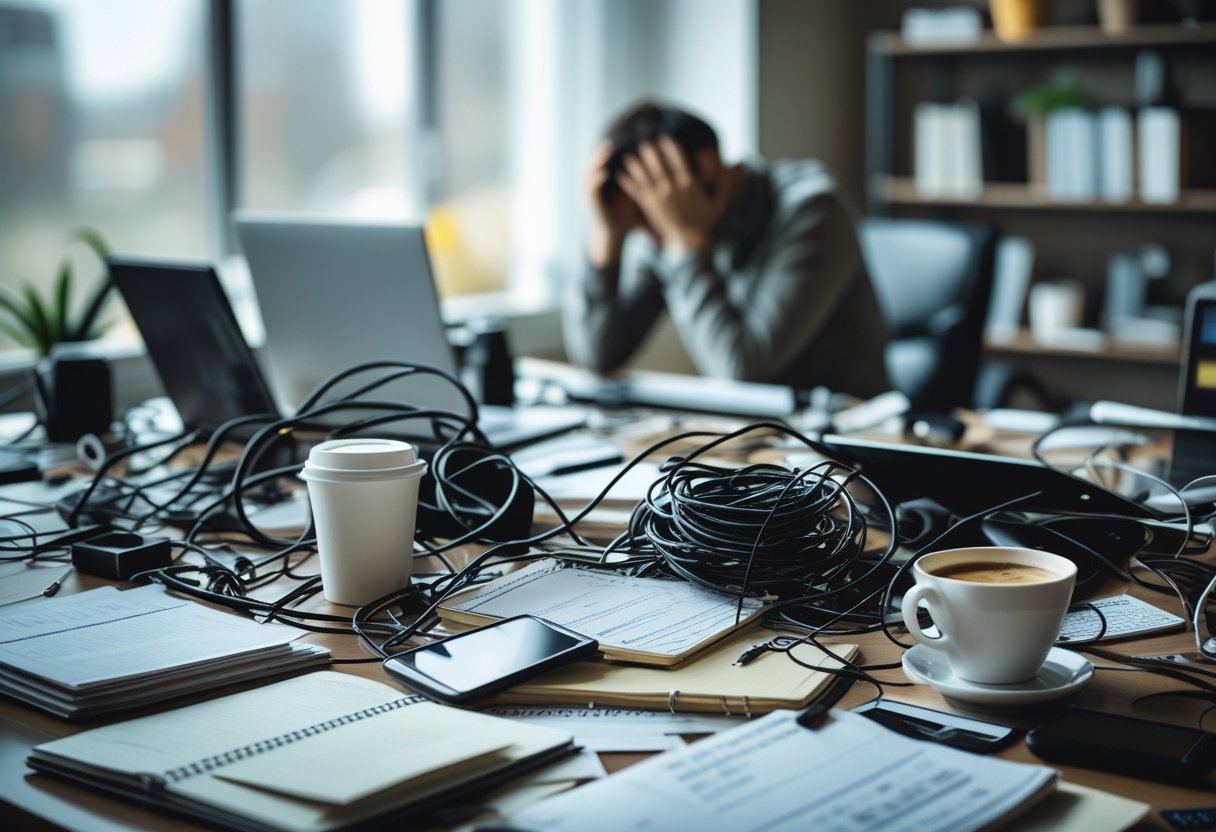
Many people wonder why visual mess feels like mental failure. A messy space makes your brain work harder. That can make you feel tired, overwhelmed, or less capable, even when the task is simple.
How does cluttered design affect thinking and focus?
Clutter makes your brain sort out what matters and what doesn't. Your short-term memory can only hold a little at once. When there is a lot to look at, your brain fills up faster.
Seeing many things at once uses energy. That makes you feel tired and distracted sooner than if the space were tidy.
What happens to thinking in a messy workspace?
A messy workspace makes it harder to remember things for a short time. Your brain spends time ignoring items that are not important instead of focusing on work.
Research shows people make more mistakes and take longer on tasks in messy places. Switching between jobs also gets harder when there is visual chaos around you.
How does visual chaos affect getting things done?
Visual chaos makes it harder to work because your attention is split. Things you can see ask for some attention, even if you try to ignore them.
When your brain must filter out distractions, you lose time finding items and getting back to the task. Tasks take longer and feel harder. That can make you feel like you failed mentally, which explains why visual mess feels like mental failure.
How does an unorganized visual environment impact emotional well-being?
A messy space can trigger stress in your body. Your nervous system reads clutter as unfinished tasks, which creates low-level anxiety even when you are not thinking about it.
Studies link clutter to higher levels of the stress hormone cortisol. You may feel overwhelmed, short-tempered, or unable to relax in messy places. Over time, these feelings can lead to tiredness and low mood.
How does visual simplicity help decision-making?
Visual simplicity cuts the number of things your brain needs to check before choosing. With fewer objects and options, your mind processes information faster and with less effort.
Simple spaces help you decide more confidently. You spend less time doubting choices because fewer things pull your attention. That saves mental energy for more important decisions.
What are the effects of visual disorder on concentration and focus?
Visual disorder breaks your focus by causing attention to jump to new or odd items. Your eyes move to these things, pulling you away from your work.
It is harder to reach deep focus in cluttered spaces. Your brain stays partly alert, scanning the area instead of fully working. This scattered attention makes it tough to think deeply or solve hard problems.
Constant interruptions from visual mess also shorten your attention span. You may get used to brief focus followed by distraction, so long periods of concentration become harder over time.