



Well-Being in the Living Room: Cozy Textures, Wallpaper & Warm Interiors
December 7, 2025
Your living room can affect your mood and body more than you think. The colors you pick, how you place furniture, and the light and air in the room all matter. Making a living room that supports well-being means creating a calm, comfortable space that helps you relax and feel less stressed.
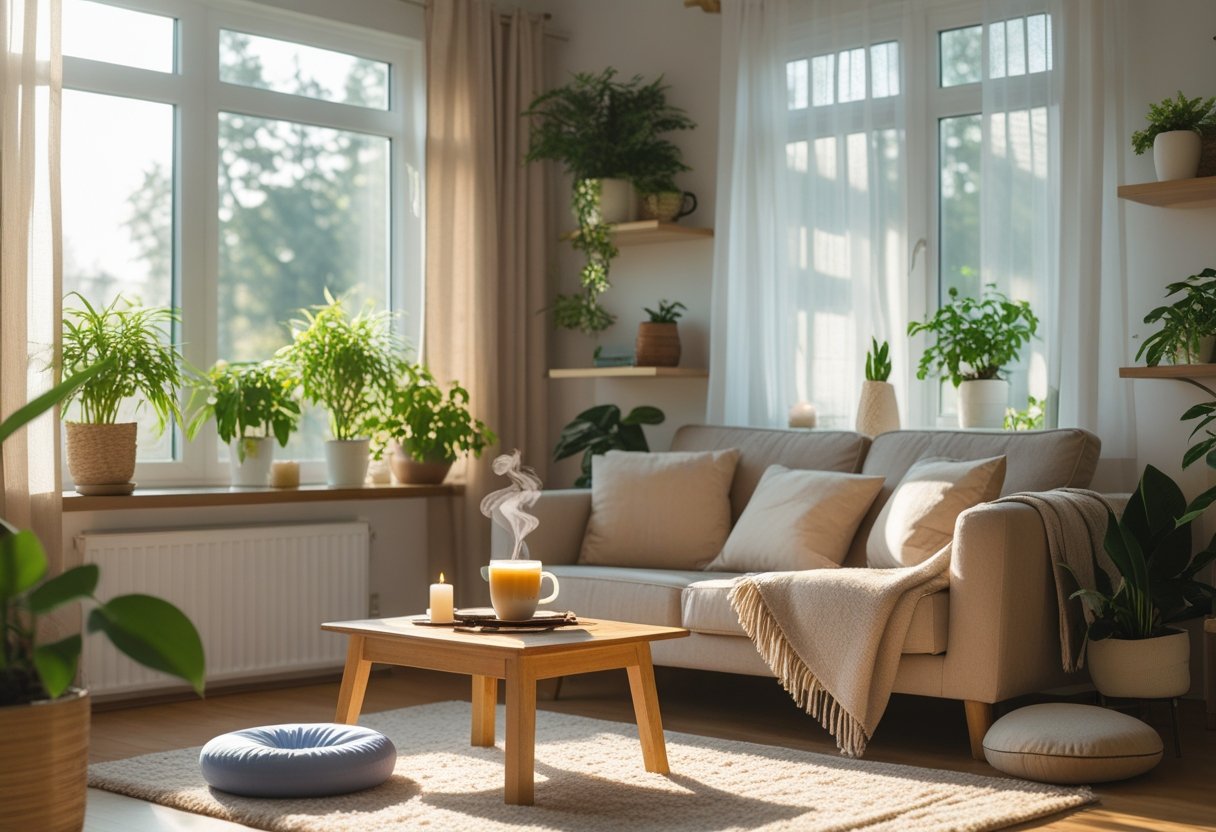
You do not need to redo the whole room to improve well-being. Small changes like adding plants, letting in more natural light, or moving furniture can help a lot. Research shows that wellness design focuses on improving health and comfort through better air, soothing colors, and layouts that make it easier to connect with others.
This short guide will explain the main ideas of wellness design and give easy tips to change your living room. You will learn how to pick calm colors and materials, arrange furniture for relaxing and social time, and form simple habits that make your living room a peaceful place to rest.
Core Principles of Well-Being in the Living Room
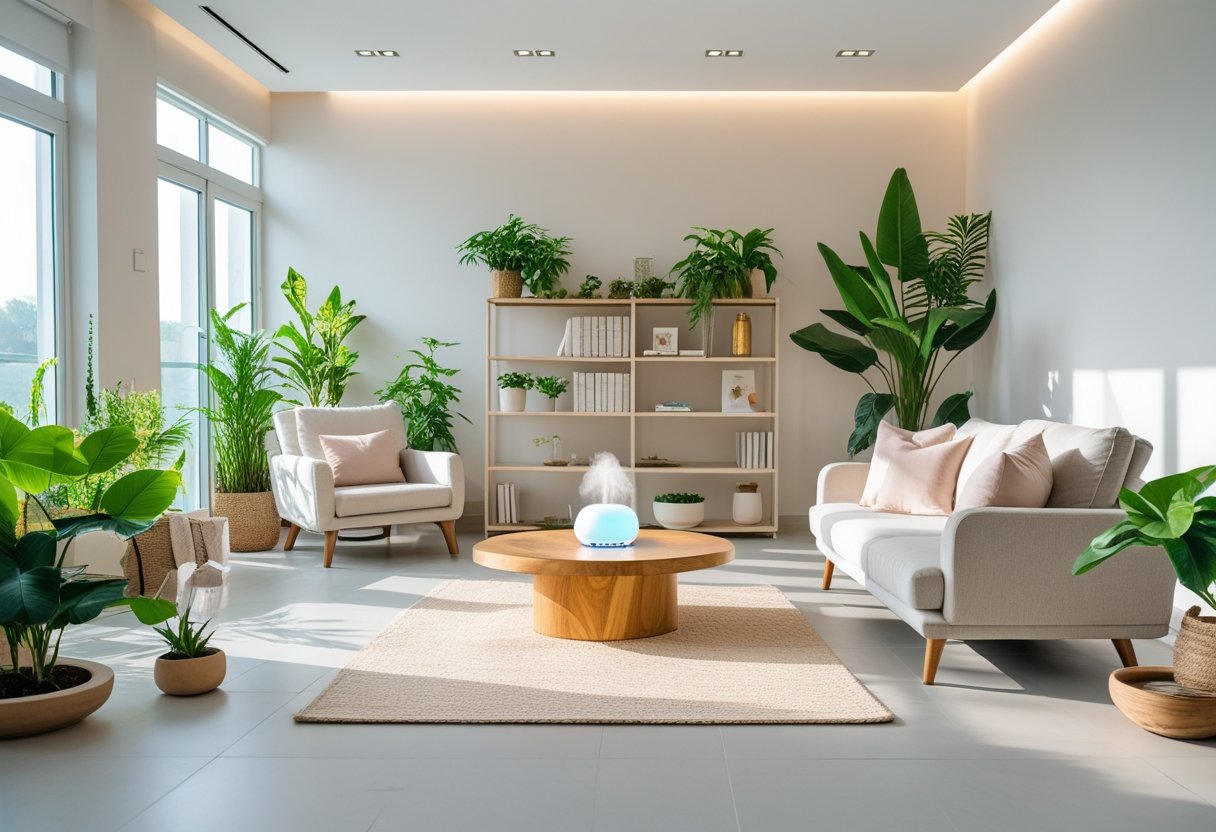
To improve well-being in the living room, focus on comfort, calm design, and arranging furniture so people can talk and relax. These ideas help make the room better for both your body and mind.
The Role of Wellness and Comfort
Comfort in the living room affects your overall health. Designing with wellness in mind means choosing items that support your body and make you feel calm.
Pick furniture that feels good. A sofa should support your back and be soft enough to sit on for a long time. Add cushions and blankets that are nice to touch.
Keep the room at a comfortable temperature. Good airflow keeps the air fresh and stops the room from feeling stuffy.
Natural light improves mood and helps your sleep. Place seats near windows when you can. Use curtains or blinds so you can control how much light comes in.
Key comfort elements include:
- Seating that supports your back
- Soft blankets and pillows
- Good natural and electric lighting
- Fresh air and ventilation
- A comfortable room temperature
The Importance of Relaxation and Tranquility
Your living room should help you relax after a busy day. A calm space comes from simple design choices that affect what you see, hear, and feel.
Colors change how a room feels. Soft neutrals, light blues, and warm earth tones usually feel more relaxing than bright colors.
Reduce clutter to make the room peaceful. Too many things can make you feel tense. Keep surfaces mostly clear and store items out of sight.
Sound affects calm too. Rugs, curtains, and upholstered furniture absorb noise and make the room quieter. You can add a small water fountain or play soft background music.
Use layered lighting to change the mood. Bright overhead lights can feel harsh. Lamps at different heights give a softer, more relaxing light.
Optimizing Layout for Social Interaction
How you place your furniture affects how well you connect with family and friends. A clear layout makes it easier to talk and build relationships.
Put seats so people face each other instead of all facing the TV. This makes talking and eye contact easier. L-shaped or U-shaped seating works well for groups.
Leave enough space between furniture so people can move around. About 18 inches of space helps people walk comfortably. This stops the room from feeling crowded during visits.
Offer different kinds of seating for different people. Some like sitting close on a sofa. Others prefer a single chair. Having both makes everyone feel welcome.
Place a coffee table or ottoman where everyone can reach it. This gives a place for drinks and becomes a natural center for the group.
Furniture arrangement tips:
| Element | Purpose | Recommended Distance |
|---|---|---|
| Conversation circle | Easy eye contact | 4–8 feet between seats |
| Walking paths | Free movement | 18–24 inches wide |
| Coffee table | Shared surface | 14–18 inches from seating |
Design Elements for Enhancing Well-Being in the Living Room
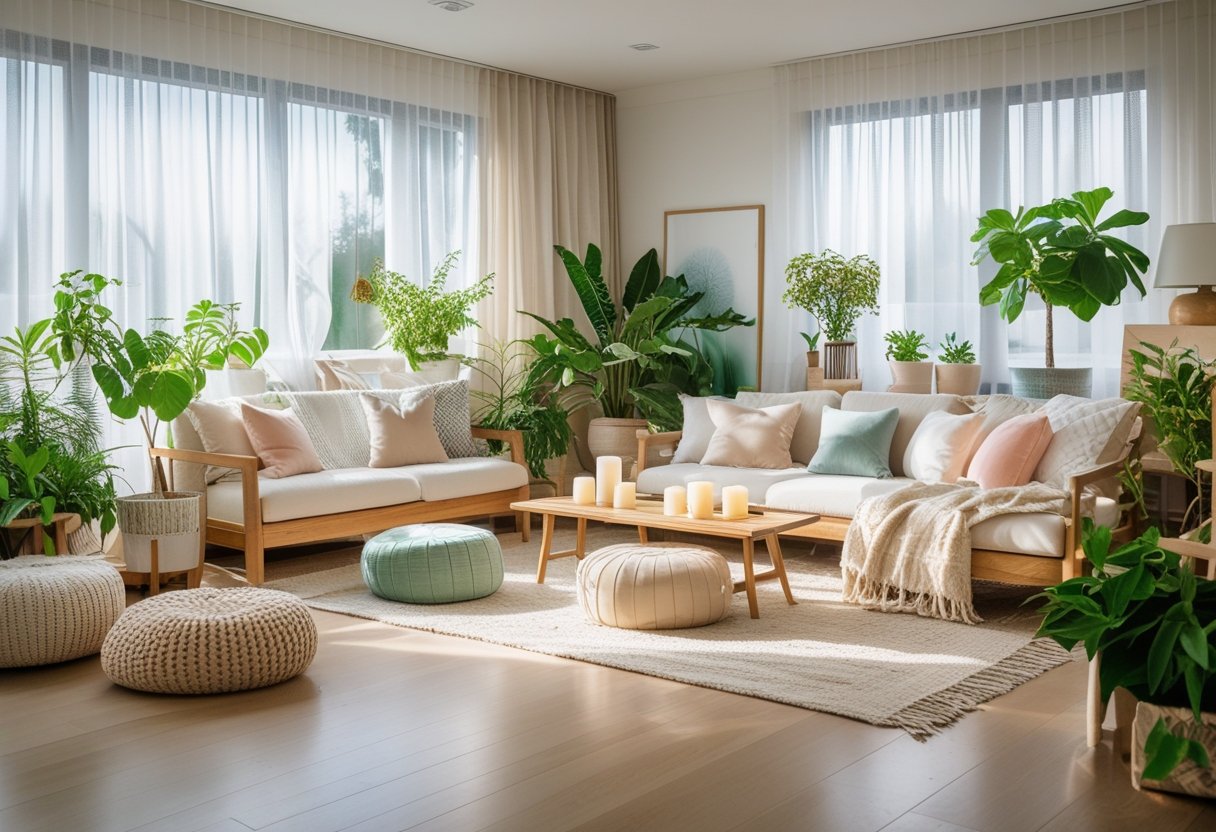
The right design choices can make your living room better for your body and mind. Good lighting, comfy textures, and plants help lower stress and make everyday life easier. These ideas help improve well-being in the living room.
Lighting and Natural Light
Natural light is one of the best ways to lift your mood and keep your sleep schedule steady. Sit near windows so daylight reaches you during the day. Morning light helps you wake up and feel alert. Warm light in the evening tells your body it is time to relax.
Use different kinds of lights for different needs. You can have bright ceiling lights for general use, a lamp for reading, and small lights to show off parts of the room. Dimmer switches let you change the light level for different times and activities.
Choose cooler, brighter light (around 4000–5000K) in the daytime when you need to focus. Use warmer light (about 2700–3000K) in the evening to help you relax. Smart bulbs can change light color and brightness automatically to match your day.
Textures, Soft Furnishings, and Materials
Mixing different textures makes the room feel cozy and interesting. Try smooth leather with linen, wool blankets with cotton pillows, and wood furniture with soft rugs. These textures are nice to touch and make the space feel welcoming.
Natural materials like wood, stone, cotton, and wool help bring a bit of nature inside. Pick furniture that shows wood grain, wool rugs instead of synthetic ones, and cotton or linen covers. Natural materials often have fewer chemicals that can harm indoor air quality.
Soft items also help with sound. Cushioned chairs, thick curtains, and fabric wall hangings absorb noise so the room is quieter and calmer.
Plants and Natural Décor
Live plants help you feel closer to nature and can improve air quality in the living room. Snake plants, pothos, and ZZ plants do well in low light. Spider plants and peace lilies help remove some toxins from the air. Put at least one plant where you can see it from your main seat to boost well-being in the living room.
Choose plants you can care for. If you travel or often forget to water, pick drought-tolerant plants like succulents or snake plants. To get a big effect with little work, start with three to five plants of different heights.
Natural décor also helps bring nature indoors. Show driftwood, stones, or shells you found. Hang art with plants or landscapes. Use fabrics with natural patterns instead of sharp geometric prints.
Furniture and Space Planning for a Wellness-Focused Living Room
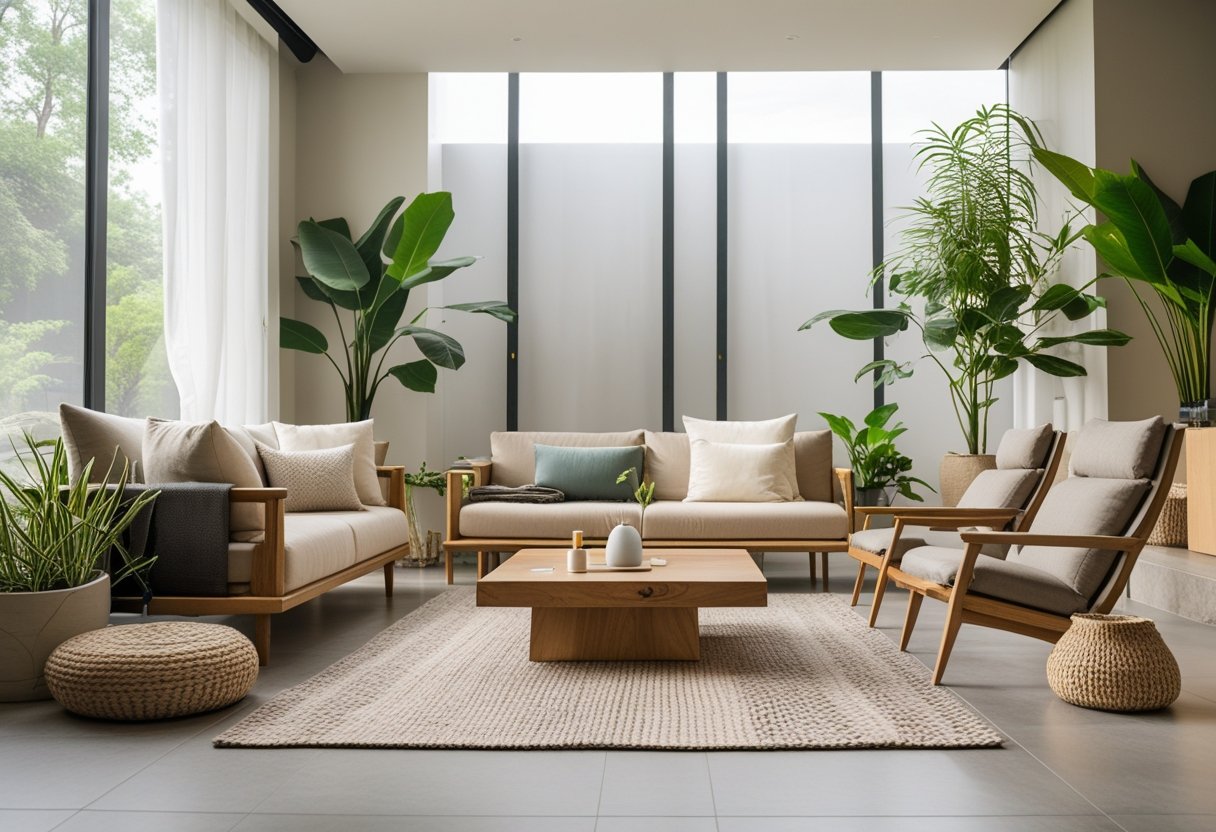
The right furniture and layout change how calm and comfortable you feel. Good planning can lower stress, improve airflow, and make separate areas for different activities while cutting down noise.
Choosing Flexible Furniture and Modular Sofas
A modular sofa lets you change the room layout when you need to. You can move pieces to make a place for talking, open space to walk, or more seats for guests.
Arrange furniture in small groups that make talking easy and keep seating at least 30 inches from the walls. Leave 24 to 30 inches between the coffee table and seats so the space does not feel tight.
Pick items that do more than one job. A storage ottoman hides clutter and gives extra seating. Nesting tables can be spread out or tucked away to free floor space. Choose furniture with smooth edges and soft fabrics that feel nice to touch.
Try making paper templates of your furniture shapes and placing them on the floor before you decide. This helps you see how much space you have and makes sure people can move through the room easily.
Minimalism and Decluttered Spaces
Too many items in your living room can cause visual stress and make it hard to relax. Too many knick-knacks and mess can hurt your mood.
Keep only the things that matter, like a few photos or a piece of art. Use built-in cabinets to hide electronics and media gear. Baskets can store everyday items and keep surfaces clear. Wall-mounted TVs free up floor space and can make the room seem larger.
Minimalism means choosing fewer, better items. Pick a handful of well-made pieces instead of filling every corner. Leave some empty space on shelves and walls so your eyes can rest. This makes the room calmer and helps the well-being in the living room.
Acoustics and Noise Reduction
Sound-absorbing materials cut down echoes and make the room quieter. Some materials, like fiberglass, work well across many sounds, while mineral wool works well for mid to high sounds.
Add thick curtains to block outside noise and put area rugs on hard floors to soften sound. Sofas, chairs, and cushions also absorb noise that would otherwise bounce around. Acoustic panels on walls can reduce echoes and improve the room's sound.
Seal gaps around windows and doors with acoustic caulk to keep outside noise out. Use layers of soft materials—each one helps reduce sound. These small changes make the living room quieter and more relaxing, which improves well-being in the living room.
Promoting Self-Care and Healthy Habits through Living Room Design
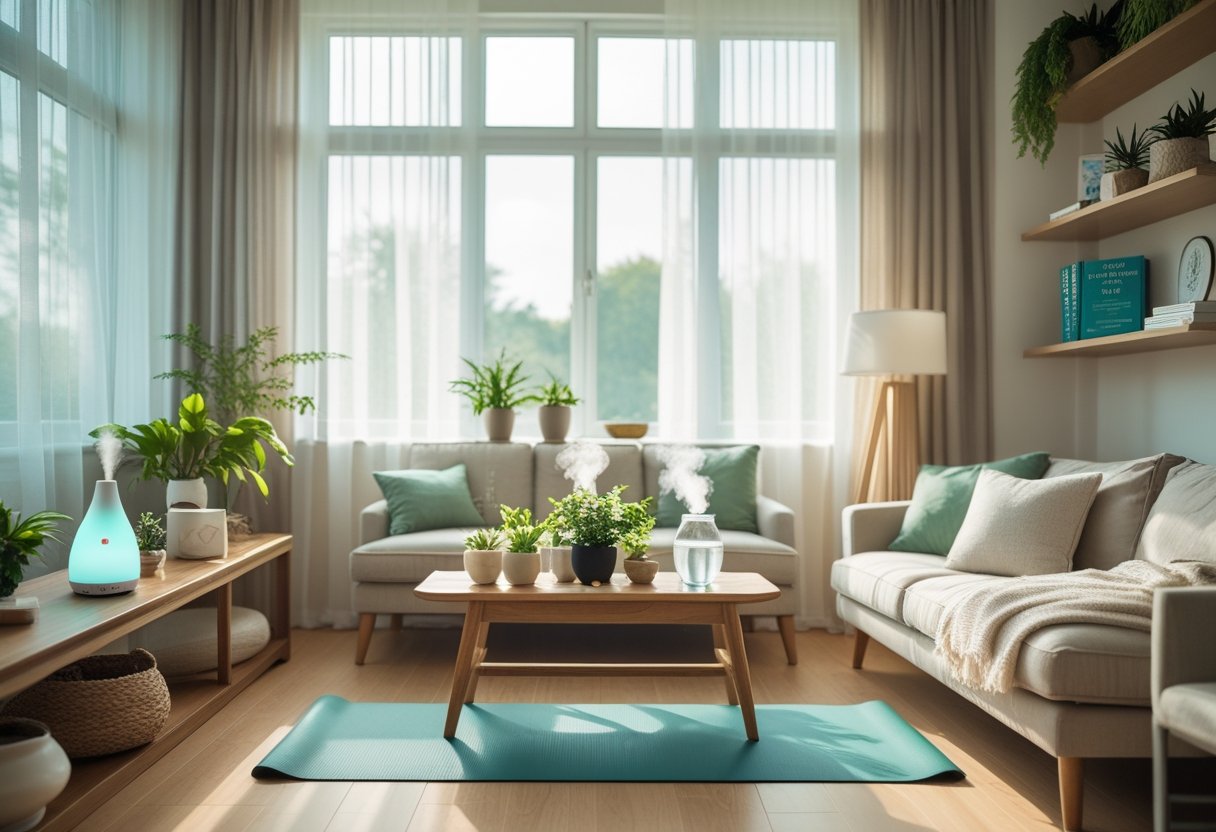
Your living room can help with well-being in the living room when you set up simple spaces for self-care. Small changes in furniture and décor make it easier to keep healthy habits at home.
Creating Spaces for Self-Care Activities
Make clear spots for different activities. A comfy chair with good light is great for reading or quiet time. Keep a yoga mat near a clear floor area so you can stretch easily.
Add a small side table for things you use for self-care, like a water bottle, a journal, or essential oils. Clear paths and open spaces also make it easier to move around your home.
Think about how you use the room. Do you need space to stretch? A place for puzzles or crafts? Start with how you use the space to choose better layouts and items.
Keep wellness tools easy to see and reach. A basket of resistance bands or a shelf with art supplies will remind you to use them. When items are handy, you are more likely to use them often.
Adding Personal Touches and Simple Décor
Put out things that make you happy and calm. Family photos, favorite art, or souvenirs can lift your mood and lower stress. These items help your living room feel like a safe place for well-being in the living room.
Choose décor that looks nice and works well. A pretty bowl can hold keys. A useful lamp gives light for hobbies. Buy items that have a clear purpose instead of filling space with things you do not need.
Plants make the room feel alive and can help clean the air. Try easy plants like pothos or snake plant if you are new to plant care.
Let your home show who you are. Display books you read, supplies you use, or collections you love. These real touches turn your living room into a calm place for self-care and better well-being in the living room.
Frequently Asked Questions
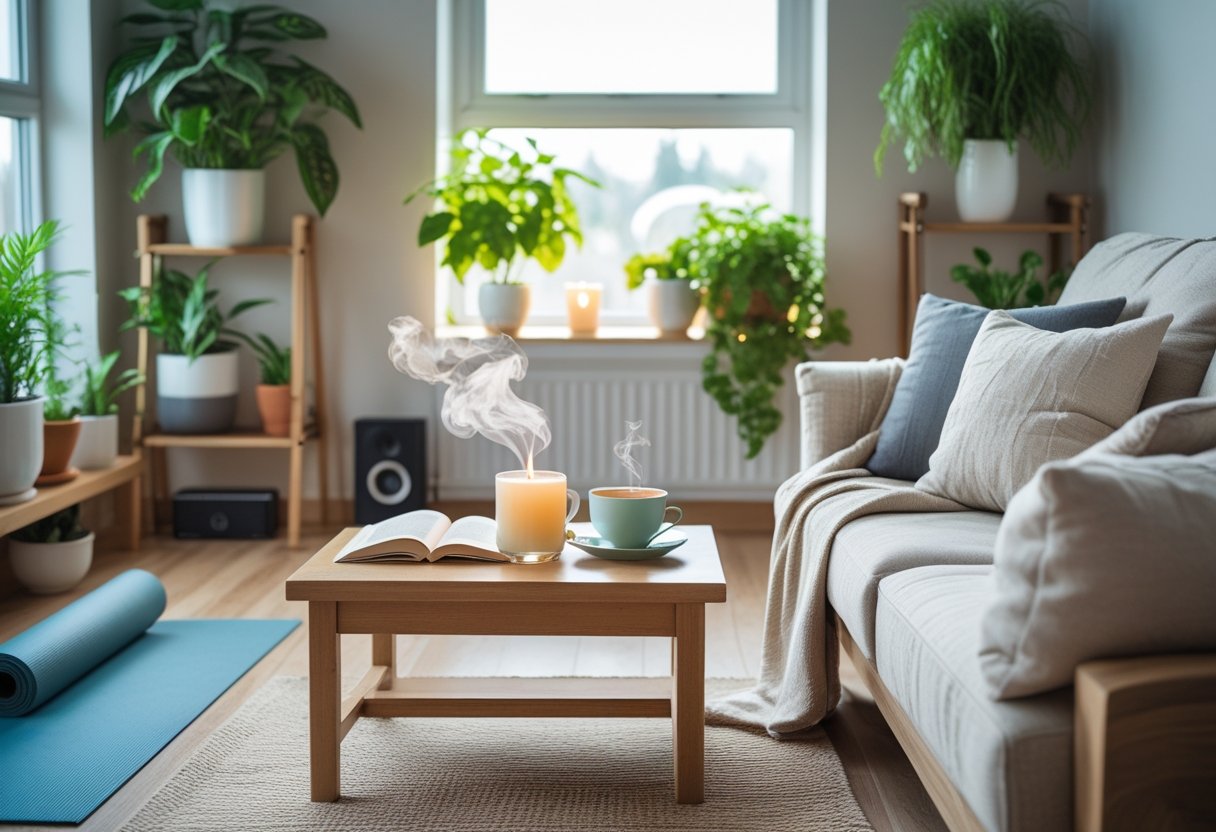
Creating a living room that supports your well-being involves specific design choices about layout, colors, lighting, air quality, furniture, and technology. These elements work together to shape how relaxed and comfortable you feel in your space.
What are the essential elements to consider for creating a relaxing living room atmosphere?
The layout of your living room should prioritize conversation areas and reduce clutter through smart storage solutions. Clutter can create mental strain, making it harder to relax in your space.
Consider furniture with built-in storage like coffee tables with hidden compartments or ottomans that double as storage units. Open shelving lets you display books, artwork, or plants while keeping surfaces clear.
Position your main seating area to encourage interaction with family and friends. If space allows, add secondary areas like a reading nook or intimate corner for quiet activities.
Flexible layouts help your living room feel fresh and dynamic. You can rearrange seating near windows during winter months to maximize daylight or adjust the space to suit different moods and activities throughout the year.
How does the color scheme of a living room impact the well-being of its occupants?
Colors directly influence your emotional state and create the overall mood of your living room. Different hues affect how you feel, so choosing the right tones matters for your comfort.
Neutral colors like soft whites, beiges, and light grays provide a soothing backdrop that promotes relaxation and calmness. These shades work well for walls and larger surfaces.
You can add vibrancy through accent colors in smaller items like cushions, rugs, or artwork. Soft blues and greens have a calming effect on most people.
Warmer tones like muted yellows and oranges promote feelings of warmth and togetherness. Keep in mind that color preferences are individual, so choose shades that feel right for you and your household.
In what ways can natural lighting be optimized in a living room to enhance comfort and mood?
Natural light has numerous health benefits, including improving mood and energy levels. Position your seating areas near windows to take full advantage of sunlight throughout the day.
Use sheer curtains that allow sunlight to filter in while still providing privacy. This approach maximizes the amount of natural light entering your space without sacrificing comfort.
Consider how your room layout changes with the seasons. During winter months, you might want to rearrange furniture to capture more daylight when the sun is lower in the sky.
Mirrors placed opposite or adjacent to windows can help bounce natural light deeper into your living room. This technique makes the space feel brighter and more open without any structural changes.
What are the most effective strategies for maintaining good air quality in a living room?
Good indoor air quality is essential because poor air can lead to allergies, respiratory issues, and mental health challenges. Open your windows regularly to allow fresh air to circulate and reduce the buildup of indoor pollutants.
Air purifiers with HEPA filters remove dust, pollen, and other airborne allergens. These devices work especially well in rooms where natural ventilation is limited.
Certain plants filter pollutants and increase oxygen levels naturally. Snake plants, peace lilies, and spider plants are known for their air-cleaning abilities.
Avoid synthetic air fresheners or candles that release harmful chemicals into the air. Instead, use beeswax candles or essential oil diffusers to freshen your space without introducing toxins.
How can ergonomic furniture contribute to physical well-being in a living room setting?
Ergonomic furniture supports your body properly and reduces strain during everyday activities. Your sofa and chairs should provide adequate back support and allow your feet to rest flat on the floor when seated.
Look for sofas with firm cushions that maintain their shape rather than soft cushions that cause you to sink too deeply. The seat depth should let you sit back comfortably without the edge pressing behind your knees.
Coffee tables and side tables should be at the right height for your seating. You shouldn't have to reach up or bend down awkwardly to use these surfaces.
Ottomans or footrests help you elevate your legs, which improves circulation during long periods of sitting. This feature is particularly helpful if you spend significant time watching television or reading in your living room.
What role does technology play in promoting relaxation and well-being in the living room?
Technology can enhance your comfort when used thoughtfully in your living room. Smart lighting systems let you adjust brightness and color temperature throughout the day to match your natural circadian rhythms.
Warm LED bulbs around 3000 K help you relax in the evenings. You can program these lights to dim gradually as bedtime approaches, signaling your body to wind down.
Sound systems with high-quality speakers allow you to play calming music or nature sounds. White noise machines can mask distracting outdoor sounds if you live in a noisy area.
Light therapy lamps can be valuable tools if your living room lacks natural light. These devices help regulate your sleep-wake cycle and boost mood during darker months.
Temperature control through smart thermostats ensures your living room stays comfortable year-round. You can set schedules that adjust the temperature based on when you typically use the space.