



The Hidden Time Cost of Poor Home Organization
March 11, 2026
You probably think a messy home just looks bad. But the real problem runs deeper than appearances. Poor home organization quietly steals hours from your day, forcing you to search for lost items, clean the same areas repeatedly, and struggle through simple daily tasks that should take minutes.

A disorganized home costs the average person between 30 minutes to 2 hours every single day in wasted time, adding up to weeks or even months of lost productivity each year. That time could be spent with family, on hobbies, or simply relaxing. Instead, it disappears into searching through cluttered drawers, moving piles from one spot to another, and dealing with the stress of not knowing where things are.
The good news is that understanding how disorganization drains your time is the first step toward fixing it. Once you see the patterns and recognize the actual cost, you can take practical steps to organize your space and reclaim those lost hours.
Understanding the Time Cost of Poor Home Organization
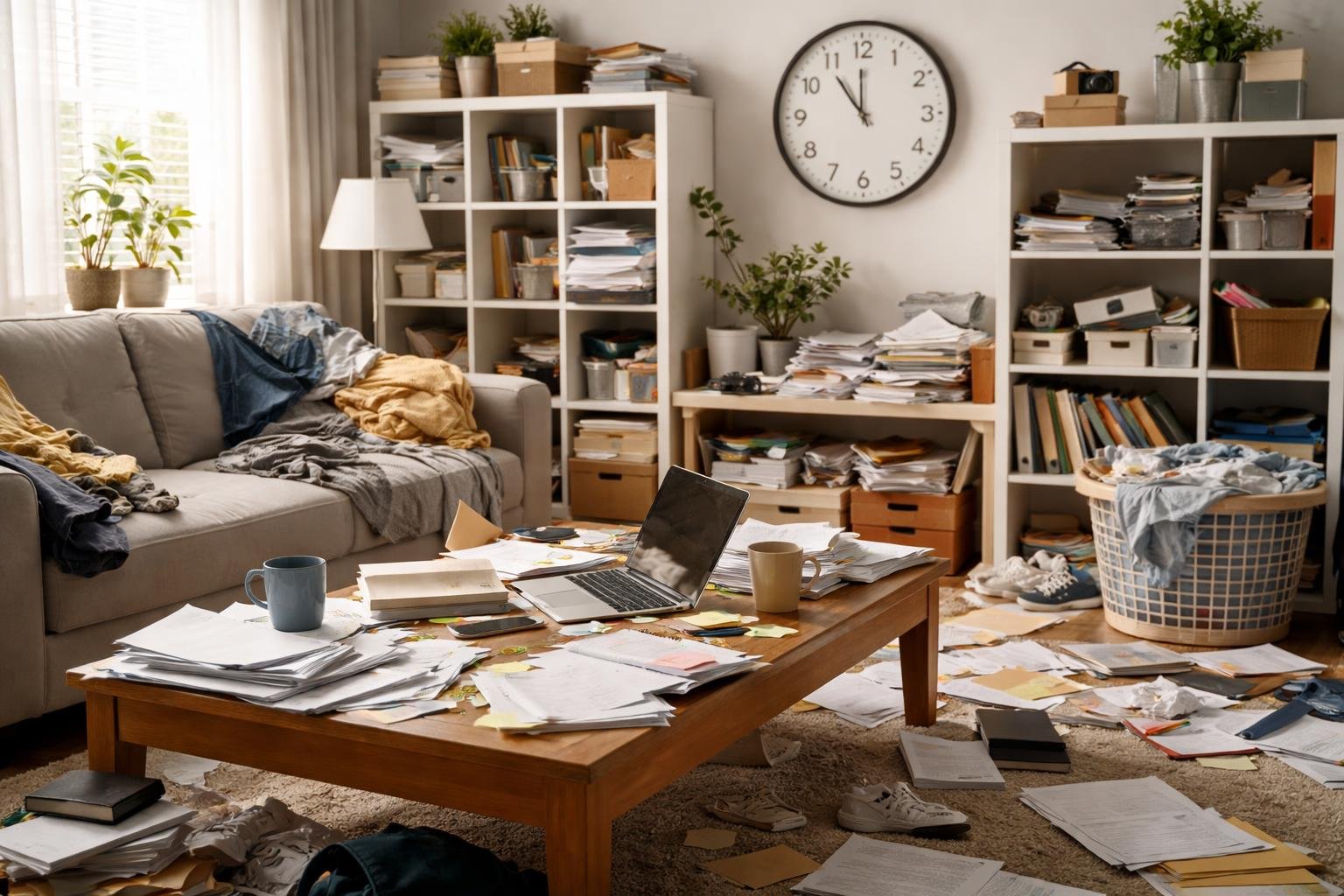
When your home lacks organization, you lose hours every week to inefficiency and disruption. These lost minutes add up to days of wasted time each year that could have been spent on more meaningful activities.
Daily Routines Disrupted by Clutter
Your morning routine takes longer when you can't find your keys, wallet, or important documents. Instead of leaving on time, you scramble through drawers and piles looking for essentials.
Clutter disrupts simple tasks throughout your day. Making breakfast becomes harder when you need to move items off counters just to prep food. Getting dressed takes extra time when clean clothes mix with dirty ones or your closet lacks any system.
These disruptions create a ripple effect. When your morning runs behind schedule, you rush through other tasks or skip them entirely. You might forget to pack lunch, miss your usual commute time, or arrive late to appointments.
The stress from these disruptions affects your decision-making and mood for hours afterward.
Cumulative Hours Lost Searching for Items
Most people spend 9 minutes per day searching for misplaced items in their homes. That equals over 50 hours per year spent looking for things you already own.
Common items that get lost include:
- Keys and wallets
- Phone chargers and remotes
- Important mail and bills
- Tools and household supplies
- Seasonal clothing and accessories
You waste additional time when you can't find something and need to replace it. You make unnecessary trips to the store, spend money on duplicates, and still end up finding the original item weeks later.
The mental energy spent trying to remember where you put things drains your focus from more important tasks.
Impact on Household Efficiency
Poor organization slows down every household task. Cleaning takes twice as long when you need to move clutter before you can vacuum or dust. Cooking requires extra time when you can't locate ingredients or cookware quickly.
Your family members also lose time searching through disorganized spaces. Kids struggle to complete homework when they can't find school supplies. Everyone wastes time asking where things are stored.
Maintenance and repairs get delayed because you can't access problem areas or find the right tools. Small issues grow into bigger problems that demand even more of your time to fix.
The inefficiency compounds when multiple people share disorganized spaces, multiplying the time cost across your entire household.
Long-Term Consequences and Solutions

Poor home organization creates lasting effects that extend beyond daily frustration. The mental strain accumulates over months and years, while specific strategies and reliable systems can break this cycle.
Effects on Mental Well-Being
Living in a disorganized home creates constant mental pressure that builds over time. Your brain processes visual clutter as unfinished tasks, which keeps your stress levels elevated even when you're trying to relax.
This ongoing stress can lead to decision fatigue. When you face disorganization daily, your brain exhausts energy on small choices like finding your keys or locating important papers. You have less mental energy left for important decisions at work or in your personal life.
Sleep quality often suffers in cluttered environments. Your bedroom should be a calm space, but disorganization triggers low-level anxiety that makes it harder to fall asleep and stay asleep. Over months and years, poor sleep affects your physical health, mood, and cognitive function.
Relationships can also deteriorate. Arguments about lost items, missed events due to poor planning, or disagreements about household organization create ongoing tension with family members or roommates.
Strategies for Reducing Time Waste
Start by tracking how much time you actually lose to disorganization. Spend one week noting every instance where you search for items, handle the same paper twice, or miss commitments. This creates awareness of your specific problem areas.
Common time-wasters to address:
- Searching for frequently used items (keys, wallet, phone, glasses)
- Sorting through piles to find important documents
- Duplicate shopping trips for items you already own
- Reorganizing spaces that lack proper systems
- Managing late fees from missed bills or appointments
Create designated homes for items you use daily. Your keys, wallet, and phone should always go in the same spot when you enter your home. Important papers need a specific location, not random piles on counters.
Use the "one-touch rule" for incoming items. Mail gets sorted immediately into action, file, or recycle categories. Groceries go directly into their proper storage locations rather than sitting in bags for hours.
Implementing Systems for Sustainable Organization
Sustainable systems work with your natural habits rather than against them. Place storage solutions where you naturally tend to drop items. If you always leave shoes by the door, put a shoe rack there instead of expecting yourself to walk them to a closet.
Key principles for lasting systems:
| Principle | Application |
|---|---|
| Visibility | Store items where you can see them |
| Accessibility | Keep frequently used items within easy reach |
| Simplicity | Use systems that require minimal steps |
| Consistency | Maintain the same system across similar items |
Set up maintenance routines that take 10-15 minutes daily. This prevents clutter from accumulating to overwhelming levels. A quick evening reset where you return items to their homes maintains order without requiring hours of cleanup.
Digital organization deserves equal attention. Create folders for important documents, set up automatic bill payments, and use calendar reminders for recurring tasks. These systems reduce the mental load of remembering everything.
Label containers and shelves clearly. When every item has an obvious home, other household members can maintain the system too. This distributes the organizational burden across everyone who uses the space.
Review your systems quarterly. What works in winter might not work in summer, and your needs change as your life evolves. Adjust storage solutions and routines based on what actually happens in your daily life rather than ideal scenarios.
Frequently Asked Questions

Poor home organization creates a ripple effect that touches every part of your day, from the minutes spent hunting for lost items to the mental energy drained by visual chaos. Understanding how disorganization impacts your time helps you make informed decisions about organizing your space.
How does disorganization in the home lead to time wastage?
You lose time every day searching for misplaced items in a disorganized home. Keys, phones, important papers, and other daily essentials disappear into the clutter, forcing you to stop what you're doing and hunt through piles.
Each search session might only take a few minutes, but these minutes add up quickly. If you spend just 10 minutes a day looking for things, that's over 60 hours per year lost to searching.
Disorganization also slows down basic tasks. Cooking takes longer when you can't find the right pan or ingredient. Getting dressed becomes a time-consuming chore when clothes are scattered or wrinkled in piles.
What are the main consequences of not keeping an organized living space?
You face financial costs when disorganization leads to duplicate purchases. You buy items you already own because you can't find them in the clutter.
Your stress levels increase in a messy environment. Visual clutter creates mental clutter, making it harder to focus and relax in your own home.
Relationships can suffer when shared spaces become chaotic. Family members waste time looking for their belongings and may feel frustrated with the disorder.
You miss important deadlines and appointments when papers and reminders get buried. Late fees, missed opportunities, and forgotten commitments become more common.
What are effective strategies to reduce clutter and improve time management at home?
Start with one small area rather than trying to organize your entire home at once. A single drawer or shelf gives you a manageable project and builds momentum.
Create designated spots for items you use daily. Your keys, wallet, and phone should always go in the same place when you come home.
Use the one-in-one-out rule for new purchases. When you buy something new, remove something old to prevent accumulation.
Set up a simple filing system for important papers. Sort mail immediately and discard what you don't need instead of letting it pile up.
Dedicate 15 minutes each day to putting things back in their designated spots. This small daily habit prevents clutter from building up again.
Can regular decluttering have an impact on daily time efficiency, and if so, how?
Regular decluttering creates clear pathways and visible surfaces in your home. You can move through rooms faster and complete tasks without obstacles in your way.
You spend less time cleaning when you have fewer items to work around. Dusting, vacuuming, and wiping surfaces becomes quicker and simpler.
Your morning and evening routines speed up significantly. Getting ready for work or preparing for bed takes less time when everything has a proper place.
You make decisions faster in an organized space. Your brain doesn't need to filter through visual noise to find what you need.
In what ways does an organized home contribute to punctuality and productivity?
You leave on time more consistently when you can quickly grab what you need. Your morning routine flows smoothly without last-minute searches for essential items.
An organized workspace at home helps you focus on tasks. You don't waste time clearing a space before you can start working or pay bills.
You complete household chores more efficiently. Knowing where cleaning supplies and tools are stored means you can start and finish tasks without interruption.
Your planning becomes more effective in an organized environment. You can see what needs to be done and access the materials required to do it.
How does one's mental health benefit from maintaining an orderly household environment?
Your stress levels drop when you're surrounded by order instead of chaos. A tidy space gives your mind room to rest rather than constantly processing visual clutter.
You feel more in control of your life when your physical space is organized. This sense of control reduces anxiety and helps you feel more capable.
Your sleep quality can improve in a clean, organized bedroom. Your brain associates the space with rest rather than unfinished tasks and disorder.
You experience less guilt and shame about your living space. An organized home removes the embarrassment of having people over or the constant feeling that you should be cleaning.