



Red Marble for Bathroom: Bold Design Ideas and Practical Tips
December 17, 2025
Red marble adds strong color and natural beauty to bathrooms. The stone shows deep reds, burgundies, and pinkish tones with unique veins. Each slab looks different. Red marble works in small powder rooms and large master bathrooms.
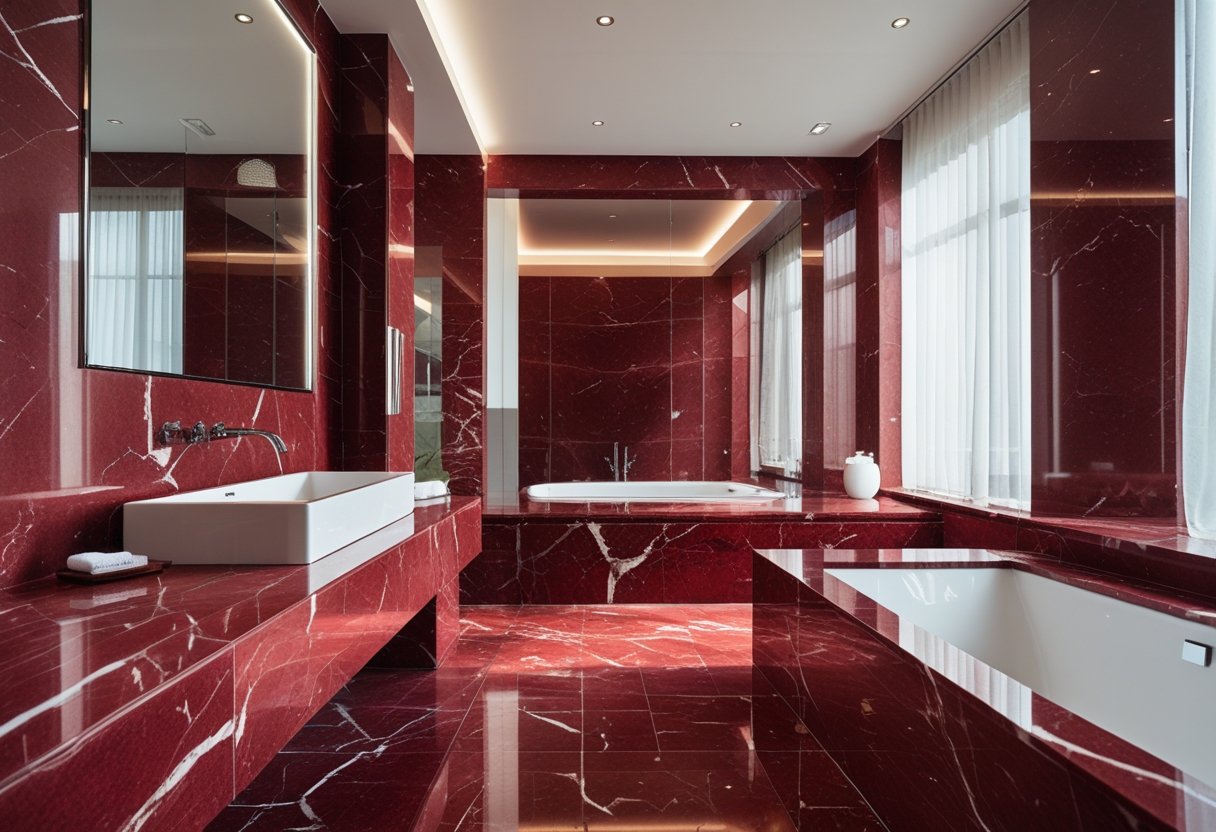
Red marble can turn a plain bathroom into a luxury space with rich color and eye-catching patterns. Use it on vanities, shower walls, floors, or as an accent. The warm tones add depth and style that plain white or beige materials do not have.
This guide explains how to use red marble in your bathroom. You will read about different types of red marble, the best places to use it, and how to match it with fixtures and other materials. You will also get simple tips for installation and care so your marble stays beautiful for years.
Red Marble Bathroom Design Essentials
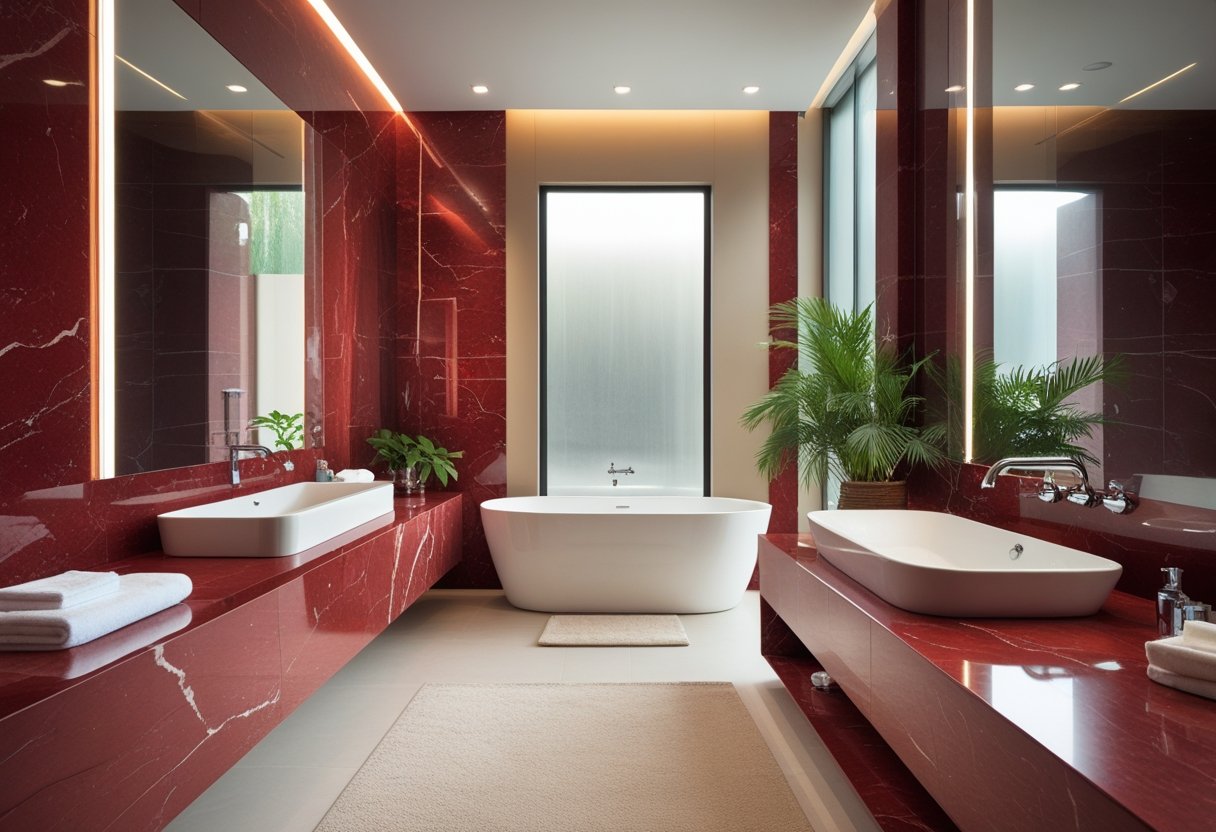
Red marble brings bold color and natural veins to a bathroom. Choose the right marble and place it where it will have the most impact. Picking the right stone and using it in the best spots are the main steps for a successful red marble bathroom.
Choosing the Right Red Marble Variety
Rosso Levanto is a very popular red marble for bathrooms. It has deep burgundy colors with white veins that make a strong contrast. These bold patterns look great on vanity tops and accent walls.
Red travertine is a softer choice with warm terracotta tones. It is more porous than polished marble and gives a rustic, Mediterranean feel that fits spa-style bathrooms.
Rouge Alicante has a strong red color with fewer white veins. This Spanish marble looks more even and works well when you want the same color over large areas.
Think about the finish of your red marble. Polished surfaces shine and show veins clearly. Honed finishes are less shiny, give a soft texture, and hide water spots better in showers.
Red Marble Surfaces: Floors, Walls, and Showers
A checkerboard marble floor made from red and white tiles adds a classic European look to a powder room. Use 12-inch or larger tiles so the pattern does not look too busy. The alternating colors add interest without crowding the space.
Marble walls in showers need proper sealing. Red marble tiles should be sealed every 6–12 months in wet areas. When possible, install large slabs to reduce grout lines where water can get in.
Marble floors in red tones can anchor the bathroom design. Use slip-resistant finishes in wet spots for safety. Pair red floors with lighter walls so the room does not feel too dark.
Limit how much red marble you use so it does not overwhelm the room. Use it on one or two main surfaces instead of every wall. A red marble vanity top with neutral walls often looks better than covering everything with marble.
Pairing Red Marble With Other Materials
Walnut and dark wood cabinets go well with red marble. Fluted wood vanities add texture that contrasts the smooth stone. Warm brown tones make burgundy marble look richer without competing with it.
Brass and bronze fixtures match red marble nicely. Brushed or unlacquered brass suits the warm tones in many red stones. Wall-mounted brass faucets keep the marble backsplash visible.
White ceramic tile balances heavy red marble. Use white subway tiles on walls with a red marble vanity to keep the bathroom from feeling too dark.
Black accents increase the drama of a red marble bathroom. High-gloss black panels or matte black fixtures give a modern, moody look. Use black sparingly for trim or hardware, not for large surfaces.
Cream plaster walls can soften red marble’s strong look. Venetian plaster or limewash in warm neutrals lets the marble stay the focus without overwhelming the room.
Popular Red Marble Bathroom Layouts
Powder rooms are great for bold red marble statements. These small rooms can handle dramatic looks without feeling cramped. Add a red marble vanity with a matching backsplash as the main feature.
Primary bathrooms do well with some red marble, not too much. Use red marble on the vanity countertop and floor, and keep the shower walls neutral. This makes clear areas without too much color.
Floating vanities with red marble tops are common in modern designs. Mount a fluted wood cabinet with a red marble sink. The floating look makes small bathrooms feel larger.
Corner features with backlit red onyx or marble add a touch of luxury in larger bathrooms. Put LED lights behind thin stone slabs. This works nicely in walk-in showers or next to freestanding marble tubs.
The vintage Italian layout uses red and white checkerboard floors with cream walls. Add a pedestal sink or an old-style dresser vanity. Use brass or bronze fixtures for an authentic feel.
Inspiring Red Marble Bathroom Features and Ideas
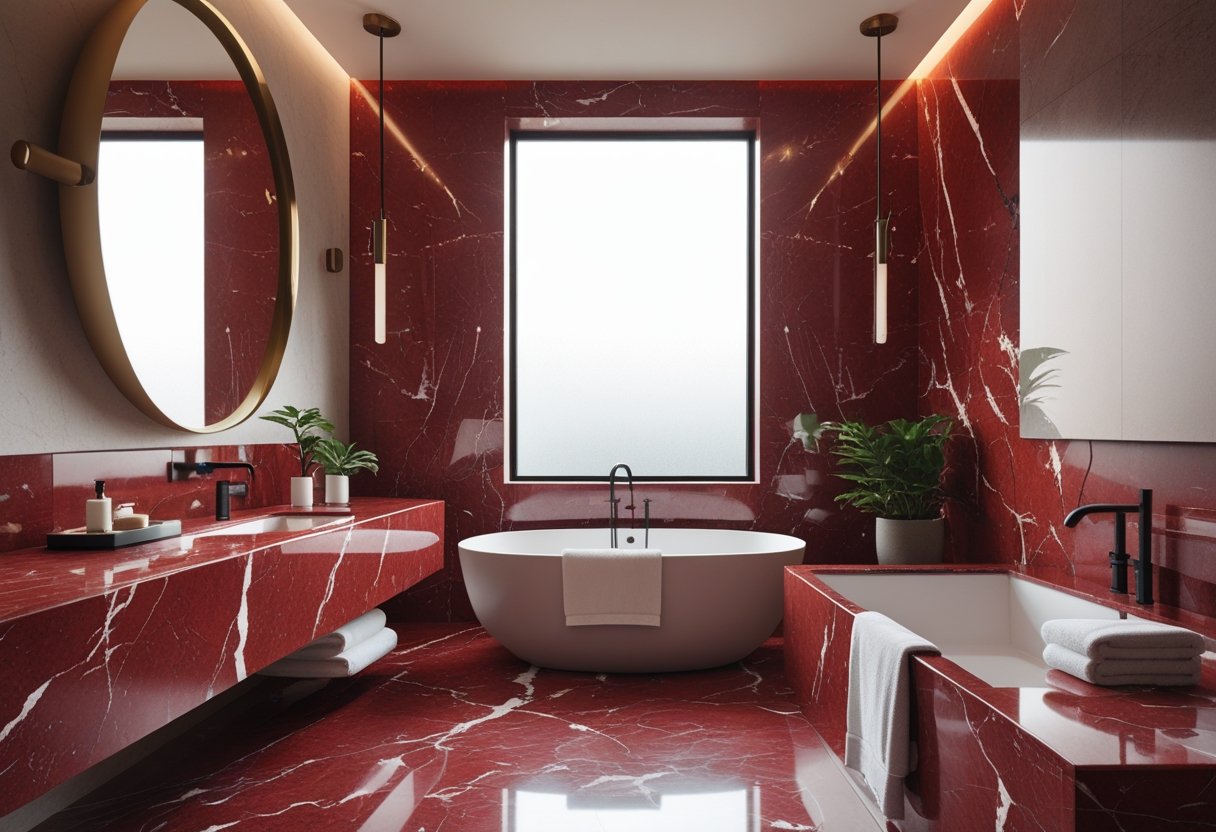
Red marble for bathroom use can turn plain spaces into bold, stylish rooms. You can use one strong feature, like a sculpted vanity, or cover whole areas like a full-slab shower. This natural stone adds color and a high-end look.
Statement Red Marble Vanities and Sinks
A red marble vanity can be the main piece in your bathroom. Rosso Levanto has deep wine-red shades with white veins. Rosso Alicante gives warmer terracotta-red tones. Pair these marble tops with dark wood or gray cabinets, or pick flat-panel cabinets for a modern style.
Vanity Style Options:
- Floating designs with sculpted red marble sinks
- Fluted bases with bold marble tops
- Traditional styles with recessed-panel or shaker cabinets
- Modern minimalist with integrated undermount sinks
For a moody look, match a red marble vanity with warm metals like brass. Wall-mounted faucets in brushed brass or champagne bronze bring out the stone’s veins. For a modern contrast, use matte black fixtures against the red tones. A red marble pedestal sink works well in small powder rooms where you want a big impact without taking up space.
Red Marble for Bathroom: Bathtubs and Showers
Red marble can make a bathroom feel like a spa. You can cover a freestanding tub with tall marble slabs for a smooth, luxury look. Or add marble wainscoting around an alcove shower for a classic feel. Rosso Francia has deep burgundy color that looks great with brass fixtures and warm lights.
Putting red marble from floor to ceiling in a shower creates a strong design statement. Using full slabs reduces grout lines and shows the stone's natural patterns. You can add a built-in bench and recessed shelves covered in the same marble for useful storage and a neat look. Glass shower doors keep the space feeling open and let the marble stand out.
If your budget is smaller, use red marble as an accent. A marble backsplash behind a tub or one feature wall in a shower gives big impact without covering everything. Mix glossy red tiles on other walls to continue the color while saving money.
Choosing Fixtures and Hardware
Fixtures should highlight the red marble, not fight it. Brass finishes usually look best with red marble because they match the warm tones. Brushed brass, aged gold, and champagne bronze all pair well with stones like Rosso Collemandina.
Recommended Hardware Finishes:
| Finish | Best For | Design Style |
|---|---|---|
| Brushed Brass | Rosso Levanto, Rosso Francia | Traditional, Transitional |
| Matte Black | Light red marbles, rose-toned stones | Modern, Contemporary |
| Aged Gold | Rosso Alicante, terracotta reds | Vintage, Classic |
| Chrome | White marble with red veining | Clean, Minimalist |
Lighting is important too. Globe or brass wall sconces by the mirror add warm light that makes the marble look richer. Avoid cool, shiny metals like polished chrome unless your red marble is very light and has only a little red color.
Creative Red Marble Floor Patterns
Red marble floors set the tone for your whole bathroom. A checkerboard floor that mixes red marble with creamy white or beige marble gives a classic look. This pattern suits traditional bathrooms with detailed cabinets and standard toilets.
Large marble slabs offer a modern choice instead of smaller patterns. Running red marble from the main bathroom into the shower makes the space feel connected and larger. Add a neutral tile border like warm white, or pair red marble with terracotta tiles for a Mediterranean look.
For a subtle effect, use red marble floors with plain, neutral walls. This lets the rich floor color stand out without being too loud. Dark wood cabinets and white counters balance deep burgundy marble. Soft pink walls go well with rose-veined marble for a warm, matching scheme.
Frequently Asked Questions
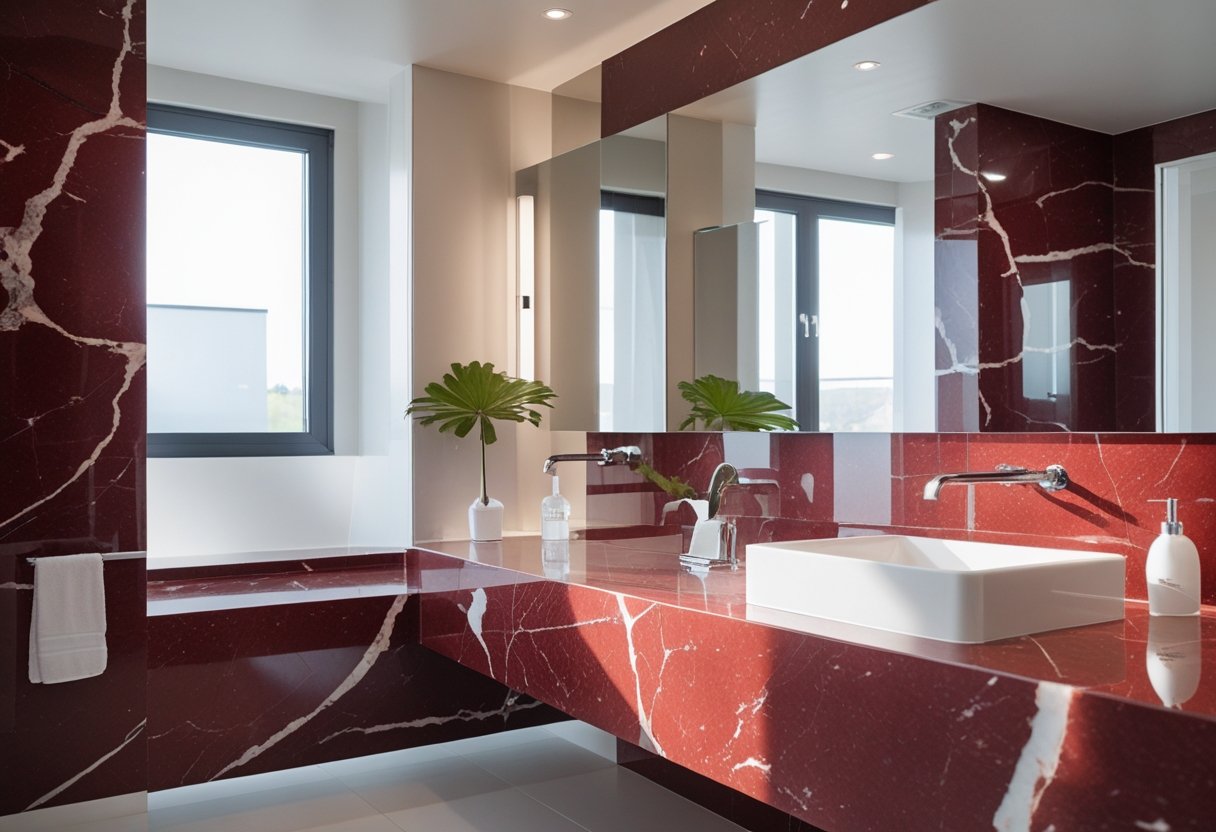
Red marble adds a strong, unique look to bathrooms. It also needs care and can cost more than other stones. Knowing the types, how to clean them, and design ideas helps you choose the right marble for your bathroom.
What are the best types of red marble suitable for bathroom installations?
Rosso Levanto is a popular choice. It has deep wine-red color with clear white veins that stand out.
Rosso Alicante has warm terracotta-red tones with soft white lines. It fits both classic and modern bathrooms.
Rosso Francia shows rich burgundy color with smooth movement in the stone. It looks nice with brass fixtures and warm lights.
Rosso Collemandina has bright red with dark grey and ivory veins. Its mixed colors work well in larger bathrooms that need visual interest.
Calacatta Viola is more recent in design. It has a creamy white base with plum-red veins, adding color without overpowering neutral rooms.
How do I maintain and clean red marble surfaces in a bathroom?
Clean red marble often with a pH-neutral cleaner made for natural stone. Do not use acidic cleaners like vinegar or lemon, because they can damage the marble.
Wipe up spills right away to avoid stains. Water spots and soap scum build up fast in bathrooms, so wipe daily with a soft, damp cloth to keep the stone looking good.
Use a squeegee on shower walls after each use to cut down on water and mineral buildup. This helps the marble last longer and look fresh.
Do not use abrasive pads or strong chemicals. These can scratch or dull the marble. Always use soft microfiber cloths for cleaning.
Reseal red marble every 6 to 12 months, depending on use and moisture. Showers and high-traffic areas may need sealing more often than vanity tops or accent walls.
Can red marble be used for both flooring and wall cladding in bathrooms?
Yes. Red marble can be used on bathroom floors and walls. Using the same marble on both gives a clean, high-end look.
For floors, choose a honed or textured finish instead of polished. Polished marble can become slippery when wet and may be unsafe.
Honed finishes give better grip and still show the stone’s color and veins. They also hide water spots and small scratches better than polished surfaces.
Polished red marble works well on walls, shower surrounds, and backsplashes. It looks shiny and reflects light on vertical surfaces.
Large slabs are good for shower walls because they have fewer grout lines. Fewer seams mean less cleaning and a neater appearance.
What are the costs compared to other types of marble for bathroom use?
Red marble usually costs about $50 to $200 per square foot for the material. Installation can add around $30 to $100 per square foot depending on where you live and how complex the job is.
Common white marbles like Carrara usually cost less, around $40 to $100 per square foot. High-end options like Calacatta can cost more than $200 per square foot, so some red marbles are mid-range in price.
The exact price of a red marble depends on its rarity and where it comes from. Types like Rosso Levanto and Rosso Francia are often more expensive because they are harder to find.
Rosso Alicante is often cheaper than other red marbles. It is more common and can be a budget-friendly choice for homeowners who want red marble without high prices.
Also plan for extra costs for sealing, special cleaners, and professional installation. Add about 15% to 20% more on top of material and labor for these items.
Do red marble showers and baths need special sealing?
Yes. Use a good penetrating sealer made for natural stone and wet areas. Pick a sealer labeled for bathrooms or showers.
Seal red marble before you grout and install it. This helps stop grout stains and gives quick protection from water.
Seal all surfaces that touch water: floors, shower walls, tub surrounds, and vanity tops. Pay extra attention to spots near fixtures where water pools or splashes.
Shower walls and areas near tubs often need resealing every 3 to 6 months because they stay wet. To check the seal, put a few drops of water on the surface. If the water darkens or is absorbed within 5 minutes, it needs resealing.
Good ventilation helps too. Use an exhaust fan during and after showers to cut down on steam and humidity and to help the sealer last longer.
In very wet areas, some pros suggest applying two coats of sealer. The second coat gives extra protection from water and stains.
What are the latest bathroom design trends with red marble?
Floor-to-ceiling red marble is popular in luxury bathrooms. It makes a bold, spa-like look with smooth stone all around.
Mixing red marble with other materials adds balance. For example, pair a red marble vanity with plain wall tiles or use red marble walls with different flooring.
Checkerboard patterns with red and white or cream marble make a strong, geometric style. This works in both modern and classic bathrooms.
Warm metal finishes like brass, bronze, and champagne gold match red marble well. They make the stone feel warm and elegant.
Using red marble as a statement piece is popular too. A red marble vanity or an accent wall gives impact without crowding a small bathroom.
Textured or fluted marble adds depth. Carved vanities show that red marble can be more than flat slabs.
Powder rooms are great for bold red marble. The small space lets homeowners try dramatic colors and patterns without a big commitment.