



Lace Tablescapes: Elegant Design Ideas for Your Next Dinner Party
December 28, 2025
Lace tablescapes give your table a soft, romantic feel without much work or cost. The delicate patterns and light texture of lace suit both everyday meals and special events. Use lace as table runners, overlays, or small accents to make your table look classic and fresh.
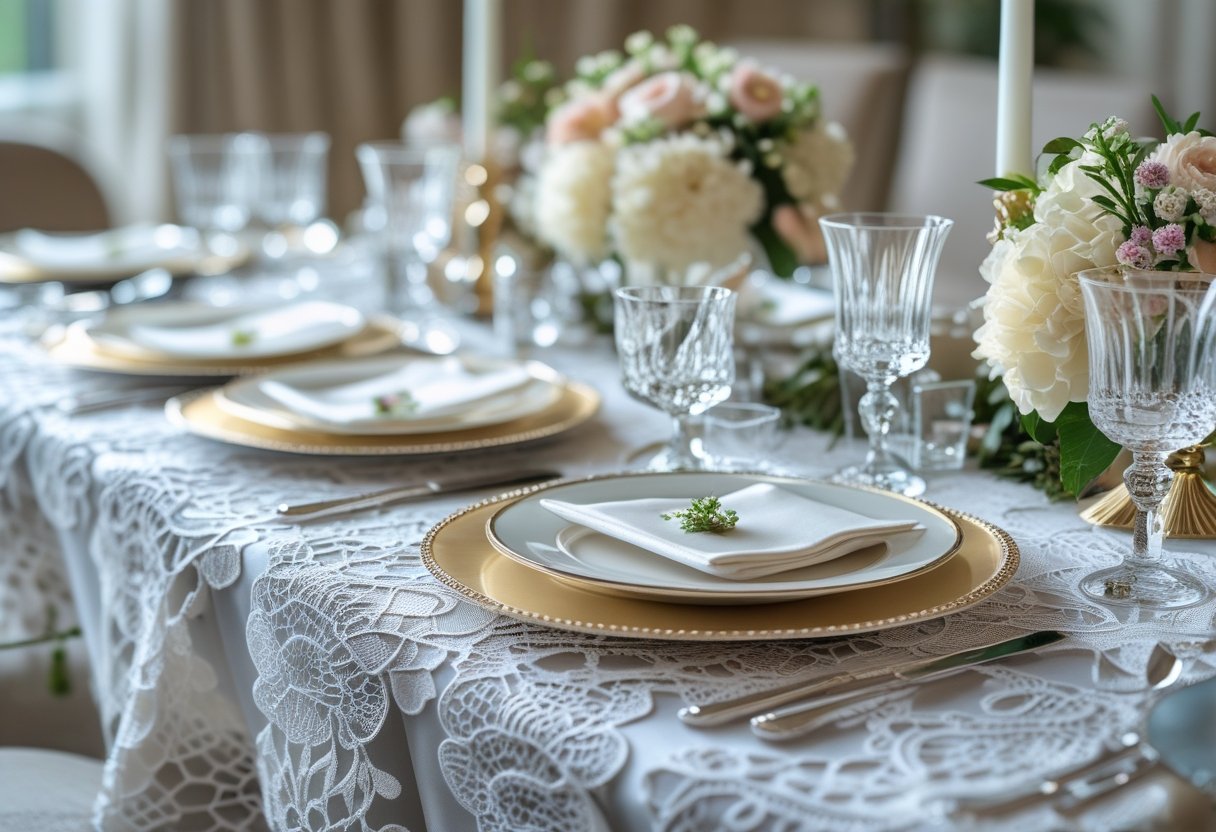
Lace adds an elegant touch and can match many styles, from vintage to modern. You do not have to use only lace. Mixing lace with wood, linen, or burlap adds layers and texture that make the table feel warm and welcoming.
This short guide will help you choose the right lace, plan a complete tablescape, and care for your lace pieces so they last a long time.
Essentials of Lace Tablescapes
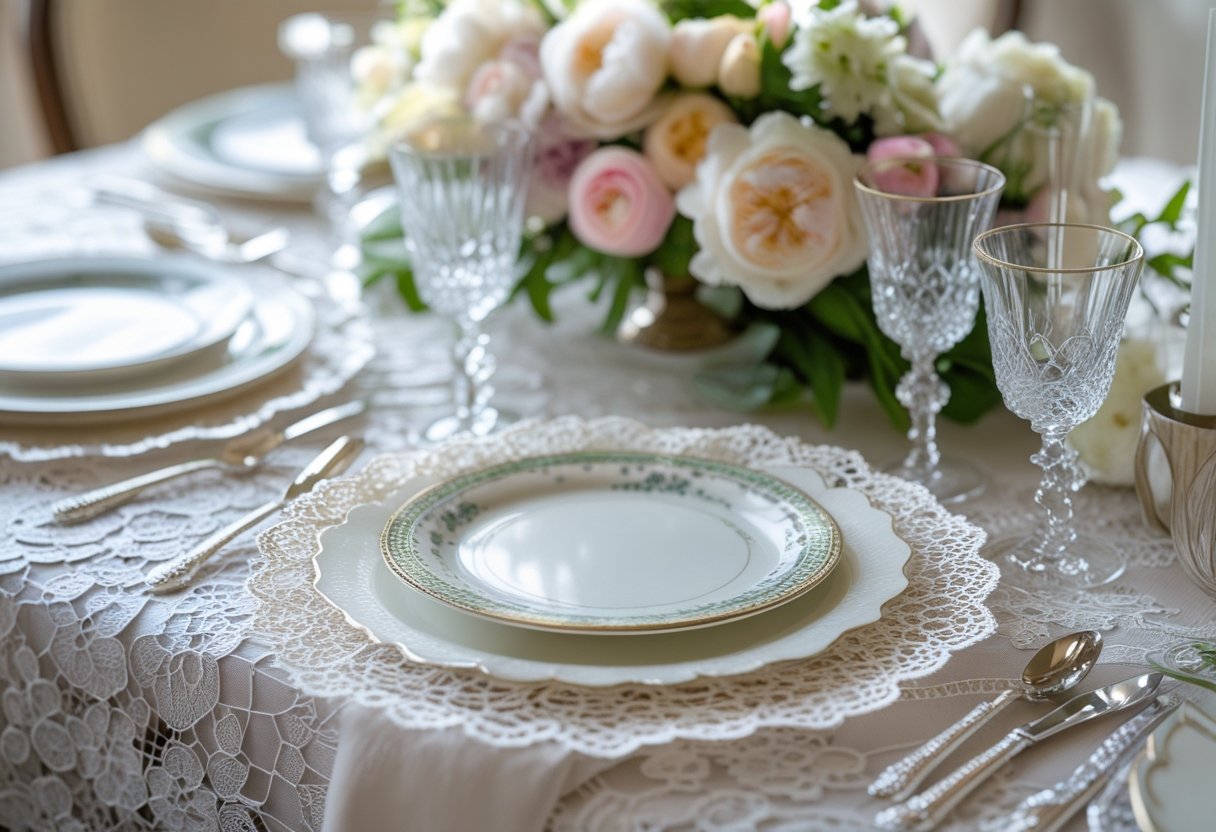
Lace tablescapes mix pretty lace with table settings to make a beautiful dining display. Knowing a few basics about lace types, where they came from, and how to pick them makes it easier to create a look that fits your style and the event.
What Lace Tablescapes Are and Their History
A lace tablescape is a decorated table that uses lace as a main part of the design. People add lace with tablecloths, runners, placemats, or napkin details. The lace brings texture and style to the table.
Lace tablescapes started in Europe in the 1500s. Wealthy families used handmade lace to show wealth and good taste. In the 1800s, machines made lace more available, so more people could use it.
Today, lace can be used for fancy dinners or casual meals. It works well for many occasions and can make any table look special.
Types of Lace Used in Tablescapes
Different lace types give your lace tablescapes unique looks and feels:
Chantilly lace has small flower patterns on a fine net. It suits romantic or vintage table settings.
Crochet lace looks handmade with thicker threads and geometric shapes. It adds a cozy, rustic touch to farmhouse or boho tables.
Guipure lace (also called Venetian lace) has no net background. The patterns are joined by bars or plaits, so it feels heavier and lasts longer.
Battenberg lace uses tape and needle-made bars to form raised designs. It fits Victorian or cottage-style tables.
Eyelet lace has small cutout holes and is often cotton. It is casual and good for outdoor or daytime events.
Choosing the Right Lace for Your Setting
Choose lace that fits the event and the room. Fine laces like Chantilly are good for weddings and formal dinners. Thicker crochet or eyelet lace works well for everyday meals or outdoor parties.
Think about color. White and ivory feel classic. Colored lace can make the table look modern. Black lace gives a bold, dramatic look for fancy events.
Mix textures. Put delicate lace over a smooth tablecloth to add interest. Pair lace with wood or rustic items for a warm, cozy feel. Layering lace over a solid cloth makes the table look deeper and richer.
Check how strong the lace is. Cotton and linen lace stand up to washing better than many synthetic fabrics. If you will use lace often, pick machine-washable types instead of very delicate handmade pieces.
Designing Lace Tablescapes
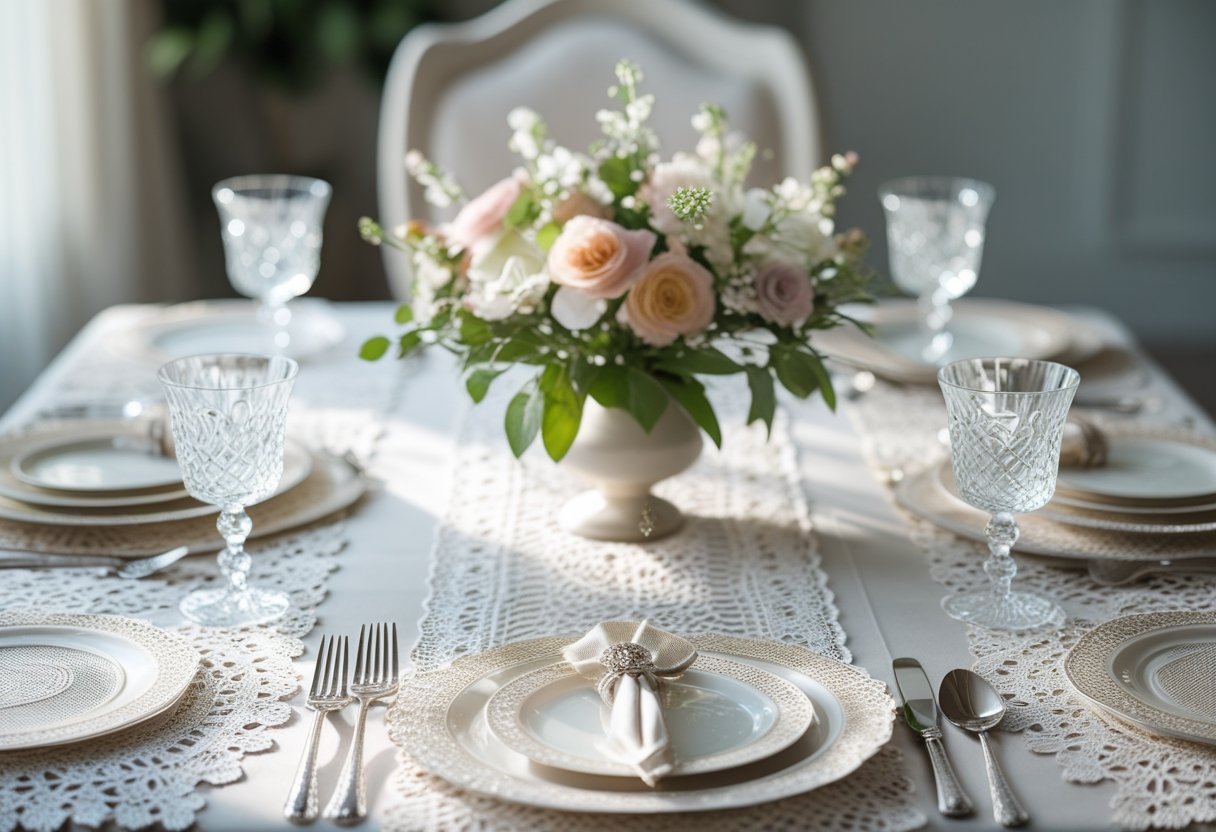
A good lace tablescape mixes delicate fabrics with careful color choices and layers. Choose items that look good together. Let the lace be the main focus or a soft background texture.
Pick a Theme and Match Colors
Your theme helps you decide everything else. Lace works well for vintage, romantic, rustic, and formal themes because it is classic and pretty.
First pick a main color for your event. White and ivory lace make a classic, elegant look for weddings or fancy dinners. Colored lace like blush, champagne, or gray gives a softer, more modern style.
Use three color parts: the lace color, an accent color, and a neutral base. For example, try ivory lace with sage green accents and natural wood. Or use black lace with gold details and white dishes for a bold look.
Match the lace pattern to your theme. Small floral lace fits romantic styles. Geometric lace works for modern looks. Thick crochet lace is better for casual, rustic events.
Layering Techniques for Visual Interest
Layering adds depth and creates a rich visual experience. Place a solid tablecloth as your base layer, then add your lace as a runner or overlay. This lets you show off the lace pattern while adding contrast underneath.
You can layer multiple lace pieces at different angles to create texture. Try a full lace tablecloth with a contrasting lace runner down the center. Or drape lace napkins over solid chargers for a subtle detail.
Mix lace with other textures like linen, burlap, or wood for balance. A linen base with lace accents prevents the table from looking too delicate or busy. Wood chargers under lace placemats add warmth and ground the design.
Layer heights matter too. Use varying plate sizes, folded napkins, and elevated centerpieces to create vertical interest that complements your horizontal lace layers.
Accentuating with Tableware and Decor
Your tableware should support your lace tablescapes, not fight them. Simple, single-color plates let lace patterns show. White or cream dishes make the lace stand out.
Glass and crystal match lace well. Clear glass adds shine without taking over. Glasses with gold or silver rims add a formal feel for vintage lace looks.
Key Tableware Choices:
- Plates: Solid colors or simple edges
- Flatware: Silver, gold, or bronze to fit your style
- Glassware: Clear, cut crystal, or lightly tinted
- Napkins: Lace or solid colors that match the scheme
Choose a centerpiece that balances the lace. Small flower arrangements in low vases work well. Candles in plain holders give soft light that shows off the lace texture.
Keep decorations simple. A few petals, small votive candles, or plain place cards stop the table from looking busy.
Seasonal and Event-Specific Lace Tablescapes
Spring and summer lace tables use light colors and flowers. Try pastel lace runners, fresh flowers, and plain white dishes. These look nice for garden parties and bridal showers.
Fall tables mix lace with leather, wood, and warm colors. Use cream lace, burgundy napkins, copper pieces, and small pumpkins or fall leaves. This adds contrast and keeps the table elegant.
Winter tables layer lace with heavier fabrics and shiny accents. White lace over a dark cloth makes a formal holiday look. Add silver candles and evergreen sprigs for a festive touch.
Wedding tables are more formal. Use full lace overlays and matching runners. Add your wedding colors with flowers and napkins. Birthday and anniversary tables can be more playful with different lace patterns and casual centerpieces.
Match the lace weight to the season and the event. Light, airy lace works for warm weather and casual events. Heavier lace or layered pieces are better for cool months and formal occasions.
Care, Maintenance, and Storage
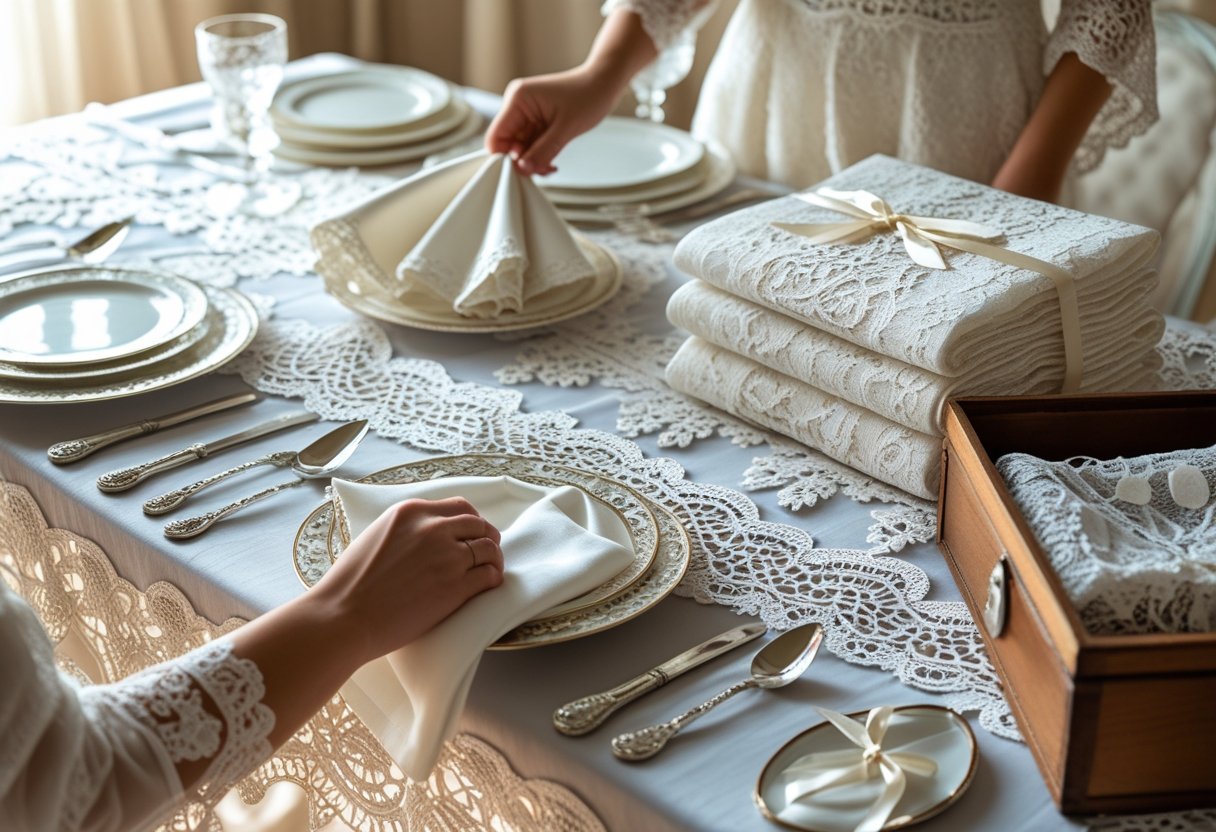
Lace tablescapes need gentle care to keep them looking nice. With the right cleaning and storage, your lace pieces can last for many years.
Cleaning and Preserving Lace
Always check the care label before you clean lace. Most lace should be hand washed in cool water with a mild soap made for delicates.
Fill a basin with cool water and add a little gentle soap. Put the lace in the water and move it around softly. Do not twist or wring the lace. If there are stains, let it soak for 10–15 minutes.
Rinse the lace in cool water until the soap is gone. Press the water out gently with your hands or against the basin. Never twist or wring, because that can stretch or break the lace.
Lay the lace flat on a clean white towel and roll the towel to soak up extra water. Then unroll and move the lace to a dry towel, reshaping it to its original size. Let it air dry completely away from sunlight and heat.
For very old or fragile lace, take it to a professional cleaner. Some modern lace blends can be machine washed on a delicate cycle if you put them in a mesh laundry bag.
Proper Storage Practices
Store your lace tablescapes in a cool, dry place away from direct sunlight. Sunlight can make the lace yellow and weak over time.
Recommended storage methods:
- Fold lace items loosely with acid-free tissue paper between folds
- Roll larger pieces around acid-free tubes to stop creases
- Use breathable cotton or muslin storage bags instead of plastic
- Keep items in closed drawers or boxes to protect from dust
Do not store lace in basements or attics where temperature and humidity change a lot. Those conditions can cause mildew and damage the fabric. Check stored items every few months and refold them differently to avoid permanent creases.
Never use wire hangers or metal clips that can leave rust marks or make holes in the fabric.
Repairing and Restoring Damaged Lace
Small tears and loose threads can often be fixed at home with care. Use a fine needle and thread that matches the lace color.
For small holes, stitch across the gap with tiny stitches that follow the lace pattern. When you can, work from the back side to hide the repair. Secure loose threads by gently weaving them back into the fabric or cutting them close with sharp scissors.
Yellowed lace can sometimes be brightened by soaking it in cool water with oxygen-based bleach. Test a small hidden spot first. Do not use chlorine bleach because it can ruin lace fibers.
For valuable antique lace or big damage, talk to a textile conservator. They have the tools and training to fix fragile pieces safely.
Frequently Asked Questions
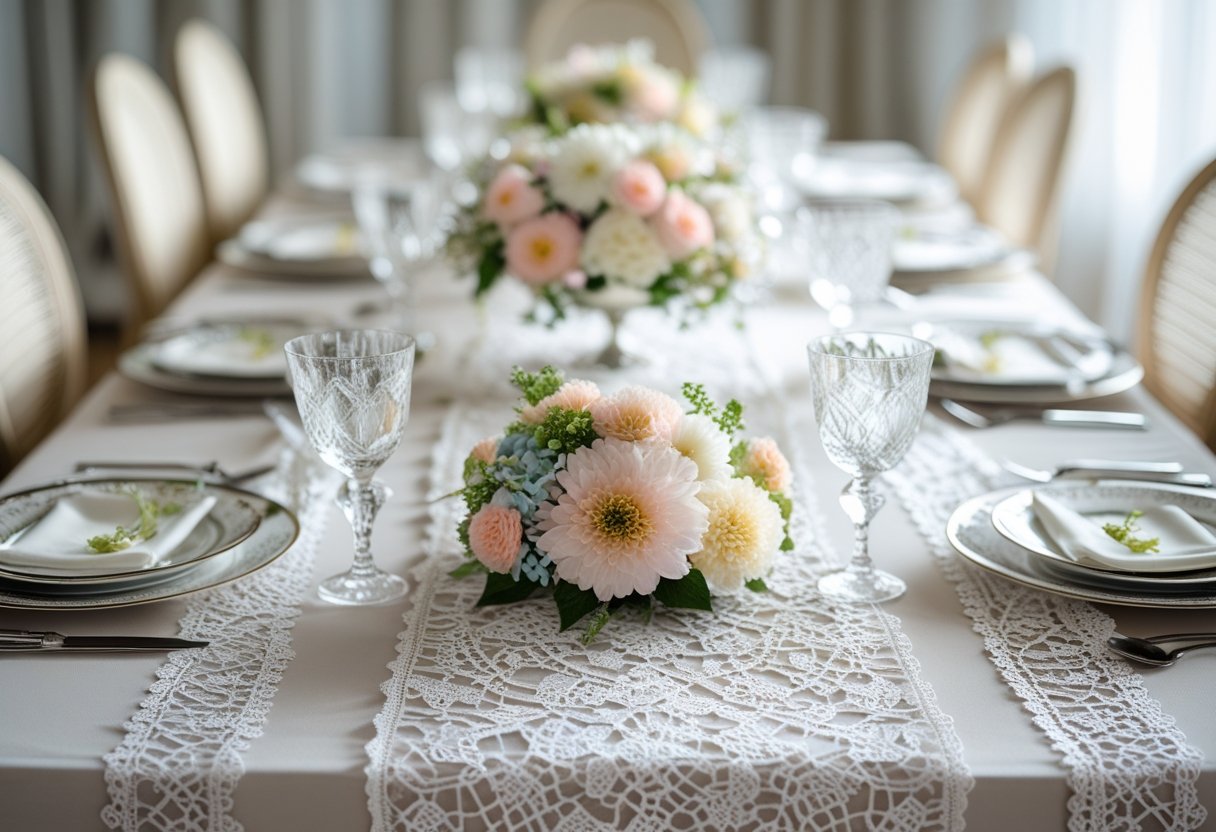
Lace tablescapes mix pretty looks with old-style charm. People often ask about the best materials, ways to use lace, and how to care for it. Here are simple answers to common questions about using lace on your table.
What are some elegant ways to incorporate vintage lace into table centerpieces?
Put vintage lace doilies under vases or candle holders to make the centerpiece stand out. Layer doilies of different sizes to add height and interest.
Use a lace runner down the middle of the table and put flowers or candles on top. The lace adds texture and lets the table or tablecloth underneath show through.
Wrap lace around glass jars or cylinders to make pretty candle holders. Tie the lace with thin ribbon or twine that matches your colors.
How can white lace be used to enhance the appearance of wedding tables?
A white lace runner can make a wedding table look elegant without covering the whole surface. This is good when you want to show a wooden table or a colored cloth under the lace.
Place white lace doilies under each plate to frame the dinnerware and add a small personal touch. This works well for small weddings or the head table.
Put a white lace tablecloth over a colored cloth to make a layered look. Popular mixes are white lace over blush pink, navy blue, or champagne colors.
Use lace napkin rings or wrap napkins with lace bands held by small pearl pins. These little details help pull the whole lace tablescape together.
What are the essential materials needed for creating a DIY lace tablescape?
Start with lace fabric or ready-made items like tablecloths, runners, or doilies. You can use old vintage lace or buy new lace from a fabric store depending on your budget and style.
Basic sewing tools help you change or fix lace. Keep fabric scissors, needles, thread, and fabric glue nearby.
Pick tableware—plates, glasses, and flatware—that matches your look. Neutral colors often work best so the lace stands out.
Add simple decorations like candles, flowers, and ribbon to finish the tablescape. Choose items that complement the lace instead of competing with it.
How can one determine the value of antique lace tablecloths?
The type of lace matters. Handmade lace, such as Venetian, Alençon, or Brussels, is usually worth more than machine-made lace.
Check the condition for stains, holes, or weak spots. Clean, undamaged pieces are worth more than those that need repair.
Size and detail affect value too. Big tablecloths with complex patterns are generally more valuable than small or simple ones.
Look at similar items on antique sites and auction pages to get a price idea. For rare or expensive pieces, ask a textile appraiser for a professional opinion.
What techniques are used to calculate the amount of lace fabric needed for decorating multiple tables?
Measure your table dimensions first to determine how much coverage you want. Add the desired overhang length to each side of the table measurements.
Multiply the total fabric needed per table by the number of tables you plan to decorate. Add an extra 10-15% to account for pattern matching, hemming, and potential mistakes.
For lace runners, measure the table length and add 12-20 inches for overhang on each end. Standard runner widths range from 12 to 18 inches depending on your table size.
Consider buying fabric in bulk when decorating multiple tables to ensure pattern and color consistency. Different dye lots can vary slightly even within the same product line.
Which types of lace are best for lace tablescapes?
Handmade bobbin lace and needle lace are the highest quality choices. These old methods make very detailed and strong patterns.
Belgian and French laces are famous for fine work and delicate beauty. Makers from these places often use good materials and careful skill.
Cotton and linen lace last longer than synthetic lace and get better with care. Natural fibers hang nicely and feel heavier on a table.
When checking quality, look for tight, even stitches and clear patterns. Good lace keeps its shape after washing and does not snag or tear easily.