



Home Gym Inspiration Design: Transform Your Space Into a Functional Fitness Haven
January 16, 2026
Working out at home sounds great until you realize your equipment sits in a cluttered corner and you never feel like using it. The difference between a home gym you avoid and one you actually use comes down to thoughtful design. A well-designed home gym combines the right equipment, smart use of space, and personal touches that make you want to work out.
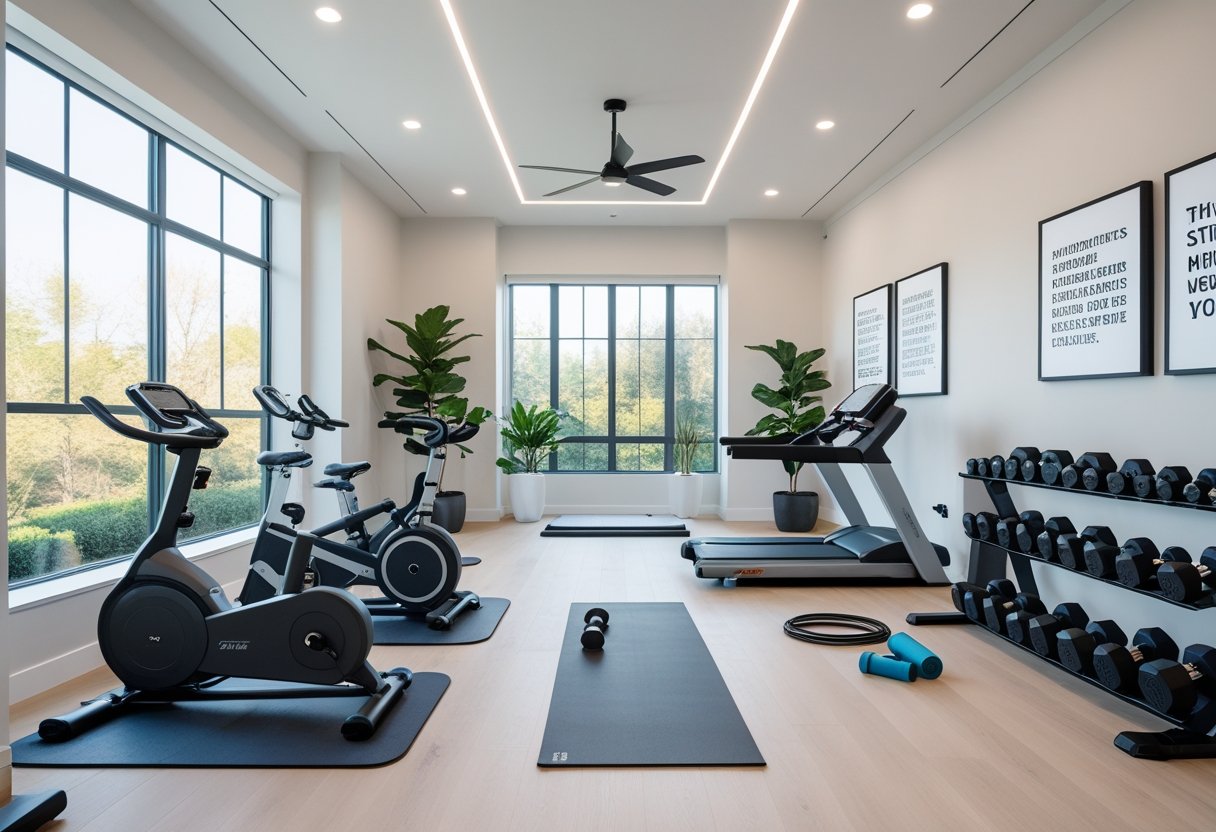
Creating your own workout space doesn't mean you need a huge budget or an entire room. You can turn a basement corner, spare bedroom, or garage into a functional gym that fits your fitness goals. The key is understanding what makes a space feel motivating rather than cramped or boring.
This guide will walk you through the core principles of home gym design and show you specific elements that make a workout space both practical and inspiring. You'll learn how to maximize your available space, choose the right equipment, and add design features that keep you coming back.
Fundamentals of Home Gym Inspiration Design
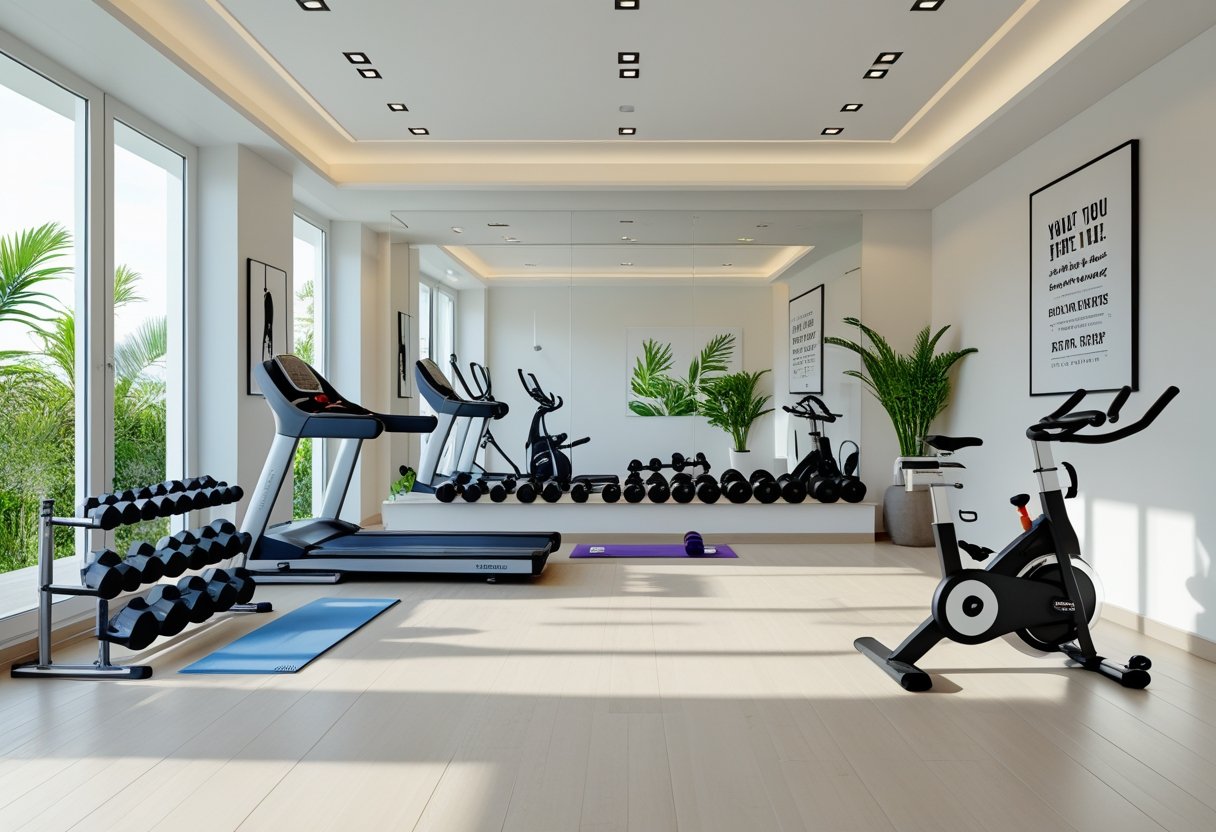
A successful home gym starts with clear goals, smart space selection, and design ideas that match your lifestyle. These three elements work together to create a workout area that you'll actually use.
Defining Your Fitness Goals
Your fitness goals determine what equipment you need and how much space you require. If you focus on cardio training, you'll need room for a treadmill, bike, or rowing machine. Strength training requires space for weights, a bench, and possibly a power rack.
Think about your workout style before buying anything. Do you prefer high-intensity interval training, yoga, weightlifting, or a mix of activities? Write down the specific exercises you do most often.
Your goals also affect your budget and timeline. A basic setup for bodyweight exercises and stretching costs far less than a full weightlifting station with multiple machines. Start with essential items that support your main fitness activities.
Consider how often you'll work out. Daily users need durable equipment and proper flooring. If you exercise three times per week, you can prioritize differently.
Choosing the Right Space
The best home gym space has enough room for your equipment plus movement area. Measure your space carefully before buying anything. Most cardio machines need at least a 3-foot clearance on all sides.
Basements work well because they offer privacy and typically have concrete floors that support heavy equipment. Spare bedrooms provide convenience but may need floor reinforcement for weights. Garages give you plenty of space but require climate control solutions.
Key space requirements:
- Ceiling height of at least 8 feet for overhead exercises
- Adequate electrical outlets for equipment
- Proper ventilation or windows
- Level flooring that can handle equipment weight
Check if your chosen space has good natural light or needs extra lighting. Poor lighting makes workouts less enjoyable and can affect safety.
Inspiration Sources for Home Gym Design
Look at hotel gyms and boutique fitness studios for layout ideas. These spaces maximize every square foot while maintaining a clean, organized appearance. Take photos of setups you like during your travels or gym visits.
Social media platforms and home design websites show real examples from people with similar spaces and budgets. Search for gyms in rooms that match your available area. Save images that show color schemes, storage solutions, and equipment arrangements you want to recreate.
Interior designers who specialize in wellness spaces can provide custom solutions that blend fitness with your home's style. They understand how to incorporate motivational elements without making the space feel cluttered.
Visit sporting goods stores to see equipment in person. This helps you understand actual dimensions and test different brands before purchasing.
Design Elements for a Motivating Home Gym
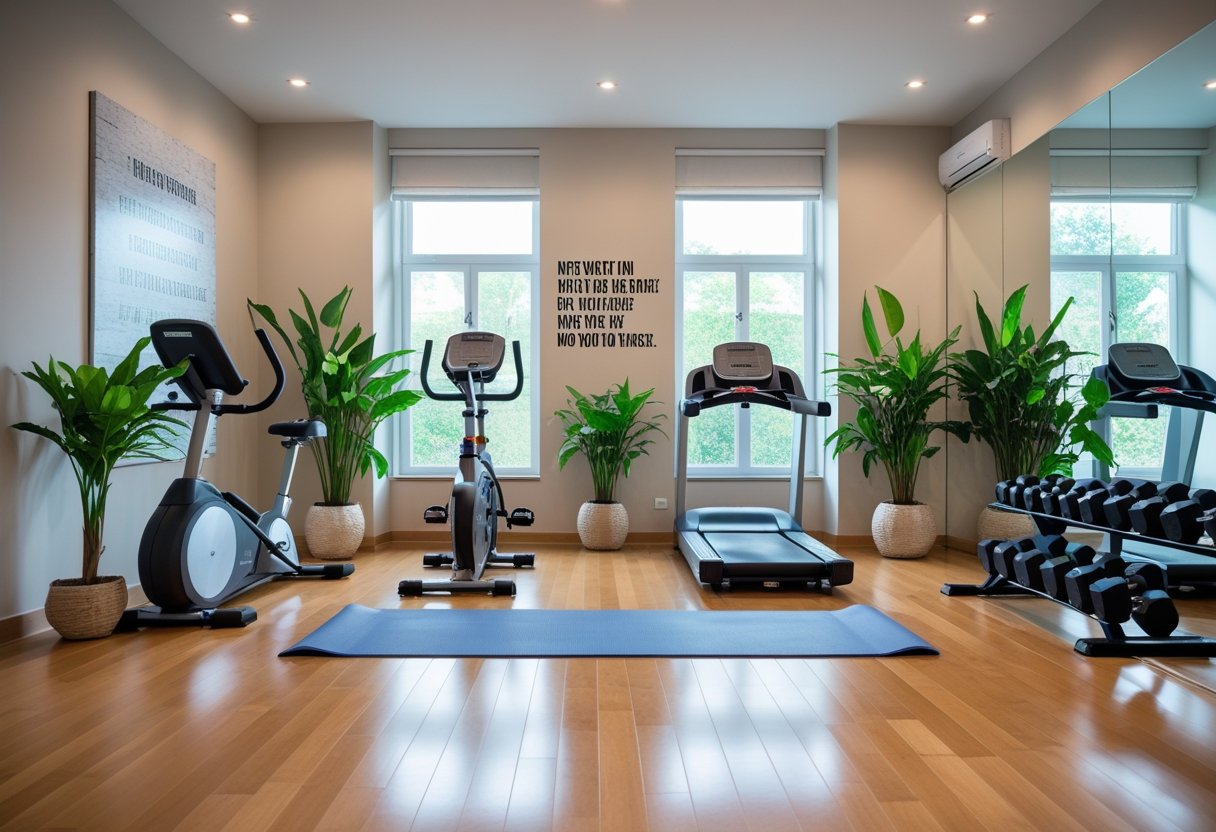
The right design choices can make the difference between a gym you avoid and one you want to use every day. Your color palette, lighting quality, equipment placement, and storage systems all work together to create a space that supports your fitness goals.
Color Schemes and Lighting
Your gym's colors affect your energy and focus during workouts. Bright colors like orange, red, and yellow boost energy levels and work well for cardio zones. Blues and greens create a calming effect that suits yoga and stretching areas.
Many people find that neutral walls with colorful accents offer the most flexibility. You can add color through equipment, mats, or wall art without overwhelming the space.
Natural light is your best option when available. It improves mood and helps regulate your body's natural rhythms. Position equipment near windows when possible.
For artificial lighting, aim for bright, even illumination that eliminates shadows. Install overhead LED lights with at least 50-70 foot-candles of brightness. Add task lighting near mirrors or specific workout zones. Dimmable lights let you adjust the mood for different activities like high-intensity training versus cool-down stretches.
Equipment Selection and Layout
Start with equipment that matches your actual workout routine. Don't buy machines you won't use just because they look professional.
For small spaces, prioritize:
- Adjustable dumbbells
- Resistance bands
- Yoga mat
- Pull-up bar
- Kettlebells
Larger gyms can accommodate cardio machines, weight benches, and cable systems. Place your most-used equipment in the most accessible spots. Keep at least three feet of clearance around machines for safe movement.
Arrange equipment by workout type. Group free weights together, create a cardio zone, and designate a stretching area. This organization helps you move efficiently through your routine. Position mirrors where they help you check form without creating distracting reflections.
Storage Solutions and Organization
Visible clutter reduces motivation and creates safety hazards. Wall-mounted racks keep weights organized and off the floor. They also make it easy to grab what you need quickly.
Install shelving units or cabinets for smaller items like resistance bands, jump ropes, and fitness accessories. Label storage areas so everything has a designated spot. This system saves time and keeps you focused on your workout instead of searching for equipment.
Use vertical space with hooks for yoga mats, foam rollers, and towels. Baskets or bins can hold cleaning supplies and personal items. A small dedicated space for your water bottle, phone, and workout log keeps essentials within reach.
Frequently Asked Questions
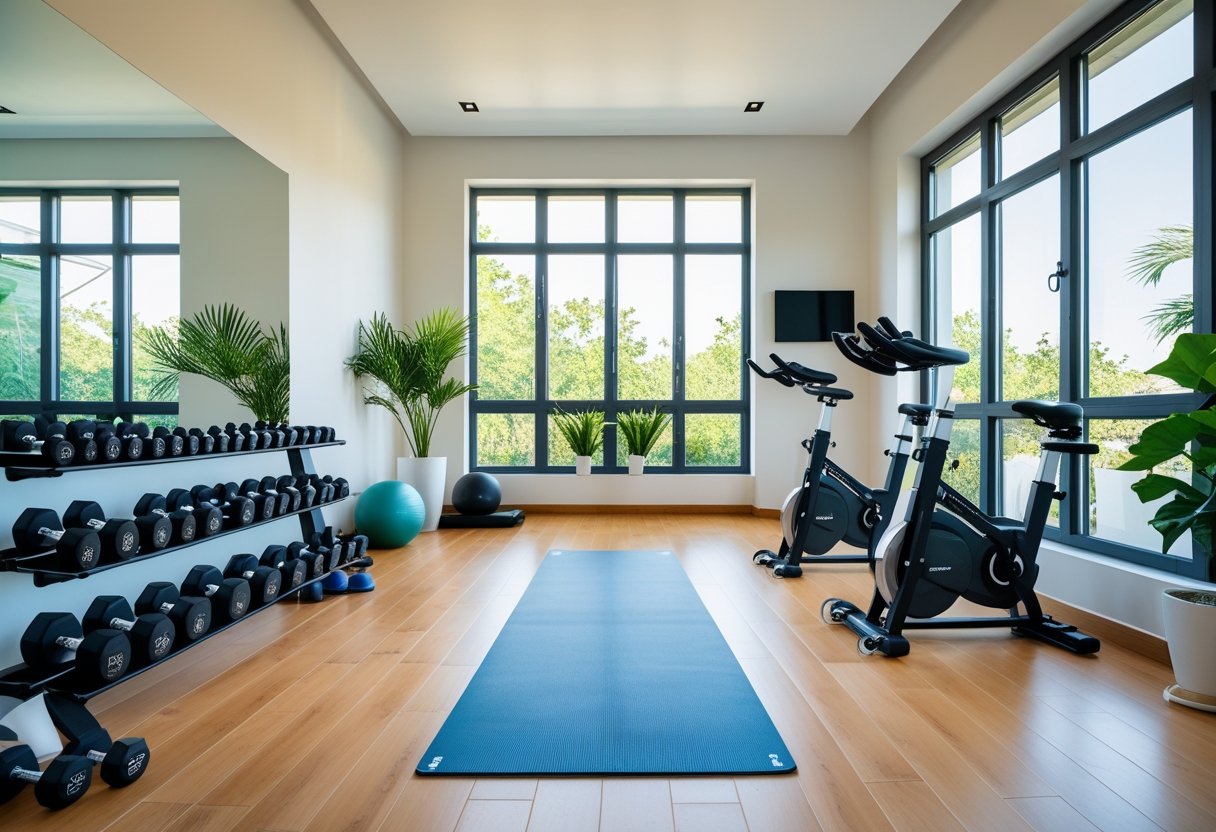
Setting up a home gym raises practical questions about equipment choices, space planning, floor protection, lighting needs, mirror placement, and storage systems. These answers will help you make informed decisions for your workout space.
What are the essential elements to include in a home gym for a balanced workout?
Your home gym needs equipment that covers strength training, cardio, and flexibility work. Start with adjustable dumbbells or resistance bands, which take up minimal space and support dozens of exercises.
Add a workout bench if you have room. It expands your exercise options significantly.
For cardio, choose one piece that matches your preferences. A jump rope costs less than $20 and provides intense cardio in any space. If your budget allows, consider a treadmill, stationary bike, or rowing machine.
Include a yoga mat for stretching, core work, and cooldowns. You'll also want a full-length mirror to check your form during exercises.
Keep a water bottle holder or small shelf nearby. Proper hydration during workouts is necessary for performance and safety.
How can I maximize space in a small room to create an effective home gym?
Wall-mounted equipment keeps your floor clear for movement. Install fold-down racks for weights or resistance bands that collapse against the wall when not in use.
Choose multi-purpose equipment instead of single-function machines. A set of adjustable dumbbells replaces an entire rack of fixed weights. An adjustable bench serves multiple exercises rather than owning separate flat and incline benches.
Vertical storage systems work well in tight spaces. Stack weight plates on vertical trees, hang resistance bands on hooks, and use corner shelving units.
Consider furniture that serves dual purposes. A storage ottoman can hold small equipment while providing seating between sets.
What are the best flooring options for a durable and safe home gym?
Rubber flooring tiles or rolls provide the best protection for your subfloor and equipment. They absorb impact from dropped weights and reduce noise transmission to rooms below.
These tiles typically come in 2x2 foot squares with interlocking edges. You can install them yourself in an afternoon without special tools or adhesives.
Foam tiles work for yoga, bodyweight exercises, and light cardio. They cost less than rubber but won't hold up under heavy weights or high-impact activities.
Horse stall mats offer a budget-friendly alternative. These thick rubber mats cost about $40-50 each at farm supply stores and provide excellent durability.
Your flooring should be at least 3/4 inch thick if you plan to do Olympic lifts or drop weights. For lighter training, 1/2 inch thickness works fine.
How can lighting design enhance the functionality and ambiance of a home gym?
Bright, even lighting helps you see equipment clearly and maintain proper form. Aim for 50-75 lumens per square foot in your workout space.
LED panels or track lighting work better than single overhead fixtures. They eliminate shadows that can hide safety hazards or make it hard to check your position in mirrors.
Add dimmer switches to control the intensity. You might want bright light for heavy lifting but softer light for yoga or stretching sessions.
Natural light improves mood and energy during workouts. Position equipment near windows when possible, but avoid glare on mirrors or screens.
Consider the color temperature of your bulbs. Cool white light (4000-5000K) creates an energizing atmosphere for intense workouts. Warm white (2700-3000K) works better for stretching areas.
Which mirror solutions are best for optimizing space and improving form in a home gym?
Full-length mirrors mounted directly to walls give you complete body visibility without taking floor space. Install them at least 60 inches tall and position them across from your main workout area.
Gym-grade acrylic mirrors weigh less than glass and won't shatter if equipment hits them. They cost more upfront but provide better safety in active spaces.
Mirrored walls create the illusion of more space in small gyms. Cover one entire wall with mirror panels rather than hanging individual mirrors with gaps between them.
Freestanding mirrors on wheels let you adjust positioning based on different exercises. You can move them aside when you need open floor space.
Place mirrors where you can see your form during key exercises. Position them to check squat depth, deadlift back position, and overhead press alignment.
What are creative ways to incorporate storage solutions in a home gym design?
Pegboard walls organize small equipment efficiently. Hang resistance bands, jump ropes, foam rollers, and lifting accessories on hooks that you can rearrange as needed.
Built-in shelving between wall studs creates storage without extending into your workout space. These recessed cubbies work well for water bottles, towels, and small weights.
Rolling carts keep frequently used items mobile. You can wheel them to different spots depending on your workout or push them aside when you need more room.
Under-bench storage maximizes unused space. Add bins or drawers beneath your workout bench to store weight plates, ankle straps, or resistance bands.
Ceiling-mounted racks hold long equipment like barbells, resistance bars, or yoga mats. They keep these items accessible while clearing valuable floor and wall space.
Label all storage areas so you can find equipment quickly. Clear bins let you see contents without opening each one.