



Dorm Room Color Designs: Essential Tips for Creating a Stylish and Functional Space
December 26, 2025
Moving into a dorm is a chance to show your style. Dorm room color designs can quickly change a small shared room into your own place. The colors you pick set the mood for studying, resting, and hanging out. With smart choices, you can make a big difference without painting or spending a lot.
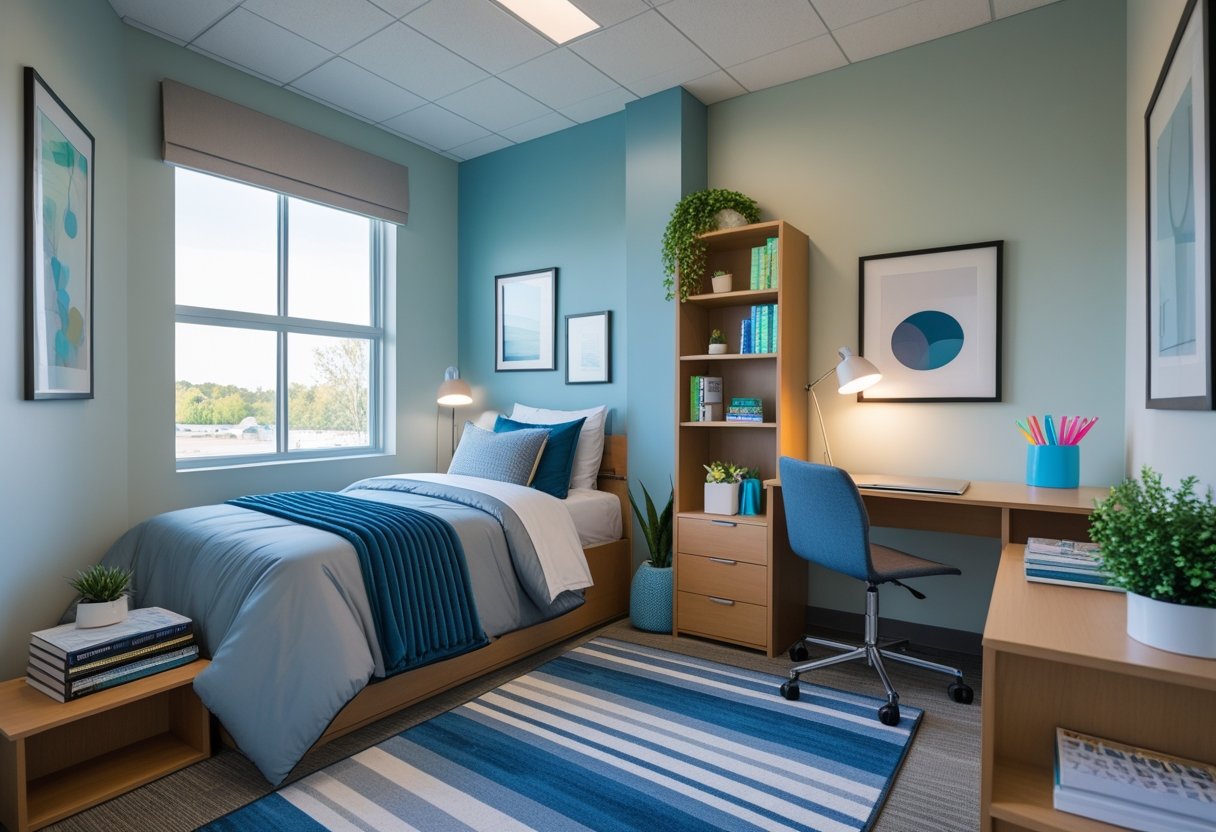
Why dorm room color designs matter
Good dorm room color designs do three main things: they make the room look put together, make the space feel bigger and brighter, and help with daily activities like focusing, sleeping, and socializing. Picking a simple color palette helps small items—bedding, rugs, curtains, pillows, and wall art—look matched and intentional.
Top color palettes for dorm rooms
- Calming neutrals: Soft gray, beige, and cream make a calm, timeless room.
- Bright and energetic: Turquoise, coral, and sunny yellow add energy. Use small accents so the room stays focused.
- Cool and focused: Navy, teal, and slate are deeper colors that help you concentrate. Add light fabrics to balance them.
- Monochrome chic: Black, white, and charcoal look modern and are easy to match with other items.
- Pastel sanctuary: Blush, mint, and lavender are soft and cozy and help you relax.
Practical tips for using dorm room color designs
- Start with a base: Choose one neutral color for large items like your comforter, curtains, and rug.
- Add two accent colors: Pick one bright color and one soft color to make the room look fun but not messy.
- Use textiles: Bedding, throws, and pillows are easy to swap and let you try new colors each season.
- Anchor with multipurpose pieces: Colorful storage bins, desk items, and a patterned rug help the room feel put together and save space.
- Keep scale in mind: Light colors make a room look bigger. Dark colors make it feel cozy but can make small rooms seem smaller.
Color choices for dorm room color designs
- Blue: Calm and helps you focus. Good for study areas.
- Green: Fresh and relaxing. Makes small rooms feel natural.
- Yellow: Bright and lively. Use it as small accents so it is not too much.
- Gray: Neutral and flexible. Goes well with almost any accent color.
Lighting and texture — how they change color
Light and texture can make colors look different. Use natural light, warm LED bulbs, desk lamps, or string lights to change the mood. Add different textures like knit throws, soft pillows, and woven baskets to make a simple color scheme feel cozy and interesting.
Budget-friendly ways to update dorm room color designs
- Swap bedding and pillow covers for an instant palette refresh.
- Add removable peel-and-stick wallpaper or decals for a focal wall (follow housing rules).
- Use colored storage boxes and matching hangers to create visual uniformity.
- Frame inexpensive prints or photos that echo your accent colors.
Quick checklist before you shop
- Choose a dominant neutral base.
- Select one bold and one soft accent color.
- Measure key pieces (bed, desk, window) to scale patterns and rugs.
- Plan lighting to complement your palette.
Final thoughts on dorm room color designs
Good dorm room color designs help you make the space comfy, stylish, and useful without big changes. Pick a matching color palette, use fabrics and lights to change the feel, and add a few items that show your personality. Small changes can make your dorm feel like a cozy home away from home.
Popular Dorm Room Color Palettes

Choosing the right color palette gives your room a clear look. You can pick calm single-color schemes or bright mixes that feel energetic. Pick colors that match your taste and help you relax or focus.
Monochromatic Schemes
A monochromatic color scheme uses different shades, tints, and tones of a single color. This approach creates a cohesive look that's easy to pull together on a student budget.
You can pick any base color and work with its lighter and darker versions. For example, a blue monochromatic scheme might include navy bedding, sky blue curtains, and powder blue accessories.
Popular monochromatic options include:
- All-white scheme - Creates a clean, spacious feel with cream, ivory, and bright white
- Gray scale - Combines charcoal, slate, and light gray for a modern look
- Pink variations - Ranges from blush to rose to dusty pink
- Blue tones - Works with everything from navy to cerulean to baby blue
This palette type works well in small dorm rooms because it doesn't overwhelm the space. You can add visual interest through different textures like knit blankets, smooth pillows, and woven baskets without introducing new colors.
Neutral and Minimalist Tones
Neutral palettes use colors like beige, cream, white, tan, and soft gray. These colors make the room feel calm. A calm room can help you study and relax.
With a neutral base, you can change accent items easily. Start with beige bedding and white storage bins. Then add small seasonal touches, such as a rust-colored pillow in fall or a green plant in spring.
Key neutral combinations:
- Cream + warm beige + soft taupe
- White + light gray + natural wood tones
- Off-white + sand + ivory
- Greige (gray-beige) + white + warm tan
Neutral colors work well in dorms because they match most furniture and walls. You do not need to paint or make big changes. The room will look neat and pulled together.
Minimalist neutral designs also make good photos for social media. Simple colors help cut down visual clutter in small rooms.
Bold and Vibrant Combinations
Bold color palettes use two or three contrasting or complementary colors to create energy and personality. These schemes make strong style statements and reflect your individual taste.
Trending vibrant combinations:
| Primary Color | Accent Colors | Style |
|---|---|---|
| Navy blue | Coral + gold | Preppy coastal |
| Forest green | Blush pink + cream | Modern earthy |
| Terracotta | Mustard + teal | Bohemian warm |
| Black | Hot pink + white | Contemporary chic |
You can balance bold colors by using them strategically. Apply your brightest color on 20% of items like pillows and wall art, a secondary color on 30% like bedding, and a neutral on the remaining 50%.
Vibrant schemes work best when you commit to your color choices across multiple items. Three matching throw pillows create more impact than three different bright colors scattered around your room.
Design Tips for Choosing Dorm Room Colors
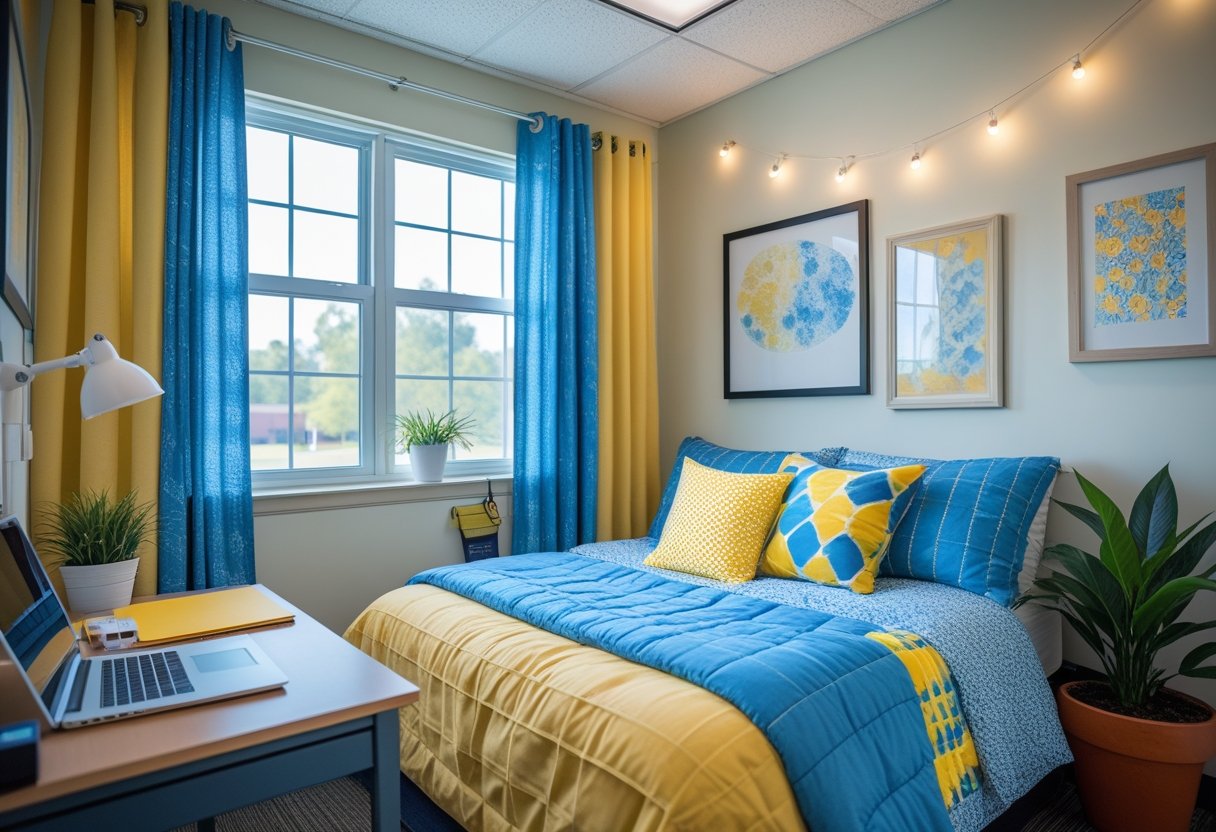
Picking the right colors for your dorm requires thinking about how shades affect space, reflect who you are, and work with what you already have. Smart color choices make small rooms feel bigger and create a space where you actually want to spend time.
Maximizing Small Spaces With Color
Light colors make dorm rooms look bigger than they really are. White, cream, light gray, and soft pastels reflect more light and push walls outward visually.
If you want darker colors, use them on one wall only. This creates depth without closing in the space. Pair a navy or forest green accent wall with lighter colors on the other three walls.
Colors that expand small spaces:
- Soft white
- Light blue
- Pale pink
- Mint green
- Lavender
Avoid using more than three main colors in a small dorm. Too many colors make rooms feel busy and cramped. Stick to one main color, one accent color, and one neutral shade.
Vertical stripes in light colors draw the eye up and make ceilings appear higher. You can add this through removable wallpaper, wall decals, or even fabric hangings.
Incorporating Personal Style in Dorm Room Color Designs
Choose colors that show what you like and how you live. Think about colors that make you feel calm, awake, or focused.
Think about what you do in your room. If you study a lot, blue and green can help you concentrate. If you need energy in the morning, add yellow or orange with bedding or wall art.
Look at the things you already own before you pick colors. Your clothes, photos, and keepsakes can help. Try using two or three colors from items you already have.
Match colors to your needs:
- Study-focused: Blue, green, soft gray
- Creative work: Coral, teal, mustard yellow
- Relaxation: Lavender, sage, warm beige
Don't pick a color just because it is popular. You will see these colors every day. Choose shades you truly like.
Balancing Color With Furniture and Decor
Most dorm furniture is neutral, so you can pick any colors you like. Use bedding, rugs, and curtains to bring in your main colors—this helps with dorm room color designs.
Start with big items first. Choose a color scheme for your bedding, then add smaller decor that matches. This stops you from buying things that clash.
Try the 60-30-10 rule. Use one main color for 60% of the room (bedding, big pieces), a secondary color for 30% (curtains, rug), and an accent color for 10% (pillows, small desk items).
If your walls are bold, keep furniture and bedding simple so the walls stand out. If your walls are white, add color with textiles and things you can remove later.
Use a desk lamp, storage boxes, and wall art to tie colors together. Small organizers can be both useful and colorful—for example, a small 3-tier desk organizer can hold supplies and add a matching pop of color. These little touches link different parts of the room without big changes to your dorm room color designs.
Frequently Asked Questions
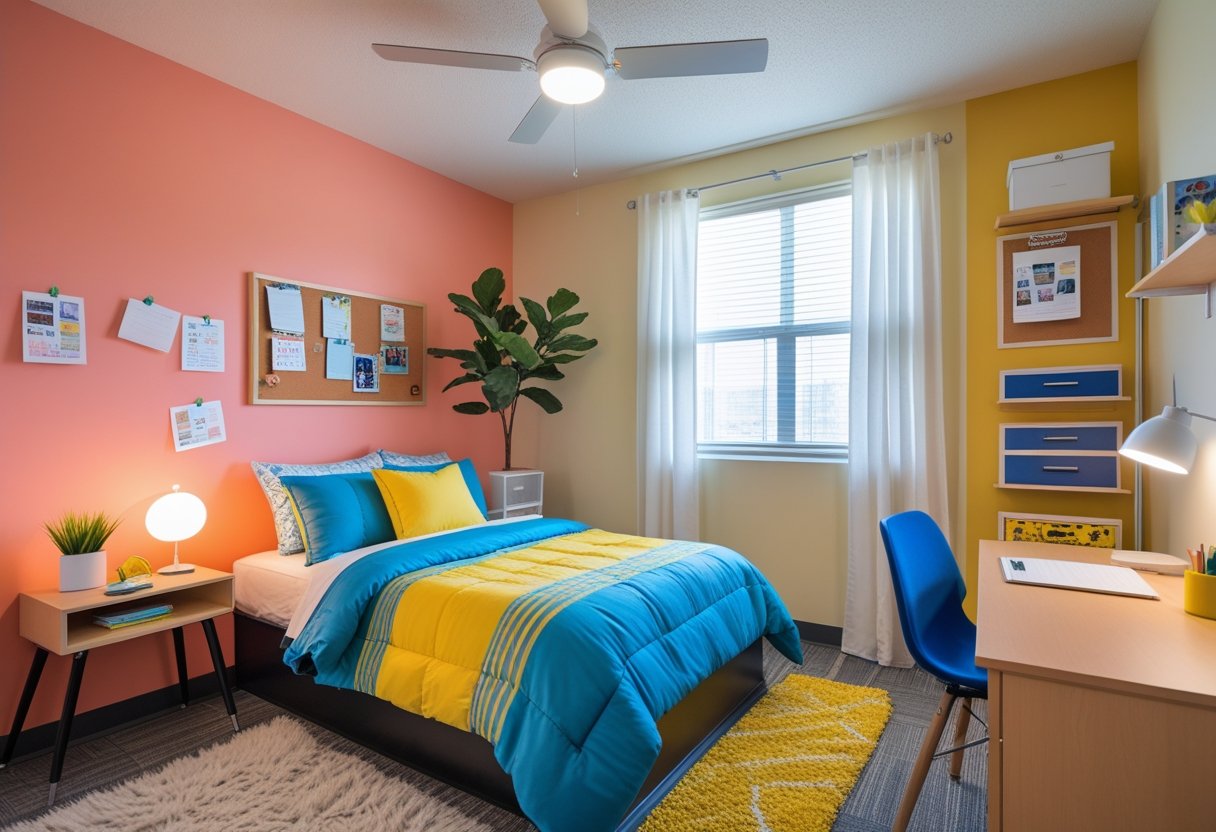
Color choices in dorm rooms affect comfort, space perception, and overall atmosphere. Understanding how to work with different palettes and coordinate with roommates helps create a functional living space.
What are some popular color schemes for dorm rooms to create a comfortable space?
Neutral colors like beige, gray, and white make a calm base. They match many items and help small rooms feel tidy. Soft pastels such as light pink, pale blue, or mint add a gentle touch. Earthy tones like terracotta, sage green, and warm brown bring a cozy, natural feel.
How can color be used effectively to maximize the perception of space in a small dorm room?
Light colors such as white, pale gray, and soft beige reflect light and make a room look bigger. Dark colors work best as small accents or one wall, not all the walls. Using one color in different shades (monochrome) keeps the room flowing and avoids strong contrasts that can make it feel smaller.
What are the best color choices for dorm room walls that complement most decor styles?
Soft white and off-white shades match any decor and let you change bedding and accessories without clashing. Light gray adds a bit more style and works with warm or cool accent colors. Beige and cream give a warm feel, fit both modern and classic rooms, and hide small wall flaws better than bright white. These are all good options for dorm room color designs.
How do light and dark colors affect the mood and atmosphere of a dorm room?
Light and warm colors—like pastel neutrals, yellow, and orange—reflect natural light to make small dorm rooms feel energizing, spacious, and fresh while cool and dark accents such as navy, charcoal, and deep green promote focus and relaxation.
For effective dorm room color designs, use light palettes as the base and reserve deeper hues as accents to create a cozy, study-friendly balance.
Dorm Room Color Designs: How to Add Color Without Painting
You can brighten a dorm room without painting the walls. Try removable wallpaper or wall decals. Hang a tapestry, posters, or fabric panels for big color and patterns. Use colorful bedding, throw pillows, or a bright comforter to change the look. Add a rug, curtains, or string lights for extra color and a cozy feel. All of these are easy to remove when you move out.
How can you coordinate dorm room colors with a roommate to ensure a cohesive design?
Start by discussing your color preferences to find common ground or agree on a neutral base, then choose a main color palette together and assign different accent colors to each side so you both have individual expression while maintaining harmony, and use matching or complementary bedding patterns that share common colors to tie the room together.
What are the best dorm room color designs for small rooms?
Light, neutral colors like soft whites, pale grays, and muted pastels make small dorm rooms feel larger and brighter. Use a consistent palette for walls, bedding, and large furniture, then add one or two accent colors for personality without overwhelming the space.
How can I choose a color scheme that matches my style?
Start with a base color you find calming, then pick one or two complementary accent colors. For modern looks choose monochromatic schemes with texture; for boho try warm earthy tones and jewel accents; for minimalism stick to neutrals with a single bold accent. Visual inspiration and mood boards help refine your dorm room color designs.
Are removable wallpapers and peel-and-stick tiles good for dorm room color designs?
Yes. Removable wallpaper and peel-and-stick tiles let you introduce patterns and bold colors without damaging walls. They’re ideal for renters and allow experimentation with trendy dorm room color designs that can be changed each year.
How do I use accent colors effectively in a dorm room?
Use accent colors in small doses: throw pillows, rugs, desk accessories, curtains, and artwork. An accent wall can work if allowed, but coordinating smaller accents across the room creates cohesion and makes your dorm room color designs feel intentional.
What colors are best for studying and focus?
Calming blues, soft greens, and muted neutrals promote concentration and reduce stress. Avoid overly bright, saturated colors near study areas; use them instead on non-work zones to maintain focus while still keeping lively dorm room color designs.
How can I mix patterns without clashing the dorm room color designs?
Limit patterns to two or three and keep at least one common color across them to tie the look together. Vary scale—pair a large geometric rug with smaller floral pillows—and balance busy patterns with solid colors to avoid visual overload.
What are budget-friendly ways to update dorm room color designs?
Swap textiles like bedding, curtains, and throw blankets; add removable wall decals; use inexpensive decorative items like framed prints, washi tape frames, and plants. Small changes in color accents can refresh the whole room without a big expense.
How do lighting and color interact in dorm room color designs?
Natural and artificial light change how colors appear. Warm lighting enhances warm tones (yellows, terracottas), while cool lighting sharpens blues and greens. Test paint chips and fabrics under your room’s lighting before committing to a dorm room color design.
Can roommates share a unified dorm room color design?
Yes—start by agreeing on a neutral base for walls and large furniture, then allow each person one or two accent areas (bedding, desk accessories) in their preferred colors. This creates a cohesive look while respecting individual tastes in dorm room color designs.
What dorm room color design trends are popular now?
Current trends include muted earth tones, soft pastels, sage green and terracotta combinations, and mixed neutrals with warm wood accents. Sustainable, nature-inspired palettes and high-contrast black-and-white schemes are also popular in dorm room color designs.