



Deck Planter Box Ideas: Design Options, Styles & Practical Uses
December 24, 2025
Deck planter boxes can change your outdoor space from plain to pretty without big fixes. They add color, texture, and life to your deck. You can grow flowers, herbs, or vegetables right outside your door.
Planter boxes work on large decks and small balconies. The right box can make your space feel cozy and personal. Choose simple designs, sturdy materials, and plants that fit your light and space. This will help your deck look great and be easy to care for.
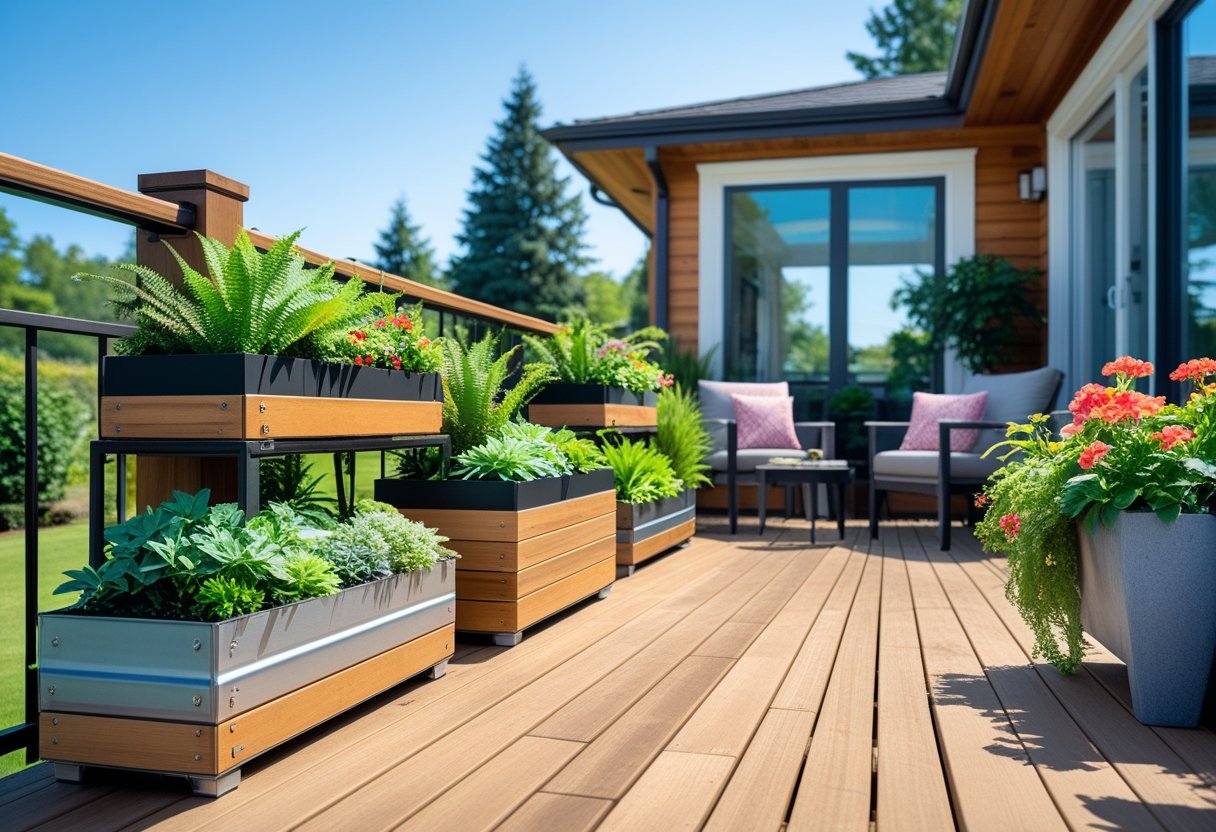
You can pick many styles like built-in boxes that match your deck, vertical planters that save floor space, or rolling boxes you can move around. Each kind has different benefits for your space and gardening needs. Some look nice, others are very useful, and many give you both beauty and function.
This guide shows different planter box types and design ideas for your deck. You will also learn how to arrange your boxes and choose plants that do well in containers. By the end, you will have easy, practical ideas to make an outdoor space you enjoy.
Types of Deck Planter Boxes and Design Options
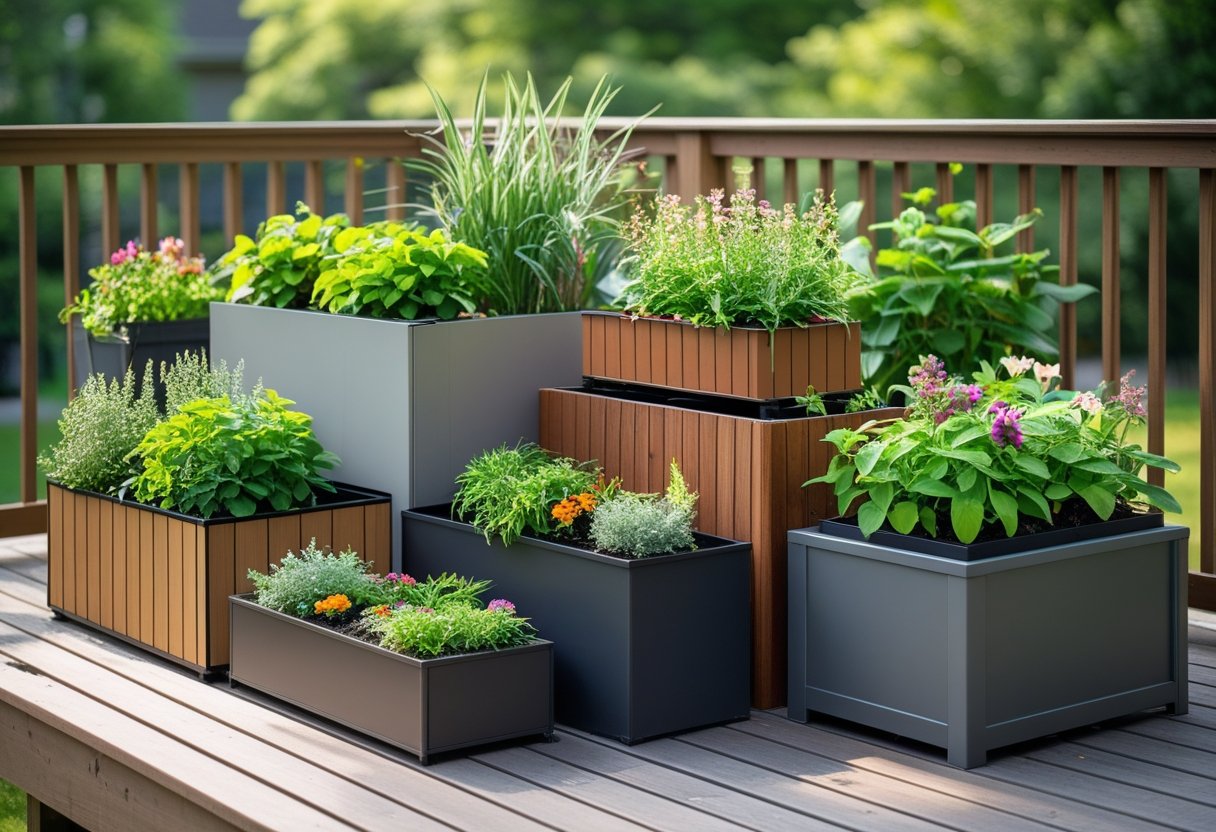
Deck planter box ideas include several types that fit different decks and gardening needs. Built-in planters, raised boxes and benches, railing planters, and rolling boxes each have different uses. Built-in planters attach to the deck, raised boxes add height and seating, railing planters save floor space, and rolling boxes let you move plants where needed.
Built-In Planter Boxes for Seamless Integration
Built-in planter boxes attach right to the deck and use the same materials as the deck boards. This makes them look like part of the deck instead of something extra.
They work well along the edges of the deck or between areas to divide space. You can build them at different heights to make the deck look more interesting and to separate places for eating, relaxing, or hosting guests.
Because they fit into the deck layout, built-in planter boxes save floor space. They are permanent, so you should choose their location carefully before building. They are often made with composite decking or treated wood that matches the deck boards.
Built-in planters also spread weight better across the deck. You can make them shallow for herbs or deeper for shrubs and small trees, depending on what plants you want to grow.
Raised Planter Boxes and Deck Planter Benches
Raised planter boxes sit elevated on legs or platforms, bringing plants up to a comfortable height. This design improves drainage and makes planting and maintenance easier on your back.
You can build raised boxes from wood, composite materials, or cedar. The elevation keeps plants away from ground pests and allows better air circulation around roots.
Deck planter benches combine seating with planting space. These dual-purpose pieces feature built-in planters on one or both sides of a bench seat. You get comfortable outdoor seating surrounded by flowers, herbs, or greenery.
Planter benches work especially well on smaller decks where you need to maximize every square foot. The plants create a natural backdrop for seating areas and add privacy without blocking views completely.
Both raised boxes and benches can be freestanding or attached to deck railings. Choose weather-resistant wood like cedar or composite materials that won't rot or require constant maintenance.
Deck Railing Planters and Space-Saving Solutions
Deck railing planters hook onto your deck rails and do not use floor space. These hanging boxes are great for small decks, balconies, or any place where you want the deck clear.
Most railing planters have brackets you can adjust to fit common rail sizes. You can put them on the inside or outside of the rail. Putting them on the inside makes watering easier.
These planters are good for trailing plants, herbs, and small flowers. The raised position gives plants more sun and keeps them at eye level. Before adding many boxes, check that your railing can hold the weight of soil and water.
Vertical planters also save space by growing plants up instead of out. Tiered designs let you grow more plants in a small area and add height to flat deck walls.
Hanging rail boxes are usually 24 to 36 inches long and 6 to 8 inches deep. Make sure the plants you choose will not get too heavy for the brackets.
Rolling and Mobile Planter Boxes
Rolling planter boxes sit on caster wheels so you can move plants around your deck easily. This makes it simple to follow the sun during the day or move plants when you need space for guests.
Moving your planters gives you more control over growing conditions. Put sun-loving plants in bright spots in summer and move tender plants to safe places before storms. You can even bring rolling boxes indoors in winter.
Most rolling planter boxes have locks on the wheels to keep them steady. Choose boxes with strong frames and wheels made for outdoor use so they do not rust or crack.
These planters are great for container vegetable gardens because you can change their sun exposure as seasons change. They also make cleaning the deck easier since you can roll them out of the way.
If you will move boxes often, pick lightweight materials like resin or thin wood. Heavier materials like thick wood or concrete are better if you want the planter to stay in one place. For more deck planter box ideas, think about how often you will move them and how much weight your deck can hold.
Styling Your Deck Planter Boxes and Choosing Plants
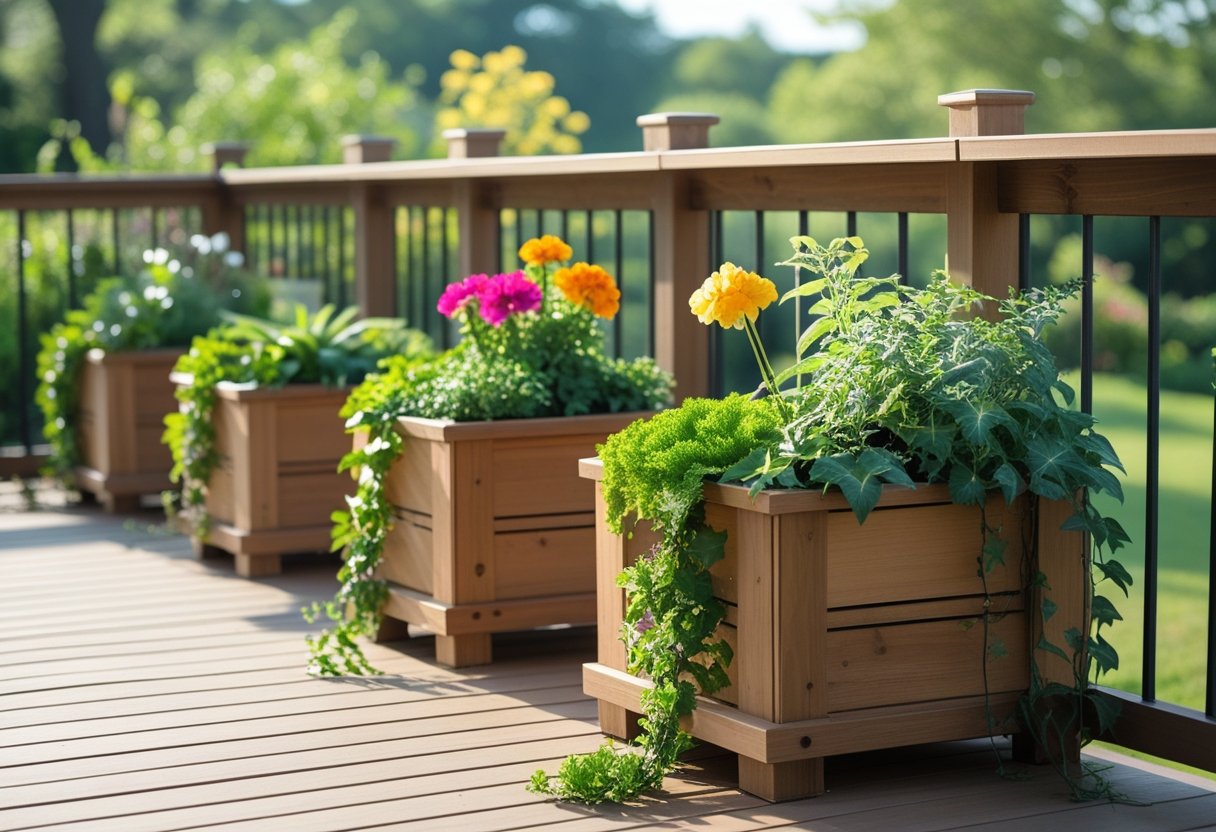
Styling your deck planter boxes means choosing plants that look good together and are easy to care for. Use the space you have well, match the planters to your outdoor furniture, and pick plants that do well in your weather. Try to balance color and shape while keeping maintenance low.
Vertical Gardening and Modern Planter Styles
Vertical gardening helps when your deck is small. Use tall planters or stack boxes to add height. This gives room for more plants and looks nice. Trailing plants, ornamental grasses, and small shrubs work well in vertical setups.
Modern planter boxes with simple lines fit well with contemporary furniture. Metal, fiberglass, or composite planters resist sun and rain and last longer. Self-watering planter boxes have reservoirs that cut down on daily watering, which is useful if you travel or are very busy.
Curved planter boxes can soften a deck with many straight lines and make the space more interesting. Freestanding planters let you move plants as they grow or as the seasons change. Custom planters made for your deck size give a neat, planned look for your deck planter box ideas.
Colorful Planters and Arrangements
Colorful planters give your deck a fresh look without big changes. Bright painted boxes in blue, yellow, or red become eye-catching spots that match flowering plants. You can also use plain planters with bright flowers for a balanced look. These deck planter box ideas are easy and fun.
Mix plants of different heights and textures in each planter to make it look full. Put tall ornamental grasses with trailing vines and medium-height flowers to fill the space. Coleus has strong leaf colors like burgundy, lime green, and copper and does well in some shade.
String lights over colorful planters and you can enjoy your deck at night. Place planters near seats or under a pergola to create cozy spots surrounded by plants.
Selecting Flowers, Shrubs, and Herbs for Planters
Flowers such as petunias, marigolds, and geraniums do well in deck planters that get at least six hours of sun each day. For shady decks, try impatiens and begonias; they bloom without full sun. Annuals give color all season but must be replanted each year.
Shrubs add shape and interest to planter boxes year-round. Small Japanese maples stay compact and have red or purple leaves. Boxwood and dwarf conifers keep their shape with little pruning, so they are good for low-maintenance plans.
Herbs like basil, thyme, rosemary, and parsley grow well in self-watering planters that keep moisture steady. Put herb planters near the kitchen door so they are easy to reach while cooking. Raised planters give herbs good drainage and keep them at a comfortable height for harvesting.
Frequently Asked Questions about Deck Planter Box Ideas
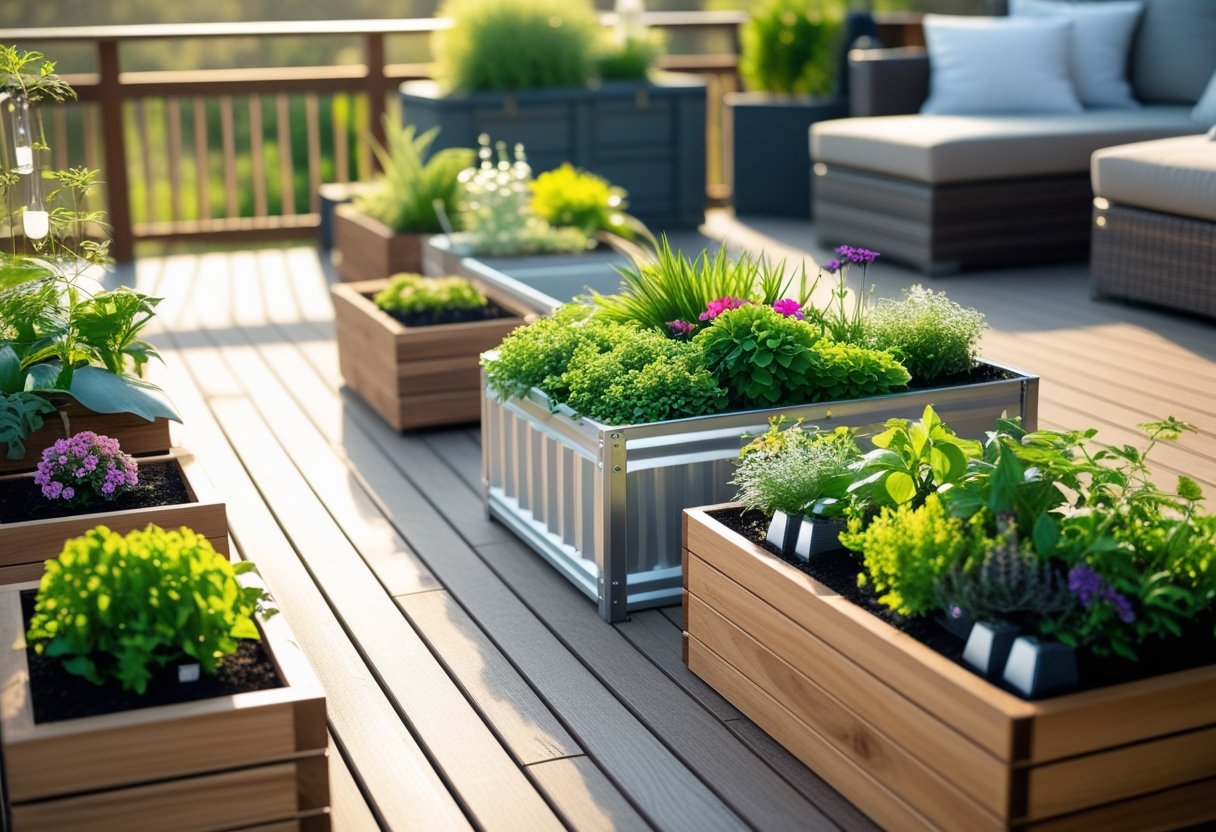
Building and styling deck planter boxes means picking the right materials, like cedar wood or composite. You can add seats that include planters, choose proper drainage for railings, and pick plants that fit your climate and how much sun your deck gets.
How can I add benches and planter boxes to my deck?
Planter benches combine seating and plants in one piece. You can buy or build benches that have planter boxes on the sides or the back. This creates a nice spot to sit surrounded by plants.
Place planter benches along the edges of your deck to make clear seating areas. This works well on small decks where space is limited.
Choose benches that match your deck materials. A wooden bench with cedar planters looks natural. A bench with metal planters gives a modern look.
Be sure the planter boxes have drainage holes so water can escape and not damage the bench. Line the inside with landscape fabric so soil does not wash out.
What are some creative outdoor deck planter box ideas to improve my space?
Vertical tiered planters stack plants up instead of spreading them on the floor. They save space and add visual interest at different heights.
Mix different planter styles and materials for a collected look. For example, use rustic wooden boxes with sleek metal or concrete planters for contrast.
Build a privacy wall with built-in planters to block views and add greenery. This gives you privacy and extra vertical space for trailing plants or vines.
Paint planters in bold colors that match your deck furniture. Use weather-resistant paint so the color stays bright in sun and rain.
DIY crate planters are an affordable option. Repurpose old wooden crates by adding drainage holes and staining or painting them to match your style.
What types of planters work best for deck railings?
Hanging box rail planters hook over the top rail and hang on both sides of the railing. They do not use floor space.
Pick rail planters with adjustable brackets so they fit different railing widths. Many fit railings about 2 to 6 inches wide.
Choose materials that hold up outside. Metal and resin resist fading and cracking better than some plastics.
Make sure the planters have drainage holes in the bottom. Without drainage, water can collect and harm the plants and the deck railing.
Choose planters deep enough for roots. Most herbs and flowers need about 6 to 8 inches of soil to grow well.
How can I build a floating deck that includes planter boxes?
Plan the deck so planter boxes are built into the edges or corners. This makes the planters look like part of the deck.
Build the planter frames with the same wood as the deck joists. Use pressure-treated lumber so the wood resists rot from wet soil.
Line each planter with a waterproof material before adding soil. Heavy-duty pond liner or rubber roofing works well to protect the wood.
Add drainage by drilling holes in the bottom and directing water away from the deck base. Space holes every 6 to 8 inches.
Make planter boxes at least 12 inches deep for most plants. Deeper boxes support larger roots and hold more soil to keep moisture longer.
What are the best materials to use for building a durable deck planter box?
Cedar naturally resists rot and insects without chemical treatment. This wood weathers to a silver-gray patina over time and handles moisture exposure well.
Pressure-treated lumber costs less than cedar and lasts for years. Make sure any wood touching soil uses ground-contact-rated pressure treatment.
Composite materials require almost no maintenance and resist warping and splitting. These planters look like wood but don't need staining or sealing.
Concrete planters handle all weather conditions and provide excellent stability. They work well for larger plants that need substantial root space.
Metal planters made from galvanized steel or aluminum resist rust and offer a modern appearance. Line metal planters with landscape fabric to prevent soil contact with the metal.
Avoid untreated pine or other softwoods that rot quickly when exposed to moisture and soil.
Which plants are best for deck planter boxes all year?
Herbs like basil, rosemary, thyme, and parsley do well in deck planters if they get 6 to 8 hours of sun each day. They need soil that drains well and regular watering.
Perennials such as lavender, sedum, and ornamental grasses come back each year. They give your deck color and texture with little replanting.
Annual flowers like petunias, marigolds, and geraniums bloom brightly in summer. You plant new ones each spring for fresh color.
Evergreen shrubs, for example boxwood, stay green in winter in many places. They work well in larger planters and keep the deck looking neat when other plants die back.
Pick plants based on how much sun your deck gets. Full sun spots need plants that can handle 6 or more hours of direct sun. Shady decks do better with plants like hostas or ferns.
Think about your climate zone. Cold-hardy plants can survive winter in outdoor planters. Tender plants may need to go inside or be replaced each season.