


Circus Theme Interior Design: Bold Color, Nostalgia & Theatrical Flair
December 19, 2025
Circus theme interior design uses bright colors, playful patterns, and dramatic touches to make rooms feel lively and fun. It borrows ideas from the classic big top, such as red and white stripes, primary colors, and whimsical props. You can use this style in many rooms, including kids' bedrooms and living rooms.
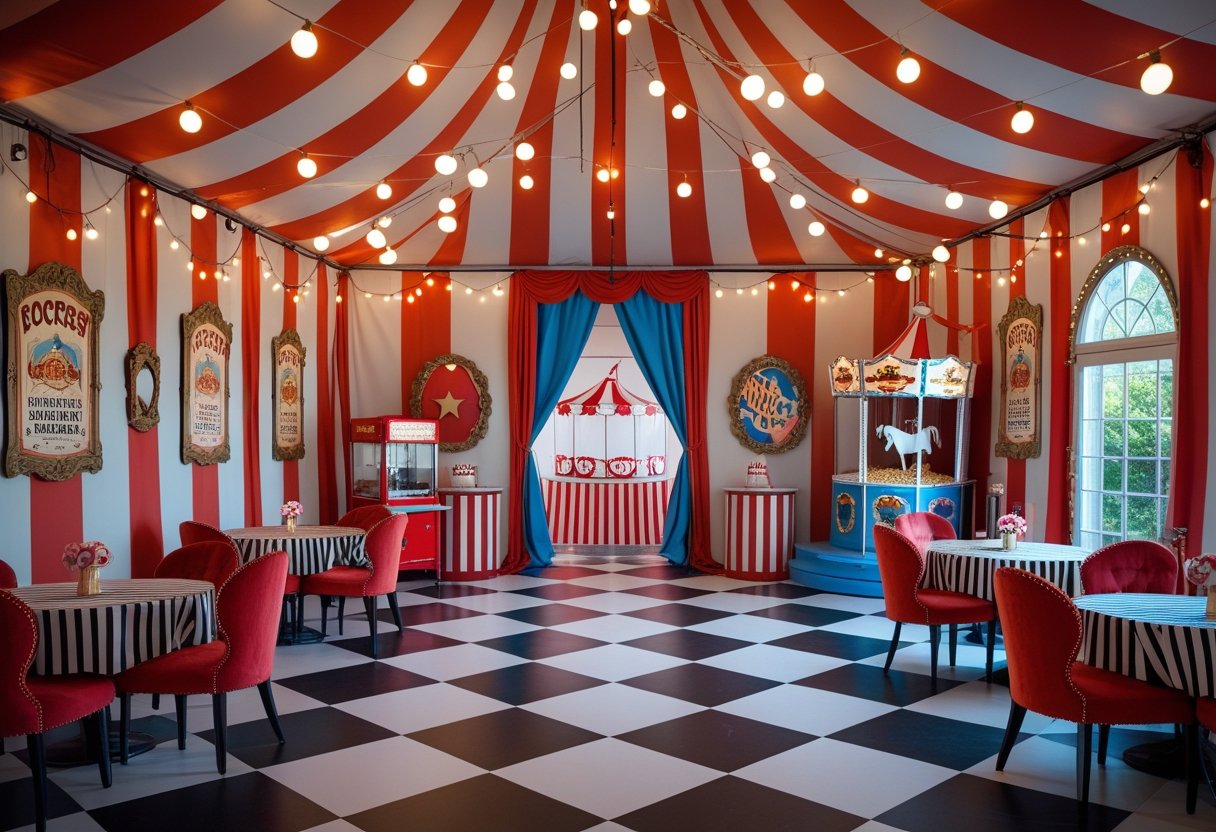
The key to good circus design is balancing bold looks with practical living. When you balance bright pieces with simpler backgrounds, the room stays useful and not too busy. Done well, the style can feel grown-up and exciting, not just childish. The goal is to pick a few strong items and pair them with neutral walls or furniture.
This short guide explains the main ideas of circus design. You will learn how to choose colors, pick props, and use lighting. It also gives tips for styling your space and answers common questions about making this energetic look work in your home.
Core Principles of Circus Theme Interior Design
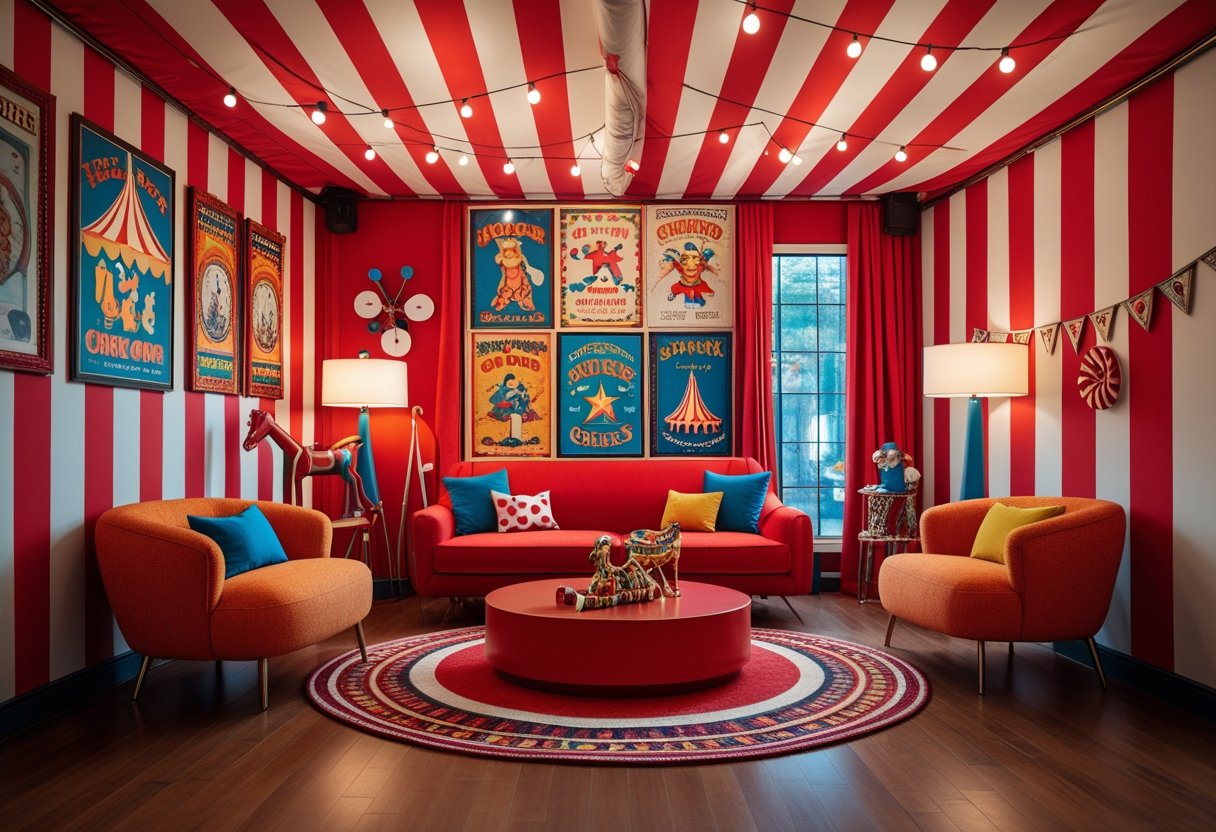
Circus theme interior design uses bright colors, strong patterns, and dramatic shapes to make a fun space. It mixes classic circus looks with simple, modern ideas.
Big Top Aesthetics and Circus Tents
The circus tent look is the main idea. You can copy this by hanging fabric from the ceiling or walls so it looks like a tent. Light fabrics like muslin or cotton are good choices.
Try to get a peaked ceiling look by gathering fabric at one center point and letting it spread out. This makes the room feel taller and more dramatic.
If you have a big room or outdoor space, you can build a real tent structure. In smaller rooms, use smaller tent touches, like a fabric canopy over a bed or seating area. That keeps the circus feel without crowding the room.
Using canvas texture and rope details helps the tent feeling too. Add these in pillows, wall hangings, or furniture accents so you get the idea without big construction.
Color Palette and Primary Colors
Primary colors are most important in circus design. Bright red, yellow, and blue bring energy, so use them in bold amounts around the room.
Red adds excitement and works well on a wall or on furniture. Yellow feels cheerful and is nice in lights and small decorations. Blue cools the look and is good for rugs, fabrics, or painted pieces.
Traditional Circus Color Applications:
- Red: Accent walls, upholstery, curtains
- Yellow: Cushions, lighting, artwork frames
- Blue: Rugs, painted furniture, wall sections
- Black & White: Trim, contrast elements, flooring
Use white or cream as a neutral background so the bright colors do not feel too busy. These light tones give the eyes a rest. Black can be used for sharp lines and contrast.
Striped Patterns and Graphic Motifs
Vertical red and white stripes make a room feel like a circus tent. Use them on a wall, curtains, or a rug. Vertical stripes can make the ceiling look higher.
Polka dots add a fun touch and balance the stripes. Put dots and stripes on different items, not on the same piece, so the room does not look too busy.
Simple shapes like diamonds, chevrons, and stars add movement. Use these on pillows, lampshades, or wall art. Change the size of patterns around the room for more interest.
Where you place a pattern matters. Large stripes work well on one main wall. Small patterns are best for accessories. Mix patterns with solid colors to keep the room calm.
Nostalgia and Theatrical Flair
Old circus posters make the room feel vintage. Frame them or make a gallery wall with pictures of performers and animals. Reprints are cheaper and still look authentic.
The right lighting can make a room feel like a stage. String lights or marquee bulbs give a warm, showy glow. Use dimmer switches to change the mood.
Props like juggling pins, an old ticket booth sign, or wooden carnival signs add interest. Find these at flea markets or antique shops. Choose a few pieces so the space does not get cluttered.
Velvet and brocade fabrics make furniture and curtains look rich. Tassels and fringe add movement. Pick these details in the same color scheme so everything matches.
Key Elements and Styling Techniques for Circus-Inspired Spaces
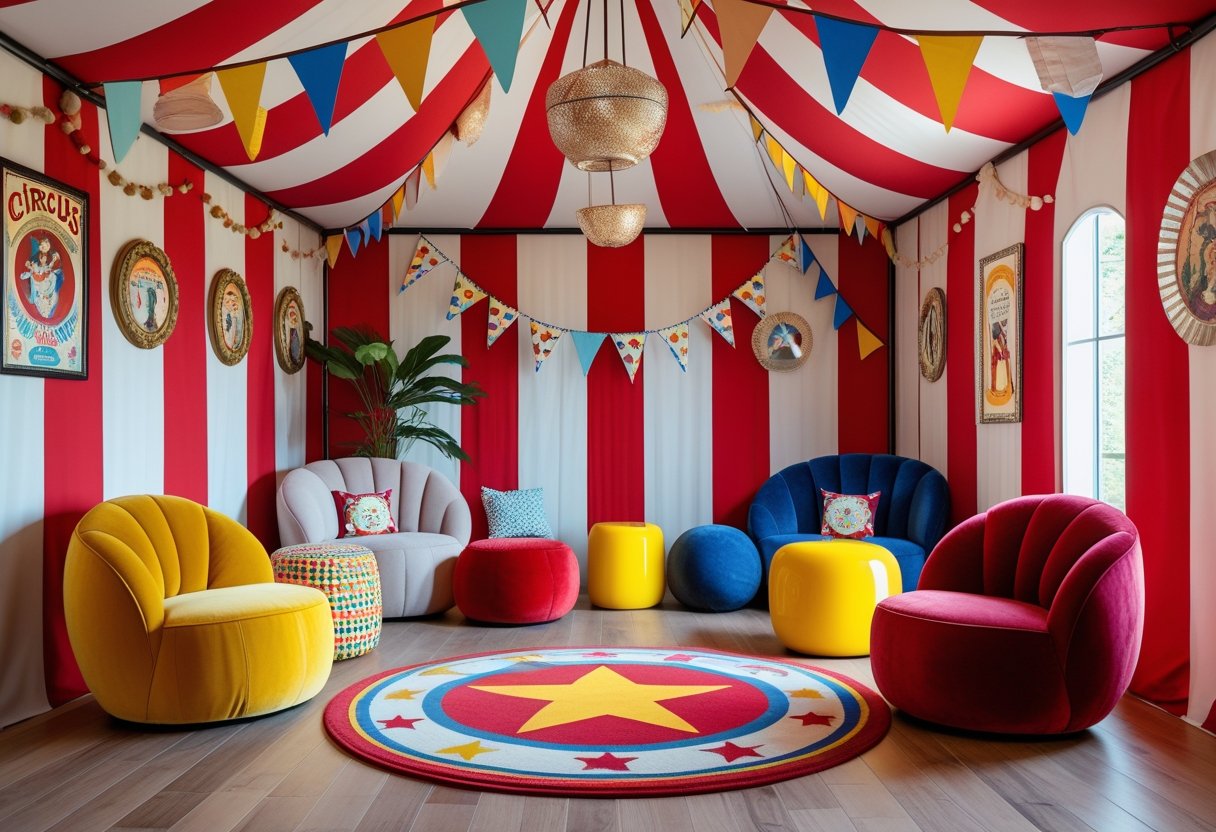
Circus theme interior design uses bold visuals and simple styling to make a home feel fun and lively. The right mix of performer details, playful patterns, and careful balance will help you create a space that feels exciting but not messy.
Ringmaster and Performer Details
The ringmaster look adds drama with neat, formal pieces. Use furniture in deep reds and blacks, buttoned velvet chairs, and brass or gold handles. Top hats on shelves or on a coat rack can be both decor and useful.
Military-style jackets can add interest on walls or over chairs. Look for jackets with gold trim, shoulder decorations, or fancy buttons. They work well in entryways or home offices to make a strong first impression.
Use clown ideas sparingly so the room does not feel childish. Try abstract art with bright shapes in primary colors or large sculptural pieces instead. Old circus posters showing acrobats and aerial acts give real circus style without relying on clown images.
Theatrical lights like marquee bulbs or spotlight wall lamps help set the mood. Add dimmer switches so you can change how dramatic the room feels.
Animal Motifs and Whimsical Decor
Use animal prints and pictures that hint at circus history but still look good. Try zebra-print cushions, leopard pillows, or a lion picture as small accents. One zebra chair can look great, but covering a whole room in animal prints can feel too busy.
Choose artistic or simplified animal items instead of exact copies. A small bronze elephant or an abstract tiger painting looks classy. Old-style animal drawings in simple frames can make a neat gallery wall.
Small props add personality without changing the room. A decorative ladder leaned against a wall can suggest acrobats. Juggling pins in a bowl or old popcorn tubs used as plant pots bring real circus touches.
String lights and fabric bunting give a festive feel. Red-and-white striped fabric hung from the corners of the ceiling can copy a tent look without major work.
Balancing Boldness with Comfort
Keep your circus-themed room useful by using restraint. Pick one or two walls for bold stripes or bright colors and keep the other walls neutral. This prevents visual overload and makes the room feel bigger.
Comfortable seating is still important. Choose plush sofas and chairs in rich fabrics like velvet or chenille. These textures feel luxurious and jewel-tone colors (emerald, ruby, sapphire) match circus palettes.
Mix patterns carefully by changing their size. Pair large stripes on curtains with small polka dots on throw pillows. Add solid colors so the eye can rest. A white or cream area rug helps ground bold furniture.
Good storage keeps things tidy. Built-in shelves show off circus collectibles and keep them organized. Trunk-style coffee tables hide items and fit the old traveling-show look.
Frequently Asked Questions
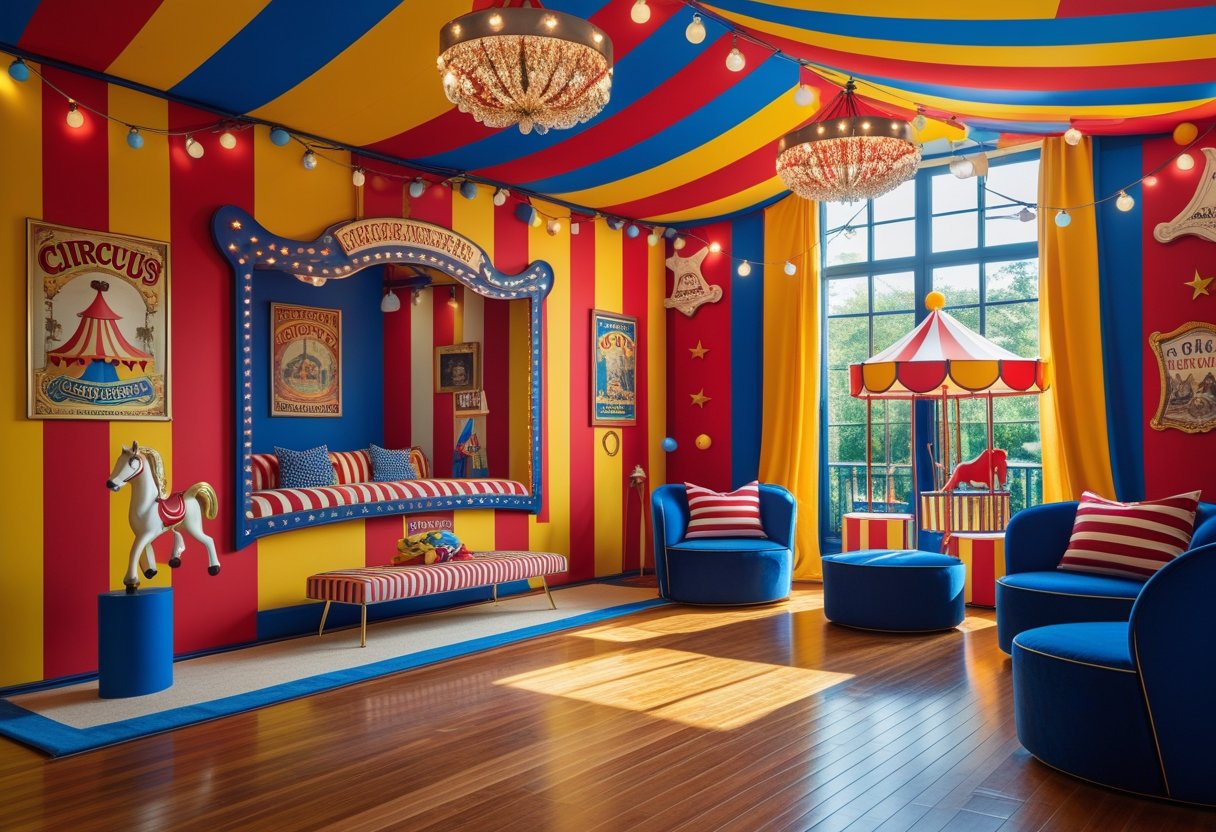
Circus theme interior design brings up common questions about colors, furniture, and how to make a space feel fun but not messy. The answers here explain patterns, lighting, art placement, and choices that work for different ages.
What are the essential elements to incorporate when styling a room with a circus theme?
Red and white stripes are a classic circus look. Use them on walls, the ceiling, or on fabrics to copy the tent feel.
Stars and diamond shapes add interest beyond stripes. Put these patterns on an accent wall, pillows, or a rug.
Circus pictures, like acrobats, animals, or old posters, give the room a real circus vibe. Colorful flag garlands add movement and fun.
Soft fabrics like velvet and satin feel theatrical. A canopy over a bed or reading corner can make a small tent-like space.
How can I achieve a balanced look using bold circus colors without overwhelming the space?
Use neutral walls as a base and add circus colors with accessories. This helps control how bold the theme looks.
Pick two or three main colors instead of using every bright color. Red, yellow, and blue often work well together.
Put bright colors in small items like pillows, art, and decorations. Keep big furniture in neutral tones like white, gray, or wood.
Paint one accent wall with a circus pattern and keep the other walls plain. This keeps the theme but avoids making the room feel too busy.
What are some child-friendly design tips for creating a circus-themed bedroom?
Use colors and decorations sparingly so the room does not feel too busy. A few strong pieces look better than filling every surface with circus items.
Paint the ceiling with red and white stripes to make it feel like a tent. You can continue the stripes a little way down the walls or stop them at the ceiling edge.
Add fun play items like gym rings or a small trapeze bar for active kids. These can be both decoration and a place to play.
Pick washable fabrics for bedding and curtains because kids' rooms need cleaning often. Use removable wall decals so you can change the look as your child grows.
Keep storage easy to reach with colorful bins or trunks that match the theme. This helps kids tidy up and keeps the circus feel.
Can you suggest ways to include circus-themed art and decor in a tasteful and elegant manner?
Choose vintage circus posters with softer colors instead of bright, cartoon images. Put them in black or gold frames to make them look classy.
Use the harlequin diamond pattern in calm colors like gray and white. This gives a circus link without looking childish.
Show one big statement item like an old circus prop instead of many small pieces. A vintage wooden ring toss or a row of pennant flags can be the room's focus.
Add small gold touches with picture frames, lamp bases, or drawer pulls. These bits hint at circus glam in a subtle way.
Pick good-quality textiles with circus-inspired patterns in adult colors. A throw pillow with soft navy and cream stripes can work in more grown-up spaces.
How can lighting be used to enhance the ambiance in a circus-theme interior design?
Marquee-style lights with visible bulbs around mirrors or doorways bring a carnival feel. They remind people of circus signs and make the room feel theatrical.
String lights in warm white tones make the space softer but still festive. Hang them across the ceiling or around a canopy for gentle light.
Use spotlights or track lights to shine on special items like artwork or props. This copies how circuses use spotlights on performers.
Add a bold chandelier with colorful crystals or an unusual shape to be the room's focal point. It adds drama without needing circus-only fixtures.
Dimmer switches let you change how bright the lights are for different moods and times of day. Lower light in the evening can make a child's room calm and cozy.
What furniture pieces work best in a living space that aims to capture a circus theme atmosphere?
Round or curved furniture echoes the circus ring and tent. An oval coffee table or curved sofa keeps the theme consistent.
Trunk-style storage pieces remind people of circus travel trunks and help keep things tidy. They can be used as coffee tables, end tables, or toy boxes.
Upholstered pieces in velvet or leather add a dramatic texture. A velvet armchair in deep jewel colors feels grand like a circus show.
Old wooden furniture with painted details fits the nostalgic circus look. Look for dressers or side tables with simple trim or turned legs.
Low seating like poufs or floor cushions makes a casual, playful spot to sit. These work well for the fun, relaxed side of a circus-theme design.