



Under Sink Kitchen Organization Ideas That Maximize Every Inch
August 19, 2026
The cabinet under your kitchen sink is probably the messiest spot in your whole kitchen. Bottles fall over, sponges get lost, and the pipes take up space right in the middle.
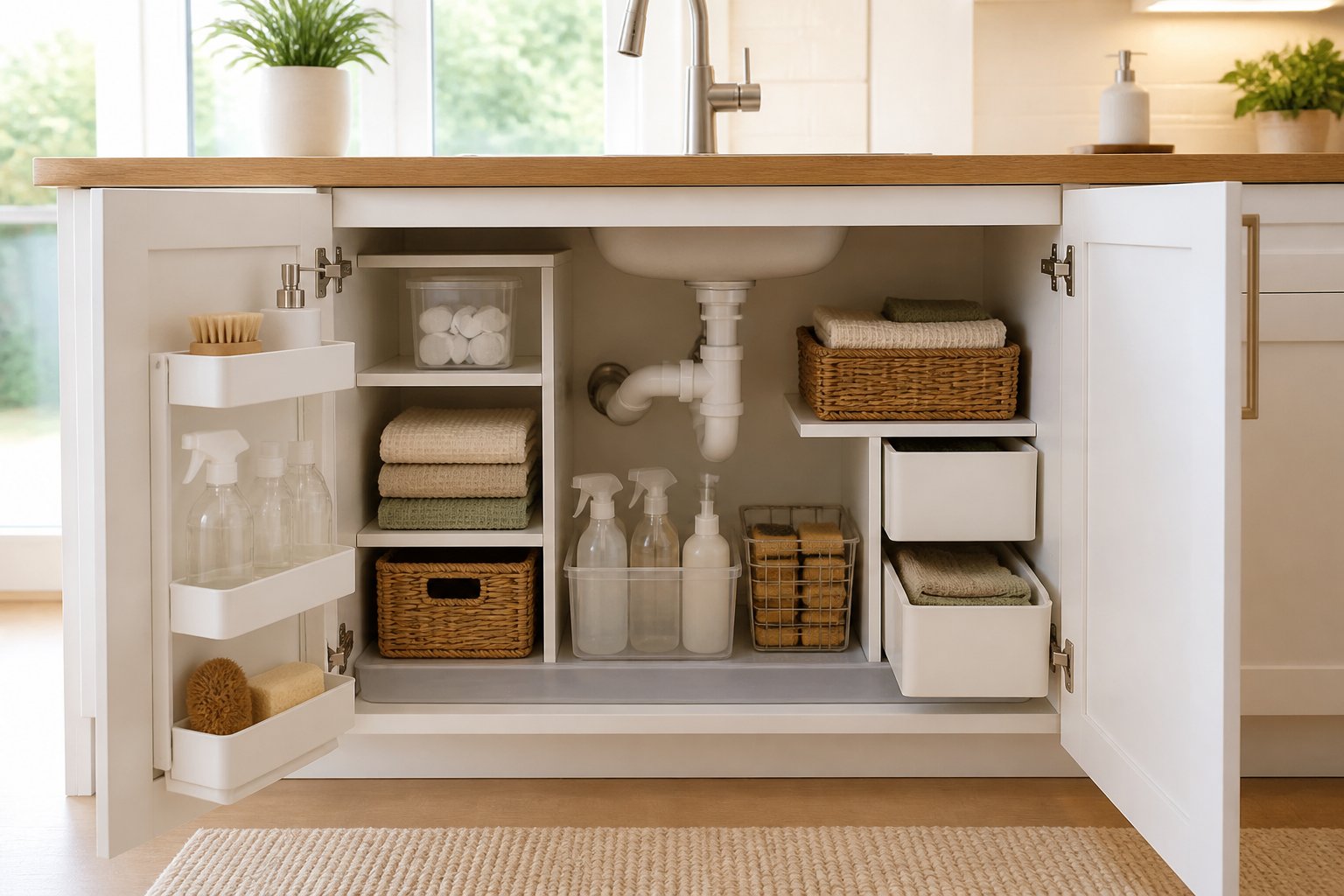
The best way to organize under your kitchen sink is to work around the plumbing with pull-out bins, tension rods, and stackable shelves that leave room for pipes while keeping everything visible and easy to reach. That simple approach turns a jumbled pile into a space you can actually use.
You don't need custom cabinets or a big budget to make it happen. A few smart tools and a clear plan can fix this cabinet in an afternoon, and the ideas below will show you exactly how.
Key Takeaways
- Measure around your pipes and disposal before you buy any organizer.
- Pull-out bins, tension rods, and tiered shelves make the most of tight space.
- Keep items you use daily in front so you can grab them fast.
Plan The Cabinet Layout
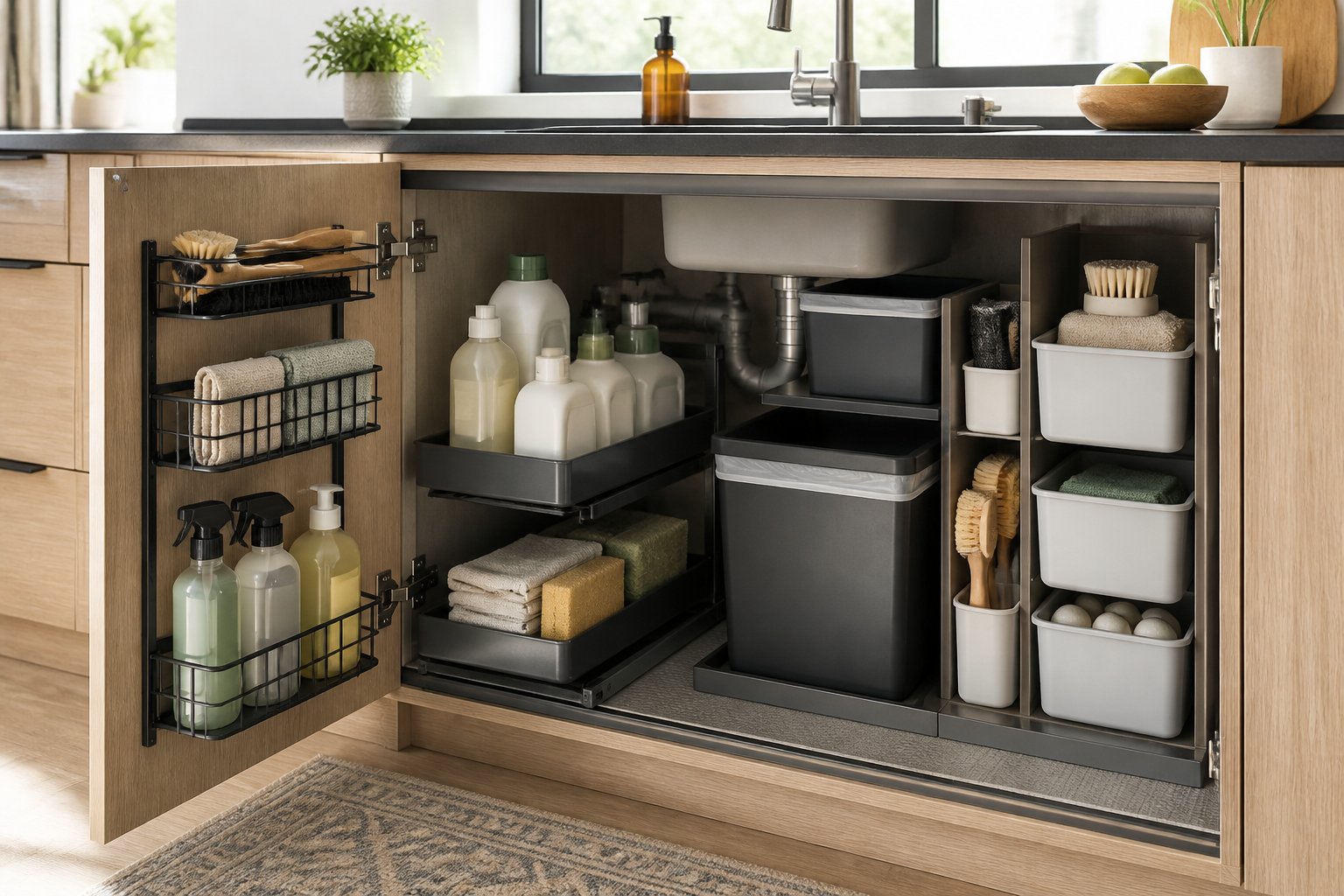
A good under-sink setup starts with a tape measure, not a shopping cart. Knowing your exact dimensions, working around pipes and the disposal, and grouping items by how often you reach for them will decide which organizers actually fit and work.
Measure Available Space
Grab a tape measure and write down four numbers: the cabinet's interior width, depth, height, and the width of the door opening.
That last one matters most. Cabinet frames often narrow the opening by 2 to 3 inches, so a bin that fits the interior may not fit through the door.
Measure height from the cabinet floor up to the lowest part of the sink basin, which is usually the tightest point. Then measure again from the floor to the bottom of the pipes.
| What to measure | Why it matters |
|---|---|
| Door opening width | Sets the max width of any bin or pull-out |
| Floor to sink basin | Limits shelf and riser height |
| Cabinet depth | Determines if two-tier sliders will clear the door |
| Floor to P-trap | Shows usable space under the pipes |
Note whether your cabinet has a center stile splitting the doors. If it does, plan for two narrow organizers instead of one wide one.
Identify Plumbing Obstacles
Open the doors and map what's in the way. Most cabinets have a P-trap curving under the drain, hot and cold supply lines running up the back wall, and often a garbage disposal hanging on one side.
The disposal is the biggest space eater. It typically blocks a 7 to 9 inch wide column, so that side works better for tall, narrow items like spray bottles than for shelving.
The dead space behind the P-trap is usually wasted. A U-shaped or horseshoe organizer wraps around the pipe and puts that area back to use.
Leave the shutoff valves clear. You need to reach them fast if a leak starts, so avoid stacking anything permanent in front of them.
Also check for a dishwasher drain hose looping through the side wall.
Sort Items By Frequency Of Use
Pull everything out and make three piles based on how often you actually use it.
Daily items like dish soap refills, sponges, and the trash bag roll go in front, at eye level when you crouch down.
Weekly items such as all-purpose spray, glass cleaner, and dishwasher pods work well in a pull-out bin so you can slide them forward.
Rarely used items like oven cleaner, extra scrub brushes, or a backup dish rack belong in back corners or on a top riser shelf.
Keep the count honest. If you're storing six half-empty cleaners, combine or toss the duplicates before you buy any organizers.
One more rule: store food-safe items and cleaning chemicals apart. Paper towels and trash bags absorb odors, so keep them away from open bleach or ammonia products.
Maximize Storage With Practical Solutions
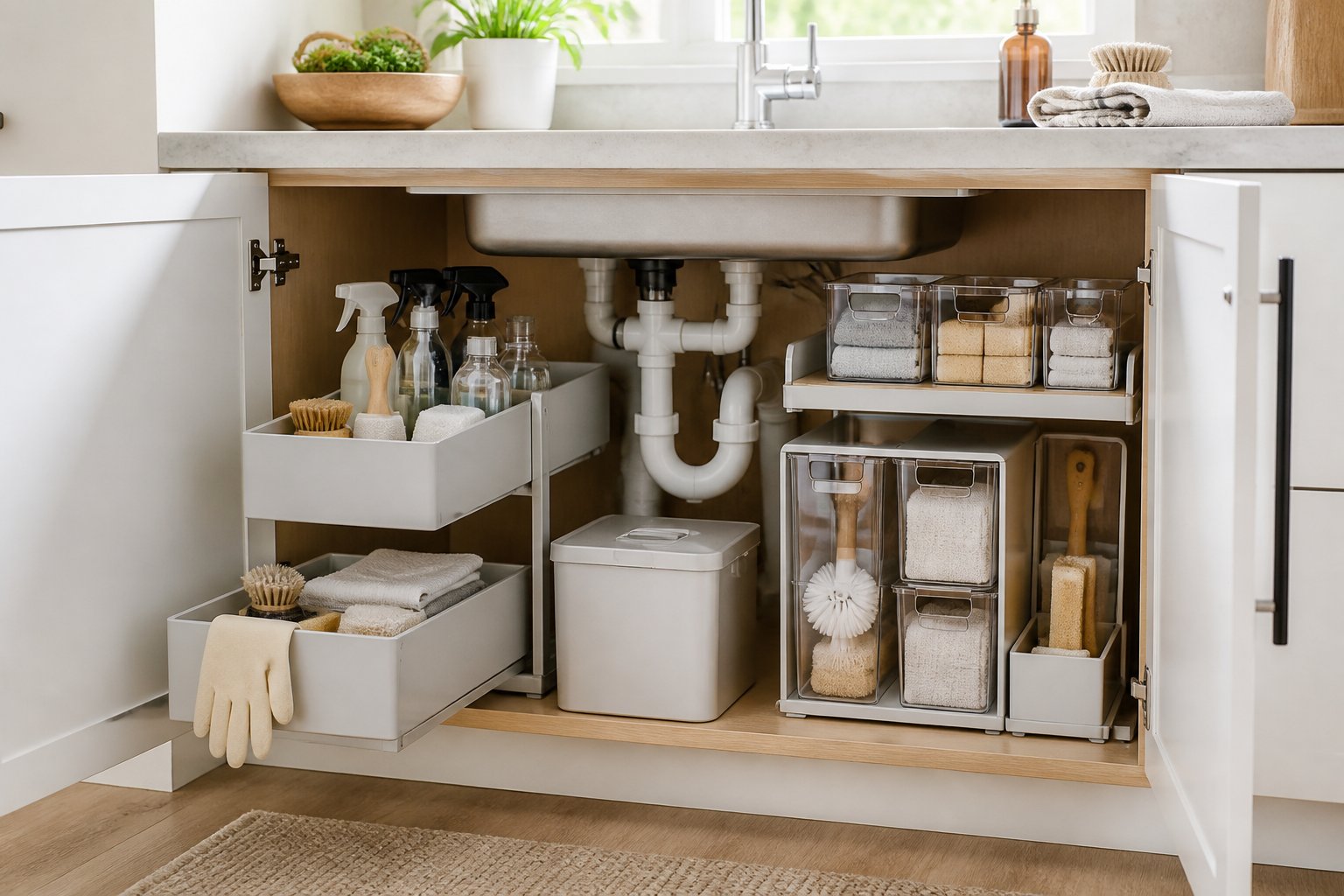
The space under your sink has pipes, odd angles, and a garbage disposal in the way, but it can still hold a lot. Pull-out drawers, door racks, stackable bins, and a waterproof liner turn that awkward cabinet into storage you can actually use.
Add Pull-Out Drawers
Deep cabinets hide items in the back. A pull-out drawer or sliding basket brings everything forward so you can see it without kneeling and reaching.
Look for U-shaped or two-tier models. The U-shape leaves a gap in the middle for the drain pipe, and the two-tier version uses vertical space for shorter bottles.
Measure before you buy:
- Width at the narrowest point, including hinges
- Depth from the door to the back wall
- Height from the cabinet floor to the pipe
Most sliding organizers sit on the cabinet floor with no screws needed, though some come with screws for extra stability. Keep heavier items like dish soap refills in the bottom tier.
Use Door-Mounted Organizers
Cabinet doors are flat, empty, and easy to use. A wire rack or fabric caddy on the inside of the door holds sponges, scrub brushes, gloves, and spray bottles.
You have two ways to attach them. Over-the-door hooks slide onto the top edge and need no tools. Screw-in racks hold more weight but leave holes.
Keep the depth under about 3 inches so the door still closes. Test it by holding the organizer in place and shutting the door before you mount anything.
Tip: A small tension rod hung across the cabinet gives you a spot to drape rubber gloves or hang spray bottles by their trigger handles.
Create Zones With Stackable Bins
Grouping similar items keeps you from digging. Clear plastic bins let you see what's inside and lift out a whole category at once.
Try zones like these:
| Zone | What Goes In It |
|---|---|
| Dish care | Sponges, dish soap, brushes, steel wool |
| Surface cleaners | All-purpose spray, glass cleaner, wipes |
| Trash supplies | Bags, twist ties |
| Extras | Rubber gloves, extra scrub pads |
Stack shorter bins on the left and right of the drain pipe, where the ceiling of the cabinet is highest. Label the front of each bin so anyone in the house can put things back correctly.
Keep bleach and other strong cleaners in a bin with a lid, and add a childproof latch to the cabinet door if you have young kids.
Protect Surfaces From Leaks
Slow drips from the drain or supply lines can swell particleboard and leave stains. A liner catches water before it soaks in.
Your options:
- Peel-and-stick vinyl liner — cheap, cuts to fit around pipes
- Silicone under-sink mat — raised edges hold small spills
- Plastic tray — sits under bottles that might leak
Check the cabinet floor once a month. Feel for damp spots, look for dark rings, and sniff for a musty smell.
Wipe up any water right away and find the source. A loose slip nut on the drain or a worn washer is often the cause, and both are inexpensive to fix.
Frequently Asked Questions
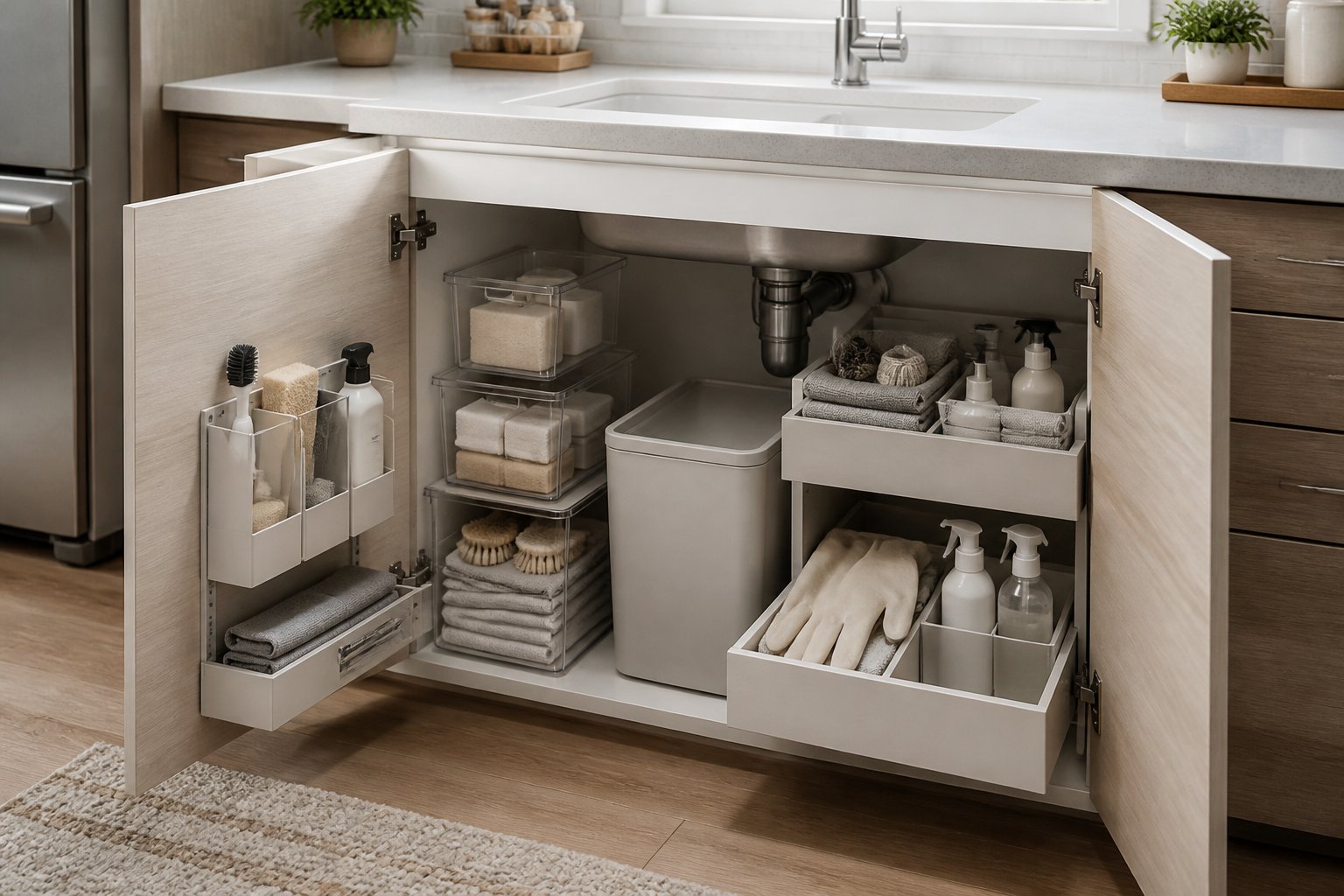
Picking the right organizer starts with measuring your cabinet and mapping your pipes. The answers below cover disposal workarounds, what belongs in this cabinet, space-saving tricks, and how to install pull-out storage.
What is the best organizer for under the kitchen sink?
A two-tier pull-out sliding drawer works for most kitchens. It slides toward you so you can reach the back without kneeling and digging.
If your pipes sit low and centered, choose a U-shaped or expandable shelf instead. These frames have legs you can adjust, so you can build around the drain pipe rather than fight it.
For narrow cabinets under 18 inches wide, stick with a single stackable bin and a door-mounted rack. Wide organizers often won't clear the cabinet frame.
How do I organize under a kitchen sink with a garbage disposal?
Measure the space from the cabinet floor to the bottom of the disposal unit first. That number tells you the tallest bin or shelf you can fit on that side.
Keep the disposal side open or use short, shallow trays there. Save the taller storage for the opposite side, where you usually have more vertical room.
A few more tips:
- Leave 2–3 inches of clearance around the unit so you can reach the reset button
- Don't stack anything on top of the disposal or its wiring
- Use the cabinet door for sponges and dish brushes instead of the crowded floor
What should I keep under my kitchen sink?
This spot works best for items you use at the sink. That means dish soap, dishwasher pods, sponges, scrub brushes, and surface cleaner.
Trash bags, a small trash can, and reusable cloths also fit well here.
Keep these things out:
- Food and pet food — moisture and pests are a risk
- Paper towels and paper bags — they absorb leaks
- Small appliances — humidity can damage cords and motors
- Vitamins or medicine — the temperature swings too much
If you have young kids or pets, add a cabinet latch or move bleach and drain cleaner to a higher spot.
How can I maximize space in a small under-sink cabinet?
Use the door. A slim over-the-door rack or adhesive hooks hold spray bottles and brushes without taking floor space.
Then go vertical with a riser or shelf over the pipes. That empty area above the plumbing is usually the biggest waste of space in the cabinet.
Tension rods are another cheap fix. Mount one across the cabinet and hang spray bottles by their trigger handles, or drape wet cloths over it to dry.
Finally, cut down on duplicates. Most kitchens only need one all-purpose cleaner, not four half-empty bottles.
What are common mistakes to avoid when organizing under-sink storage?
Buying organizers before measuring is the most common one. Check the width, depth, and height, and note where the pipes and shut-off valves sit.
Here are others worth avoiding:
- Blocking the shut-off valves. You need fast access if a pipe leaks.
- Skipping a liner. A silicone mat or peel-and-stick tray catches drips and protects the cabinet floor.
- Stacking bins too high. You'll knock the top one over every time you reach in.
- Storing too much. Cleaning supplies you use twice a year belong in a closet or garage.
Check the cabinet floor every month or two for water stains. Catching a slow leak early saves the whole cabinet.
How can I add drawers or pull-out storage under the kitchen sink?
The simplest option is a freestanding sliding organizer. It sits on the cabinet floor, needs no tools, and pulls out on its own tracks.
For a built-in look, you can install a pull-out wire basket on drawer slides. You'll need to mount the slides to the cabinet sides or floor, and you may have to trim the basket depth to clear the P-trap.
Measure the cabinet opening width, then subtract about an inch for the slide hardware. That gives you the basket size to buy.
If your cabinet has a center stile down the middle, plan on two narrow pull-outs instead of one wide one. Removing the stile can weaken the cabinet and the countertop support.