



The Real Reason You Keep Losing Things in Your Kitchen
July 8, 2026
You open a drawer looking for the can opener, but it's not there. You search three cabinets for the measuring cups you just used yesterday. Your kitchen scissors have vanished again. This frustrating cycle happens because your brain struggles to form clear memories when you're distracted or rushing through tasks, and most kitchens lack a simple organizational system that makes items easy to find.
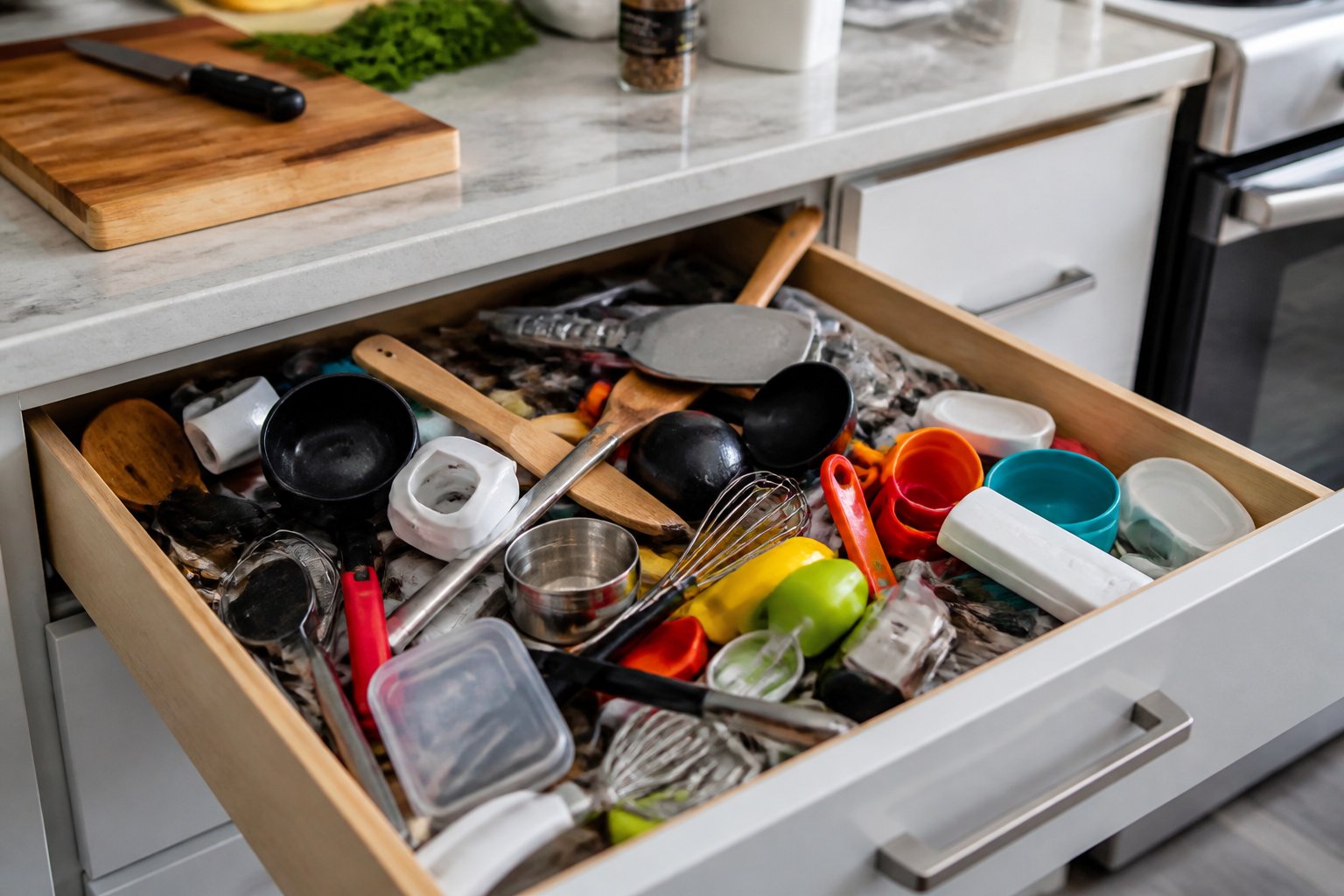
The real reason you keep losing things in your kitchen is that you don't have consistent homes for your items, and you're often on autopilot when putting things away. When you cook or clean without paying attention, your brain doesn't store where you placed that spatula or pot lid. You might set something down in a random spot because your hands are full or you're thinking about the next step in a recipe.
The good news is that you can fix this problem with a few simple changes. Understanding what causes these organizational mistakes and recognizing your daily habits will help you create a kitchen where everything has its place. You'll learn practical ways to stop the endless search for missing items and spend more time actually enjoying your kitchen.
Common Organizational Mistakes
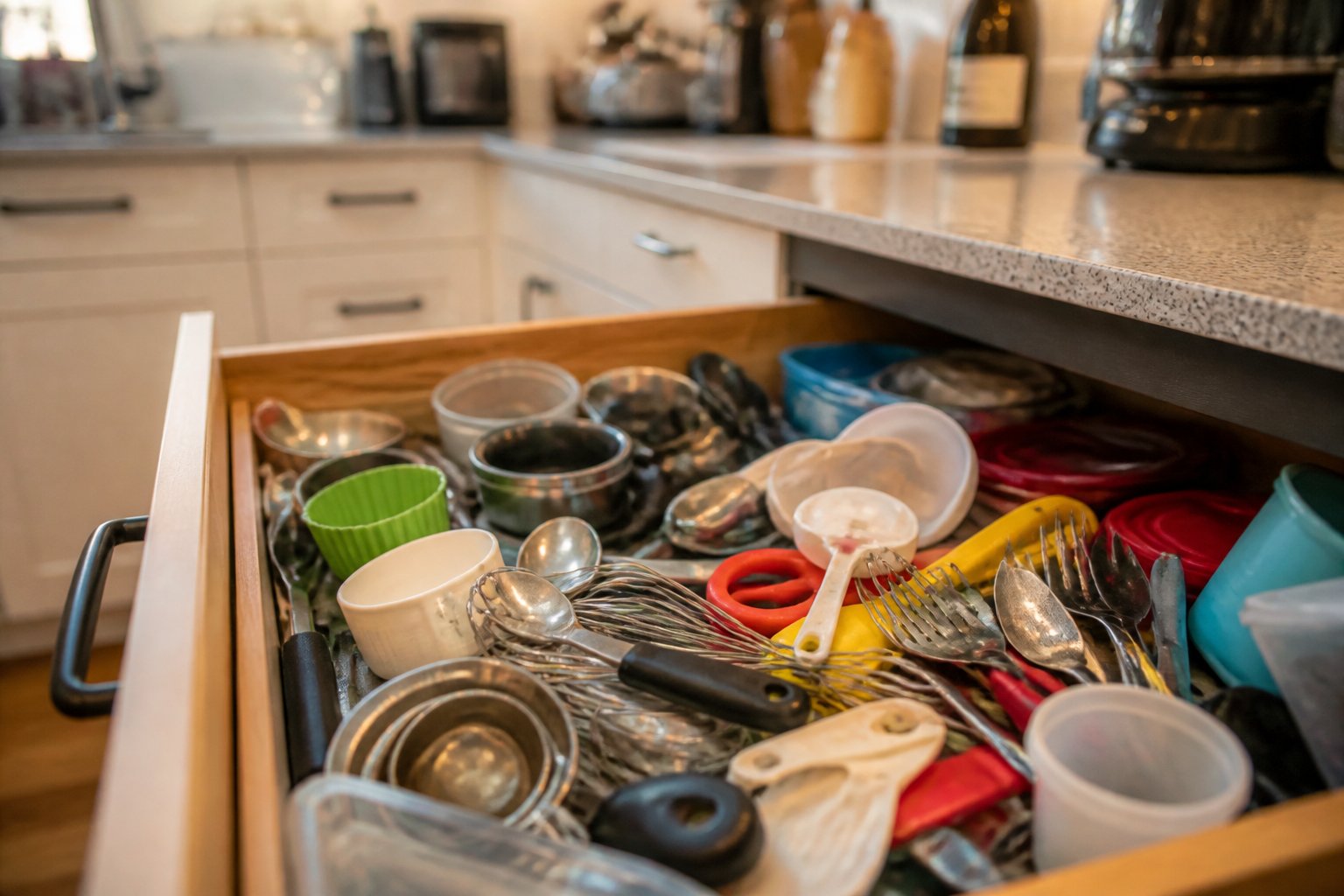
Most kitchen items go missing because of three fixable problems: not having the right storage tools, placing things randomly instead of following a system, and cramming too much into limited space.
Inadequate Storage Solutions
Your kitchen storage might not match what you actually need to store. Many kitchens come with basic shelves and drawers that don't work well for modern cooking tools and gadgets.
Standard cabinets often waste vertical space. A stack of pots becomes hard to access when you need the one at the bottom. Without drawer dividers, utensils slide around and pile on top of each other.
You need storage that fits your specific items. This means:
- Pull-out shelves for deep cabinets
- Drawer organizers sized for your utensils
- Vertical dividers for baking sheets and cutting boards
- Corner solutions like lazy Susans for hard-to-reach spaces
The wrong storage creates dead zones where items disappear. A pot shoved to the back of a deep cabinet becomes forgotten. Small items like measuring spoons get buried under larger tools when drawers lack dividers.
Lack of a Consistent Item Placement System
Putting things back in random spots makes them impossible to find later. You might place the can opener in a different drawer each time you use it.
Your brain can't build memory patterns when items move around. This forces you to search multiple locations every time you cook. The problem gets worse when multiple people use the kitchen and each person has different ideas about where things belong.
Create zones based on tasks. Keep all baking supplies together. Store cooking utensils near the stove. Place dishes close to the dishwasher.
Mark specific homes for items. Use labels on shelves or drawer fronts. Take a photo of organized drawers to show where everything belongs. This helps everyone in your household return items to the same spot.
You must decide where each item lives and stick to that decision. Write it down if needed.
Overcrowded Cabinets and Drawers
Cramming too many items into one space makes everything harder to find. When you stack ten containers in a cabinet, you need to move nine items to reach the one you want.
Overstuffed drawers won't open fully. Items get stuck and wedged together. You start leaving things on the counter because putting them away takes too much effort.
Count your items and compare that to your available space. You might own 30 food storage containers but only have room for 15. Something has to go.
Follow the 80% rule. Keep drawers and cabinets only 80% full. This leaves room to see what you have and grab items easily.
Remove duplicates first. You don't need five wooden spoons or three can openers. Get rid of broken items and tools you haven't used in six months. Donate extras that still work but crowd your space.
Everyday Habits That Contribute to Misplaced Items

Your daily kitchen routines create patterns that either help you stay organized or lead to lost items. The way you clean, handle multiple tasks, and manage time pressure directly affects where things end up.
Unfinished Cleaning Routines
When you start cleaning but don't finish, items get moved to temporary spots and forgotten. You might set a spatula on the counter while wiping down the stove, then leave it there instead of putting it back in the drawer.
Partial cleaning creates what experts call "holding zones" in your kitchen. These are spots where things pile up because you never complete the task of putting them away. Common holding zones include:
- Counter corners near the sink
- The space beside the refrigerator
- Tops of the microwave or toaster
- Empty spots on shelves
You also create problems when you clean around items instead of moving them. A spice jar stays out of place because you wipe the counter without putting it back. These small decisions add up over days and weeks.
The pattern repeats each time you clean in a hurry or get interrupted. Items migrate away from their proper homes and settle into random locations you won't remember later.
Multi-Tasking While in the Kitchen
Your brain struggles to track where you place items when you do several things at once. Cooking dinner while helping with homework or taking phone calls splits your attention. You set down the can opener without forming a memory of where it went.
Research shows that divided attention prevents your brain from creating strong location memories. You physically place an item somewhere, but your mind never records that action. Later, you have no mental picture of where to look.
Common multi-tasking scenarios that lead to lost items include:
- Texting while unloading groceries
- Watching TV while preparing snacks
- Talking on the phone while cooking
- Checking emails between meal prep steps
Your autopilot mode takes over during these moments. You complete physical actions without conscious awareness, which is why you can't retrace your steps effectively.
Rushing During Meal Prep
Time pressure makes you skip the step of returning items to their designated spots. You grab the olive oil, use it, and set it on the nearest surface instead of back in the cabinet. The measuring cups go on top of the bread box instead of in the drawer.
Morning and evening rushes create the most disorganization. You need to get breakfast ready quickly or finish dinner before activities start. Speed becomes more important than putting things away properly.
This rushing habit teaches you bad patterns. Your brain learns that temporary placement is acceptable, making it harder to maintain organization even when you have more time. Items end up in different spots each day based on whatever was most convenient in that rushed moment.
Frequently Asked Questions
Many people struggle with lost items in their kitchens due to distraction, poor systems, and competing demands on their attention. Understanding the root causes helps you build better habits and create spaces where items stay found.
What are the most common habits that cause people to misplace items in the kitchen?
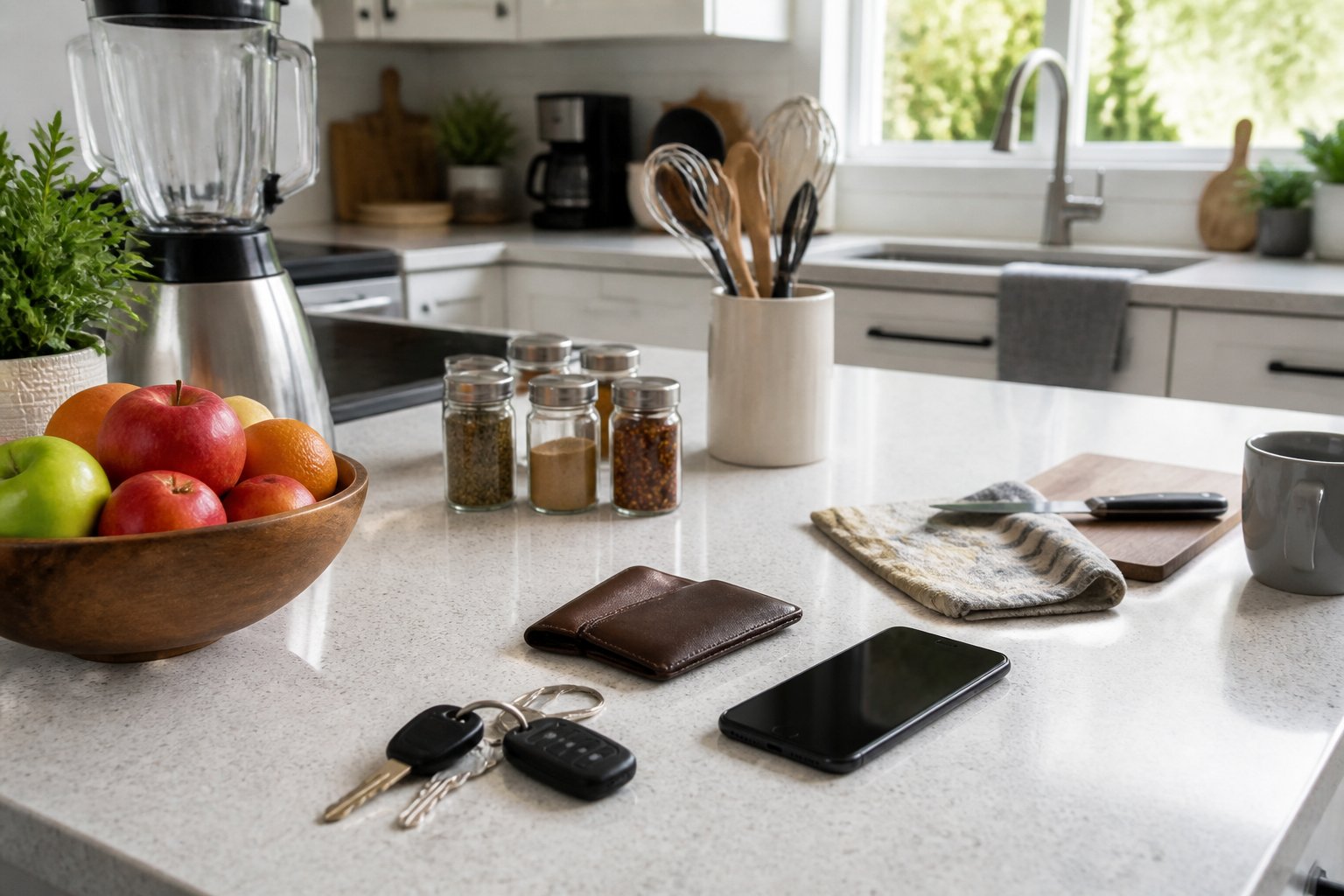
Setting things down while distracted is the biggest culprit. You put your phone on the counter, the timer goes off, someone asks you a question, and your brain never records where the phone landed.
Placing items in different spots each time creates confusion. When your keys go on the counter one day, the table the next, and the windowsill after that, your brain can't form a reliable memory pattern.
Moving between tasks without finishing compounds the problem. You grab a measuring spoon, get interrupted to stir something else, and the spoon disappears into the chaos of your workflow.
How can clutter and poor storage systems make it harder to find everyday kitchen tools?
Too much stuff for your available space creates visual noise that hides what you need. When every drawer overflows and every counter holds random items, your eyes can't quickly locate specific objects.
Items without designated homes get scattered throughout your kitchen. Your can opener might be in three different drawers depending on who used it last, making it impossible to develop an automatic retrieval pattern.
Poor storage placement forces you to work against logic. If you store coffee mugs far from the coffee maker or cooking utensils across the room from the stove, you create unnecessary movement and multiple locations where items can get lost.
Why does stress or multitasking lead to losing things more often at home?
Your brain operates on autopilot during routine tasks to conserve energy. This autopilot mode handles familiar actions without creating strong memories, which is why you can't remember if you locked the door seconds after doing it.
Stress and multitasking overload your working memory. When you're thinking about three different things while cooking dinner, your brain doesn't have capacity to record where you set down the spatula.
Competing demands split your attention at critical moments. The act of placing an item down takes less than a second, and if your mind is elsewhere during that moment, no memory of the location gets stored.
What practical organization methods prevent repeatedly misplacing keys, phones, and utensils in the kitchen?
Create dedicated homes for your most frequently lost items. Put a small dish or hook by your kitchen entrance specifically for keys, and train yourself to use it every single time.
Choose locations that match your natural movement patterns. If you always enter through the garage into the kitchen, your key spot needs to be right there, not across the room.
Use visual cues and physical barriers to build automatic habits. A bright bowl for your phone on the counter or a magnetic strip for knives on the wall makes the right choice the easiest choice.
Reduce the total number of items you own. When you have two can openers instead of five, and three wooden spoons instead of twelve, each item becomes easier to track and store properly.
Is frequently losing items a sign of forgetfulness, ADHD, or a broader attention issue?
Losing things occasionally is normal for everyone and usually reflects environmental factors rather than cognitive problems. Distraction, poor systems, and cluttered spaces affect all people regardless of their brain function.
Frequent losing of items can be associated with ADHD, which affects working memory and sustained attention. People with ADHD may struggle more with the executive function skills needed to consistently return items to designated spots.
The pattern and frequency matter more than isolated incidents. If you lose things daily, feel constantly frustrated by missing items, and notice this problem affects multiple areas of your life, it may warrant discussion with a healthcare provider.
Many people assume they just need to "pay more attention," but this advice ignores how brains actually work. Creating external systems and structures works better than relying on willpower or increased focus alone.
Do spiritual or religious perspectives interpret repeatedly losing things as a meaningful sign?
Some spiritual traditions view repeated loss of items as messages or signs requiring attention. These perspectives suggest that losing things might indicate you're distracted from your true path or need to slow down and be more present.
Other religious viewpoints see lost items as tests of patience or opportunities to practice detachment from material possessions. The frustration becomes a chance for spiritual growth rather than just an annoyance.
Most mainstream psychology and organization experts focus on practical explanations rooted in how memory and attention function. Whether you find meaning in spiritual interpretations or prefer evidence-based approaches depends on your personal beliefs and what helps you solve the problem.