


The Most-Searched Kitchen Organization Problems — Solved
June 26, 2026
Kitchen clutter can turn meal prep into a stressful chore. Crowded counters, messy drawers, and disorganized pantries make it hard to find what you need when you need it. The good news is that these problems have simple fixes.
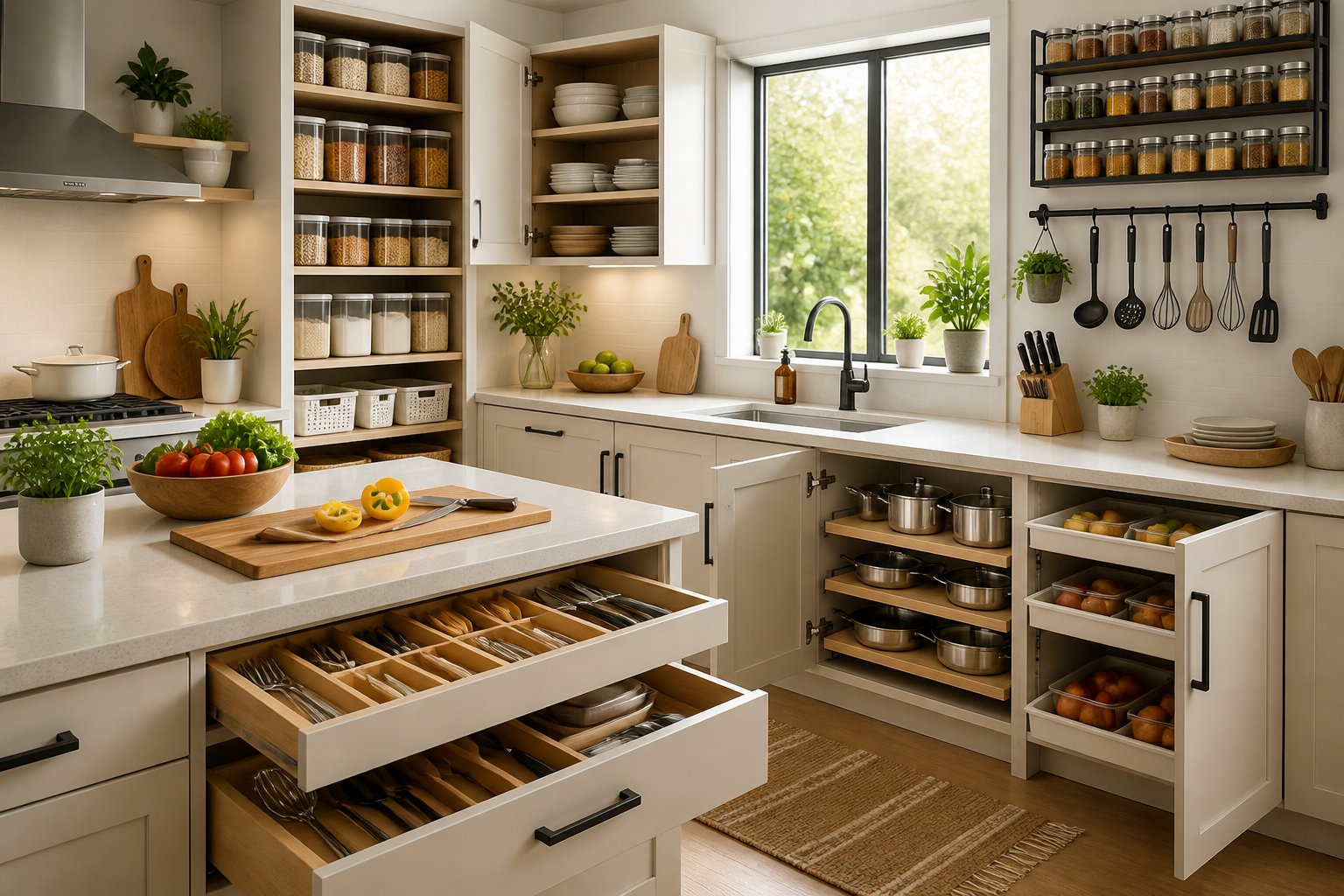
Most kitchen organization problems come down to a few key issues: not enough storage space, poor use of existing space, and too much stuff without a clear home. Once you understand what's causing the chaos, you can tackle it with practical solutions that actually work.
This guide walks you through the most common kitchen storage frustrations and shows you exactly how to solve them. You'll learn which areas cause the most trouble and get straightforward strategies to keep your kitchen organized for good.
Biggest Culprits Behind Kitchen Clutter
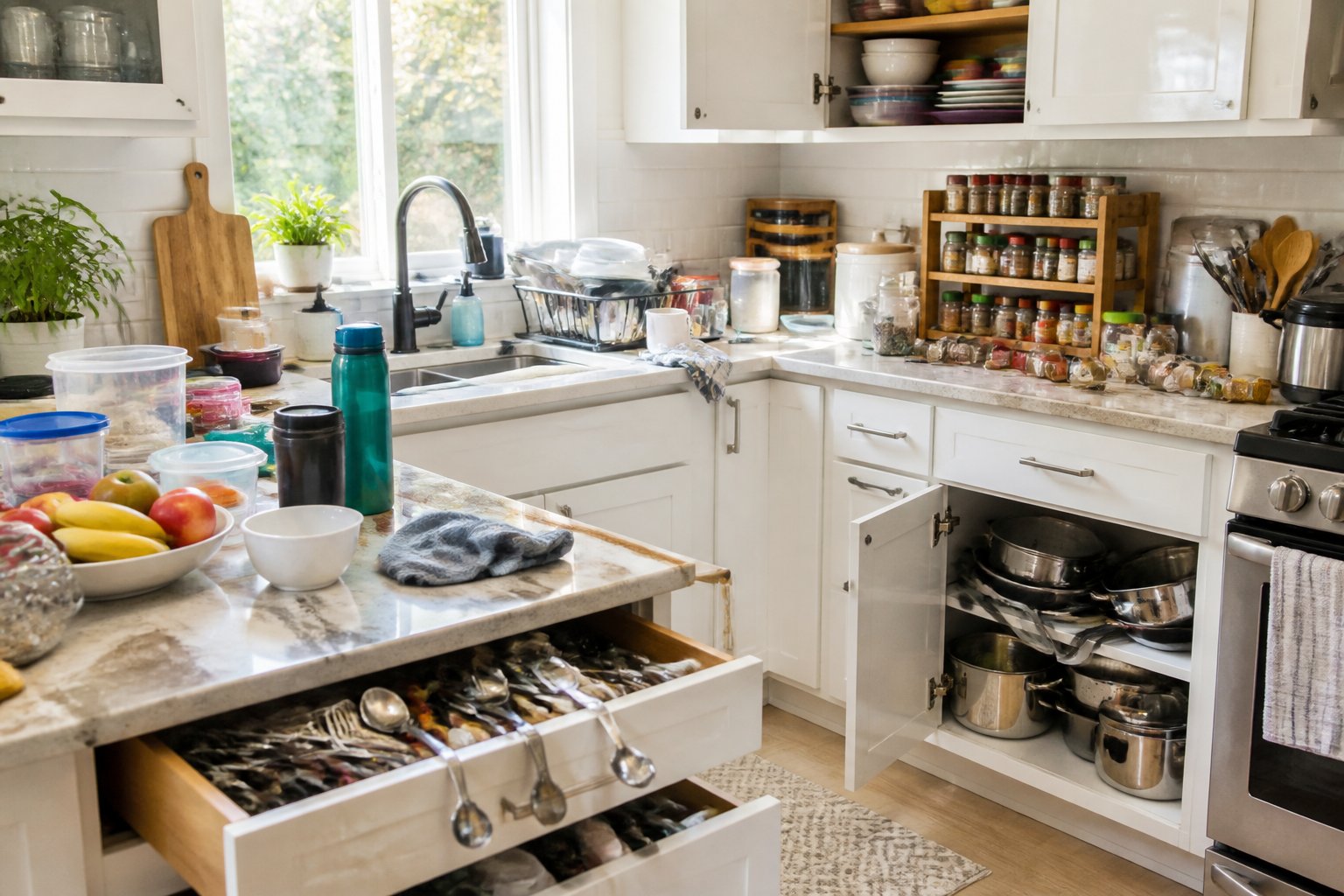
Kitchen clutter typically stems from three main problem areas: pantries that waste space, countertops covered in appliances and miscellaneous items, and drawers stuffed with disorganized utensils. Addressing these specific zones will transform your kitchen from chaotic to functional.
Inefficient Pantry Storage
Your pantry becomes cluttered when you can't see what you have or reach items easily. This leads to buying duplicates and letting food expire in the back corners.
Common pantry problems include:
- Food stored in original packaging that takes up too much space
- Missing or inconsistent containers for bulk items
- No designated zones for different food categories
- Tall items blocking shorter ones from view
Clear containers let you see exactly how much pasta, flour, or cereal you have left. Group similar items together—baking supplies in one area, snacks in another, and canned goods in a third. Use shelf risers or lazy Susans to make every inch accessible.
Store items you use daily at eye level. Less frequently used items can go on higher or lower shelves. Label everything so family members know where things belong and can put them back correctly.
Overflowing Countertops
Countertops covered in small appliances, utensil holders, and random items make your kitchen look messy even when it's clean. Professional organizers identify countertop clutter as the biggest visual problem in kitchens.
Ask yourself which appliances you actually use daily. Your coffee maker might deserve counter space, but that bread maker you use twice a year doesn't. Store occasional-use appliances in cabinets or a pantry.
Paper piles, mail, and keys don't belong in the kitchen. Create a dedicated drop zone near your home's entrance instead. Limit your countertop items to what you use every single day.
Keep these guidelines in mind:
- Only display appliances used at least three times per week
- Use one utensil holder maximum
- Store dish soap and sponges under the sink when not in use
Unorganized Drawers and Utensils
Drawers filled with tangled utensils and mystery gadgets waste your time and space. You end up digging through clutter every time you need a simple spoon or spatula.
Drawer dividers separate utensils into clear categories. Place forks with forks, spoons with spoons, and knives with knives. Dedicate one drawer to cooking utensils like spatulas and whisks, and another to eating utensils.
Get rid of duplicate tools. You don't need five wooden spoons or three can openers. Broken items and gadgets you've never used should go immediately.
Store sharp knives in a knife block or magnetic strip instead of loose in a drawer where they dull quickly and pose safety risks. Keep your most-used utensils in the drawer closest to your prep area.
Smart Solutions for Everyday Organization Challenges
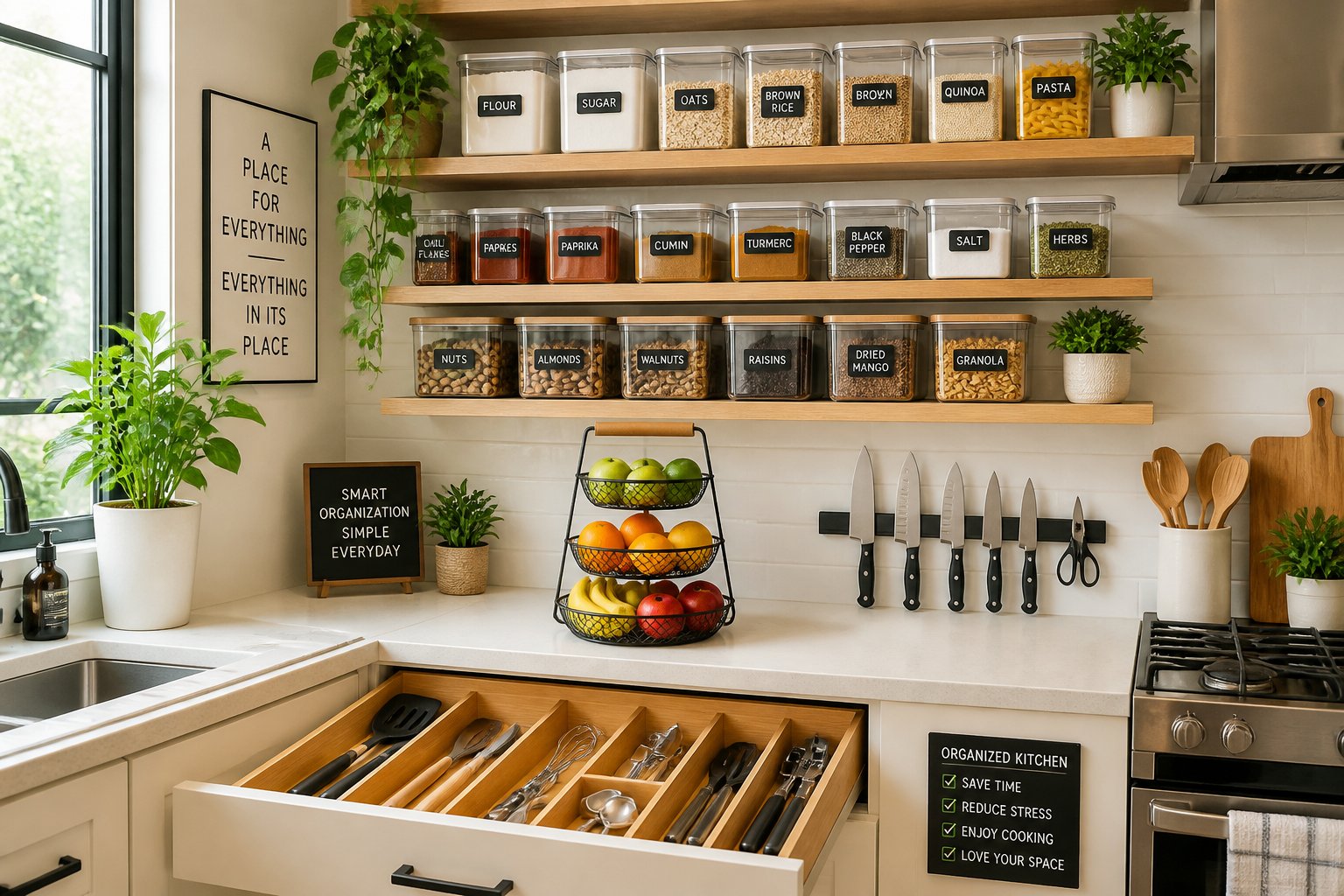
The biggest kitchen organization struggles come down to three main areas: stuffed cabinets where items disappear in the back, mismatched food containers that waste space, and the messy area under your sink. These problems have straightforward fixes that work in any kitchen.
Maximizing Cabinet Space
Your cabinets likely hold more potential than you realize. The problem isn't the size of your cabinets but how you use the vertical and horizontal space inside them.
Install shelf risers to create two levels where you previously had one. This doubles your usable space for plates, cups, and pantry items. You can find these for $10 to $20 at most home stores.
Add pull-out drawers or sliding organizers to deep cabinets. These let you access items in the back without moving everything in front. Corner cabinets work especially well with lazy Susans that spin to bring hidden items within reach.
Use the inside of cabinet doors for extra storage. Attach small racks or hooks to hold measuring spoons, pot lids, or cleaning supplies. Door-mounted organizers cost around $15 and install in minutes with adhesive strips or screws.
Stack items by frequency of use. Keep everyday dishes at eye level and special occasion items higher up or toward the back.
Streamlining Food Storage Containers
Mismatched containers create clutter and waste valuable cabinet space. A streamlined system makes meal prep faster and keeps your cabinets neat.
Pick one container brand and stick with it. Square or rectangular shapes use space better than round ones. Clear containers let you see what's inside without opening lids.
Store containers with their lids attached or use a separate organizer for lids. Standing lids upright in a small rack or file organizer saves space and makes them easy to grab.
Keep only what you actually use. Most households need 8-12 containers in various sizes, not 30 random pieces. Get rid of containers with missing lids or those you haven't touched in six months.
Label containers if you prep meals in advance or store dry goods like flour and rice. Simple labels help everyone in your household find what they need and put things back correctly.
Taming Under-Sink Chaos
The space under your sink often becomes a jumbled mess of cleaning supplies, trash bags, and random items. This area needs structure to work properly.
Install a tension rod across the cabinet to hang spray bottles by their triggers. This frees up floor space for other items and keeps bottles upright and easy to grab.
Use small bins or caddies to group similar items together. Put dish soap and sponges in one bin, trash bags in another, and cleaning supplies in a third. Pull out the entire bin when you need something instead of digging through loose items.
Add a sliding drawer system if you have the budget. These units typically cost $30 to $80 and make everything visible and accessible. Look for options that fit around your plumbing.
Place a small mat or tray on the cabinet floor to catch drips and spills. This protects the wood and makes cleanup easier when products leak.
Frequently Asked Questions
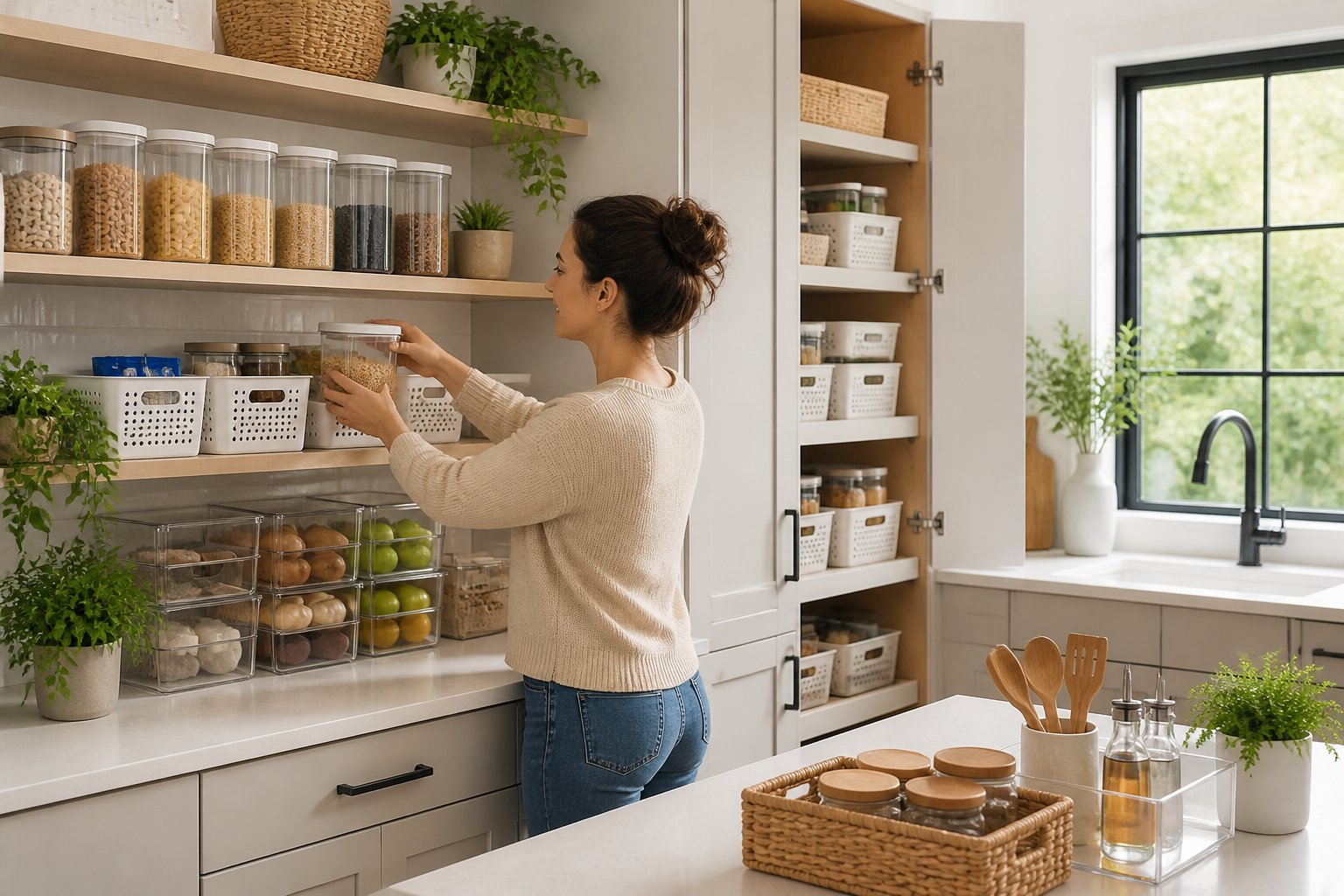
Organizing a kitchen involves tackling specific challenges like limited counter space, messy cabinets, and hard-to-reach corners. These solutions address the most common questions about creating a functional kitchen that works for your daily needs.
How can I organize a small kitchen to maximize storage and counter space?
Start by clearing your counters of items you don't use daily. Store small appliances in cabinets and only keep essentials like a coffee maker or dish soap visible.
Use your wall space by installing shelves, magnetic knife strips, or hanging racks for pots and pans. This frees up cabinet space for other items. Add hooks inside cabinet doors to hang measuring cups, pot holders, or cleaning supplies.
Consider a rolling cart that can serve as extra counter space and storage. You can move it around as needed or tuck it away when you need more room to walk.
What are the most effective steps for organizing kitchen cabinets from top to bottom?
Empty all your cabinets completely before you start organizing. This lets you see what you own and clean the shelves at the same time.
Place items you rarely use on the highest shelves, like special occasion dishes or serving platters. Store everyday dishes and glasses at eye level where they're easy to grab. Put heavy items like pots, pans, and small appliances in lower cabinets.
Group similar items together so you always know where to find things. Keep all your baking supplies in one area, drinking glasses in another, and food storage containers in their own spot.
How should I arrange kitchen drawers so utensils and tools stay easy to find?
Use drawer dividers to create separate spaces for different types of utensils. This stops everything from sliding around and mixing together when you open and close drawers.
Keep your most-used utensils in the drawer closest to your food prep area. Place measuring spoons, spatulas, and wooden spoons where you can reach them quickly while cooking.
Store sharp knives in a separate drawer with a knife organizer or in a knife block on your counter. Dedicate one drawer to junk like batteries, twist ties, and takeout menus so these items don't spread throughout your kitchen.
What is the best way to organize a kitchen pantry so food stays visible and accessible?
Clear containers let you see exactly how much of each ingredient you have left. Transfer items like flour, sugar, rice, and pasta into airtight containers with labels.
Place frequently used items at eye level where you can see and reach them easily. Put snacks, breakfast foods, and cooking staples in this prime location. Store backup items and bulk purchases on higher or lower shelves.
Use lazy Susans for bottles, cans, and jars so you can spin them around instead of digging through stacks. Group foods by category, keeping all your baking supplies together and all your canned goods in one section.
How can I make the most of deep cupboards and corner cabinets without wasted space?
Install pull-out shelves or sliding drawers in deep cabinets so you can access items in the back without removing everything in front. These shelves work especially well for pots, pans, and small appliances.
Use lazy Susans in corner cabinets to make awkward spaces more functional. A two-tiered lazy Susan lets you store more items while keeping them visible and within reach.
Stack items vertically with shelf risers to double your storage space. This works well for plates, canned goods, and food storage containers.
What kitchen cabinet storage solutions are currently trending and worth adding?
Pull-out trash and recycling bins keep waste hidden but easy to access. These drawer-style systems fit inside base cabinets and slide out when you need them.
Vertical dividers help you store baking sheets, cutting boards, and pot lids on their sides instead of stacking them. This makes it simple to grab one item without disturbing the others.
Door-mounted racks add extra storage to the inside of cabinet doors. You can use them for spices, cleaning supplies, plastic wrap, or aluminum foil. Drawer peg systems let you adjust compartments to fit your specific dishes and bowls, keeping them from sliding around and breaking.