


The Future of Kitchen Cabinets: Minimal Panels, Rich Colours & No Hardware
December 10, 2025
Kitchen cabinets are changing fast. The way we design, build, and use cabinets now looks different from just a few years ago. New materials, smarter storage, and changing lifestyles are all pushing the industry forward.
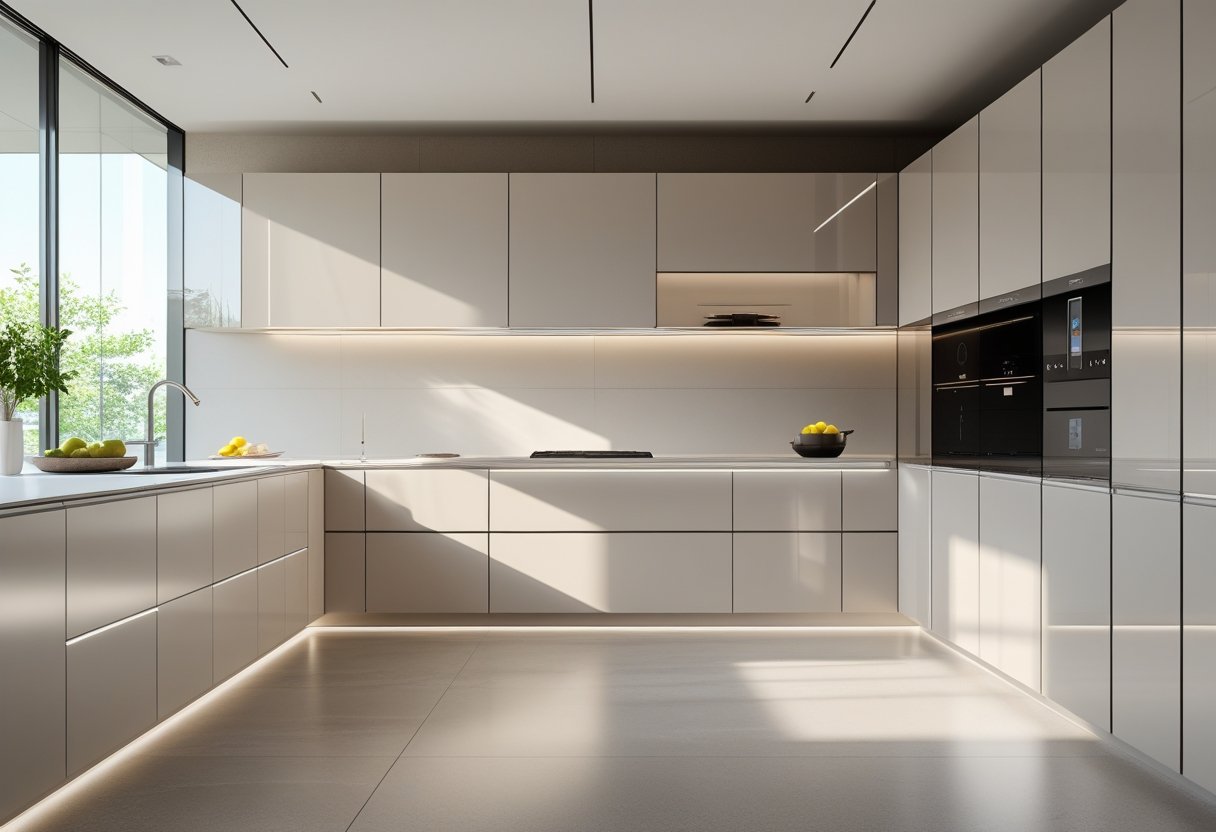
The future of kitchen cabinets will focus on modular designs, smart technology, eco-friendly materials, and flexible storage that fits your needs. Cabinets will do more, look nicer, and last longer. These changes are about making your kitchen easier to use every day.
Knowing what is coming helps you make better choices now. Whether you plan to redo your kitchen or are just curious, these trends will change how you spend money and how you use your kitchen.
Defining Trends Shaping the Future of Kitchen Cabinets
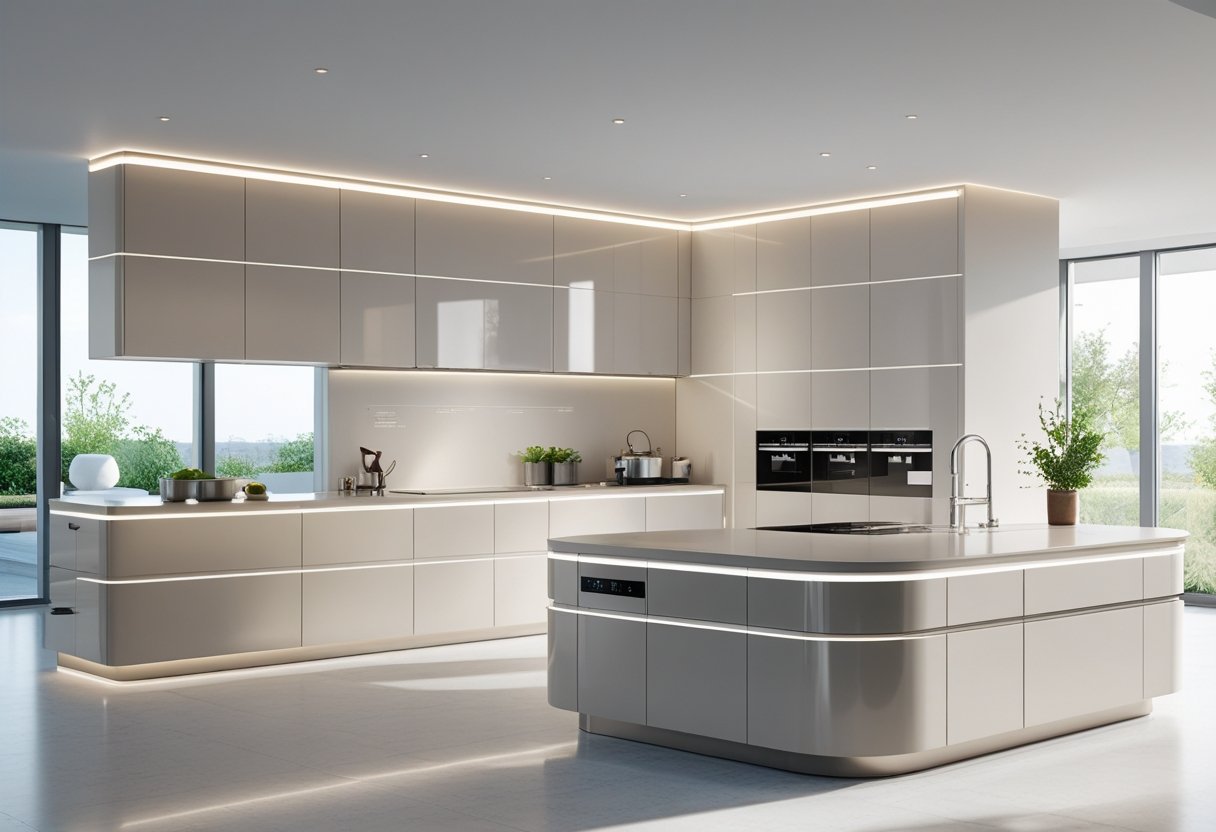
The future of kitchen cabinets focuses on smart storage, warm looks, and eco-friendly choices. People want layouts that fit their needs, natural materials, and finishes that add character without losing function.
New Ideas in Cabinet Design and Style
Frameless cabinets are becoming more common. They have no face frame, so you can use the full opening. This creates cleaner lines and more storage space.
Shaker cabinets are still popular but are changing. Panels are flatter and details are simpler. Hardware like mixed metals and large pulls are used as design features.
Special storage zones are replacing plain cabinet layouts. You can make spots for a coffee station, a charging drawer, or even fermentation projects. Deep drawers are taking the place of some lower cabinets because they are easier to reach and organize.
Some kitchens skip upper cabinets altogether. This makes the room feel open and bright and lets you use a walk-in pantry for storage. It also lets you show decorative items or run the backsplash up to the ceiling.
Color Palettes and Natural Wood Finishes
Natural wood tones and finishes are replacing the all-white cabinet trend. Timber veneers, warm browns, and earthy rusts add depth to kitchens. These wood finishes bring a natural texture that makes kitchens feel cozy.
The look of the 1970s shows up in richer colors and wood grain patterns. Deep, smoky browns with brass hardware can make a kitchen feel warm without looking old. Powder-coated finishes in earthy tones last longer and keep a soft, natural look.
Two-tone cabinets let you mix wood and paint. You could use wood on the lower cabinets and paint on the upper ones, or the other way around. This adds interest and highlights the natural materials.
Rise of Sustainable Materials
Sustainable materials are becoming common in cabinets, not just a luxury choice. You can pick reclaimed wood, bamboo, or responsibly sourced hardwood. These options help the environment and work well for cabinets.
Many makers now use low-VOC finishes and water-based glues to keep indoor air cleaner. Salvaged wood and recycled parts appear in custom cabinets, giving kitchens unique looks with less harm to the planet.
Durability is also part of being sustainable. Better construction and stronger materials mean cabinets last longer and create less waste. More companies sell modular systems so you can replace or update parts instead of replacing the whole cabinet set.
Technological Advancements and Smart Storage Solutions
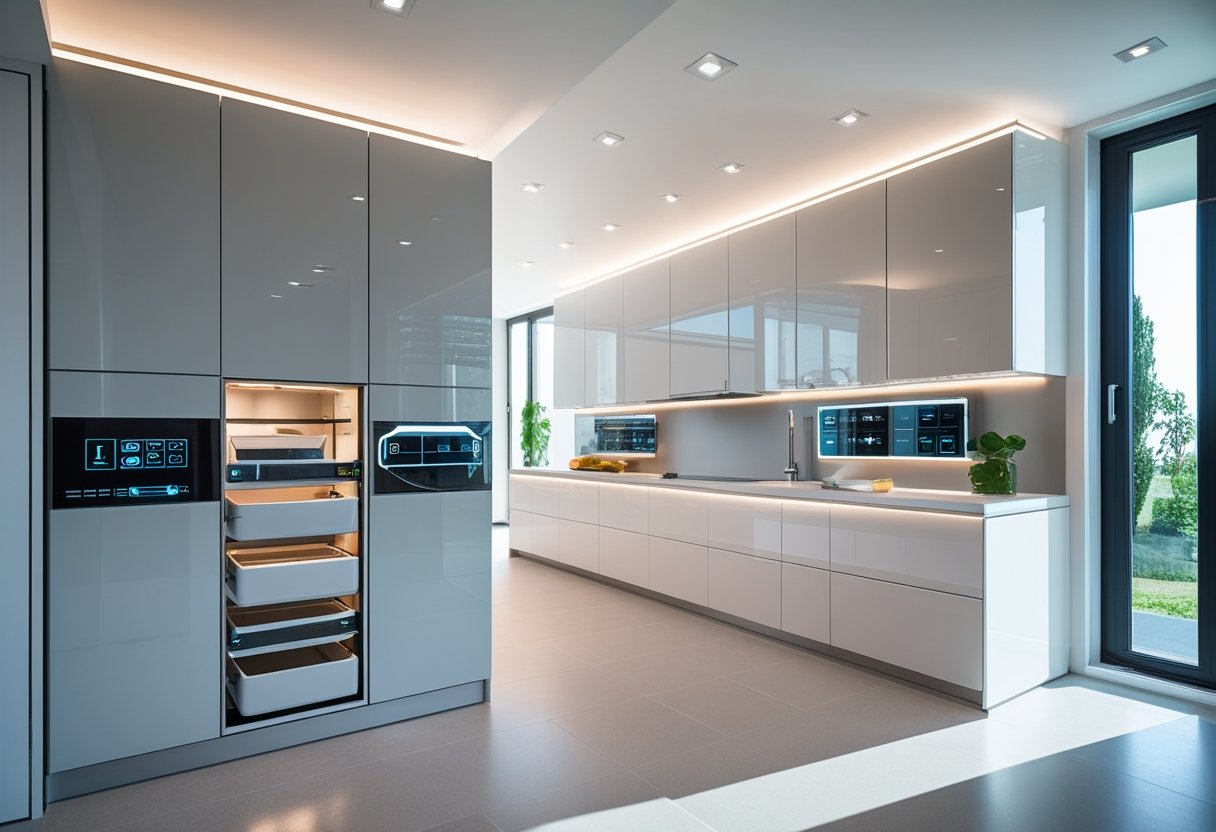
Kitchen cabinets now incorporate built-in technology and advanced organizational systems that make daily tasks easier. Modern designs focus on adding useful features like automated lighting, charging capabilities, and specialized storage that adapts to how you actually use your kitchen.
Integrated Lighting and Charging Stations
Integrated lighting transforms how you use your cabinets. Motion-sensor LED strips automatically turn on when you open a drawer or door, giving you clear visibility of contents without fumbling for switches. You can install these lights under cabinets, inside drawers, or along cabinet interiors.
Cabinet manufacturers now build USB ports and wireless charging pads directly into cabinet designs. These integrated charging stations keep your devices powered while you cook or work in the kitchen. You'll find them most useful in base cabinets near workspaces or in upper cabinets where you can tuck devices away while they charge.
The wiring for these features runs through the cabinet frame during manufacturing. This keeps cords hidden and maintains a clean look. Many systems connect to your home's electrical system, so you don't need to worry about battery replacements.
Space Optimization with Pull-Outs and Organizers
Pull-out shelves give you full access to items at the back of deep cabinets. You don't need to crouch down or reach blindly into dark corners. These shelves work on soft-close mechanisms that prevent slamming and extend the life of your cabinets.
Pull-out pantries fit into narrow spaces between appliances or at the end of cabinet runs. They typically measure 6 to 12 inches wide and hold spices, canned goods, or cleaning supplies. Corner cabinets use lazy susans or pull-out organizers with tiered shelves that swing out, making previously wasted space functional.
Common pull-out organizers include:
- Two-tier sliding racks for pots and pans
- Vertical tray dividers for baking sheets
- Pull-down shelving for upper cabinets
- Waste bin holders with multiple compartments
Personalized Storage and Appliance Garages
Appliance garages hide small machines like coffee makers, toasters, and blenders when you are not using them. These cabinet spaces sit on the countertop or tuck into a corner. They use roll-up doors, lift-up doors, or sliding doors that disappear into the cabinet frame.
You can change drawer interiors with peg systems or adjustable dividers so they fit your items. This works well for utensils, knives, and small tools. Many cabinet makers sell modular inserts you can move or swap as your needs change.
Smart storage also includes pull-out cutting boards, hidden spice racks on cabinet doors, and toe-kick drawers under base cabinets. These features help you use every inch of space without a full remodel.
Frequently Asked Questions
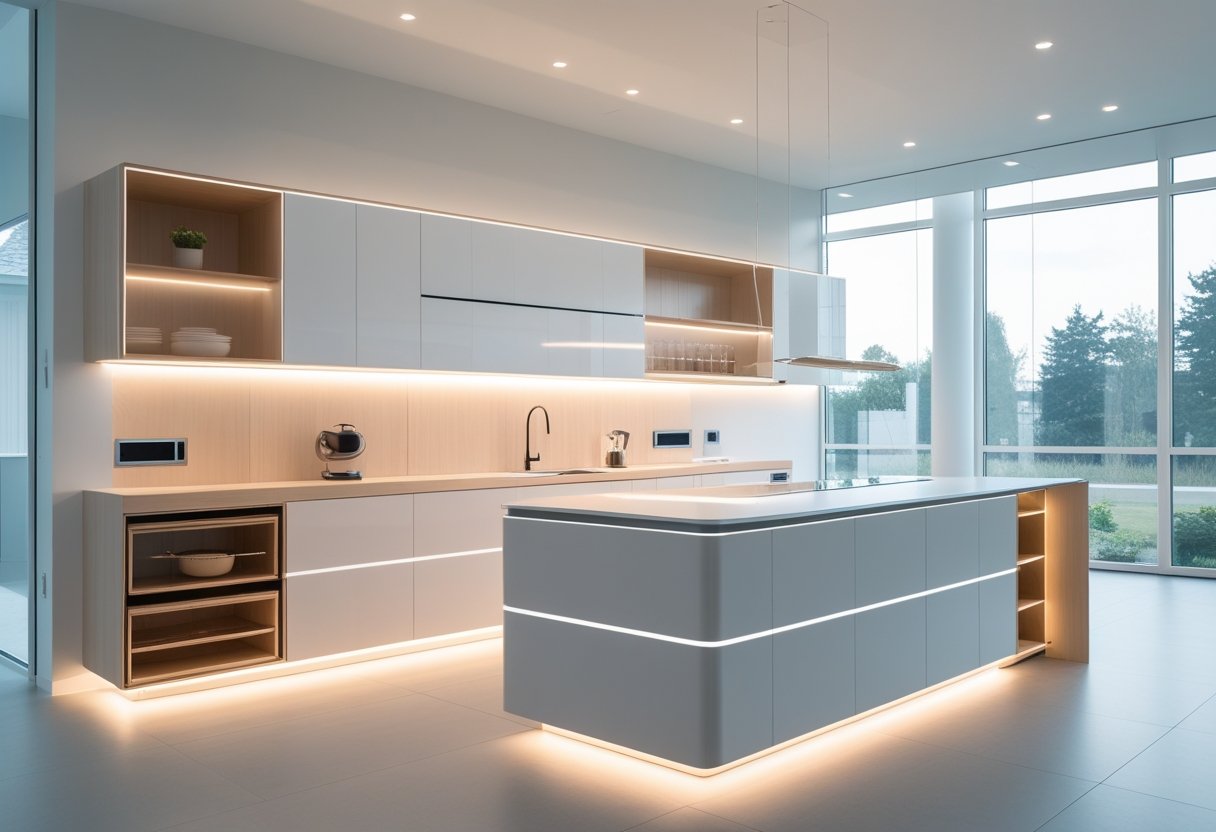
The future of kitchen cabinets is changing with new materials, smart features, and greener ways of making them. Makers now use certified wood, computer-aided design tools, and smarter storage to match what people want.
What are the new trends in cabinet materials and design?
More builders are using sustainable materials for cabinets. Wood certified by groups like FSC or PEFC means forests are managed responsibly. Low-VOC panels help keep indoor air cleaner.
Bamboo and recycled wood are becoming common because they are better for the planet and last a long time. Cabinets made with certified materials can last 20 years or more.
UV-cured finishes are a big step forward for cabinet surfaces. They cut harmful fumes and can make surfaces last longer.
Modular cabinets are flexible and fit modern homes. They can cut installation time and let you change or add pieces as your needs change.
How is technology changing kitchen cabinets?
Smart storage with sensors is making cabinets smarter. These sensors can track what is inside and tell you when supplies are low. The market for IoT cabinets is growing about 9% each year.
Digital design tools let you see cabinets in 3D before they are built. You can make changes fast. Most projects take three to five design rounds to get the final look.
AI helps plan cabinet layouts and cut waste. It can make production up to 15% more efficient. The software checks space and suggests the best storage options.
What green practices are used in making kitchen cabinets?
Energy-saving manufacturing cuts power use by up to 35%. Companies use better machines and smarter workflows to save energy. This lowers costs and helps the planet.
CNC machines and robots cut material waste to under 2%. They work very precisely and keep defects low.
Certified sustainable wood is now common. Labels like FSC and PEFC show the wood is from well-run forests. Many buyers want these certifications.
Recycled and low-emission materials help health and the environment. Low-VOC panels improve indoor air quality. Makers design these products to meet global safety rules.
How modern kitchen layouts shape the future of kitchen cabinets
The work triangle still guides good kitchen design. Your sink, stove, and fridge should be a few steps apart. Cabinets are placed to keep the items you use most within easy reach.
Kitchen size and shape change how cabinets are planned. Designers use simple rules to keep the room balanced. Cabinets must fit the space and give enough storage.
Modular cabinet systems fit many kitchen sizes and styles. They use standard parts so installation is faster. That means projects finish sooner and changes are easier later.
Custom cabinets solve odd-size problems. Digital tools let makers design cabinets to fit tight or unusual spots. Custom pieces help you use every inch of space well.
How cabinets can be customized for accessibility and comfort
Modern cabinets help people with different abilities. Shelves can move up or down so you can reach what you need. Pull-out drawers and lazy susans cut down on bending and stretching.
Modular designs let you rearrange cabinets as needs change. You can change the inside without buying new units. This makes the kitchen useful for longer.
Digital design helps place handles, shelves, and drawers at the right heights. A few design tries make sure the cabinets fit your family. The result is safer and easier to use.
Smart features also lower physical effort. Soft-close hinges stop loud slams and need less force. Motion lights turn on when you open a cabinet so you do not have to find a switch.
How smart home tech affects the future of kitchen cabinets
IoT lets cabinets work with other smart devices. Sensors can track what is inside and link to shopping apps. This helps you keep track of supplies and cut food waste.
Some cabinets control their inside conditions. Sensors for temperature and humidity help keep items fresh. The system can warn you when conditions are not right.
Data from smart cabinets shows how you use the kitchen. It can point out which items you use most and suggest better ways to organize. Over time, the cabinets learn your habits and adapt.
Adding smart parts is easier with modular systems. Makers can add sensors and wiring during production. That gives neat installation without messy wires or hard setup.
Thank you for reading! Ready to embrace the next wave of kitchen design? Visit www.dazzleree.com for minimalist, space-smart essentials that pair beautifully with today’s clean panels, rich tones, and hardware-free styles. Design forward, live beautifully—with Dazzleree® by your side.