



Planting Hanging Baskets for Beginners: A Step-by-Step Guide
August 12, 2026
Hanging baskets add color to your porch, deck, or patio without taking up any yard space. They work well in small spaces and can be moved around as needed.
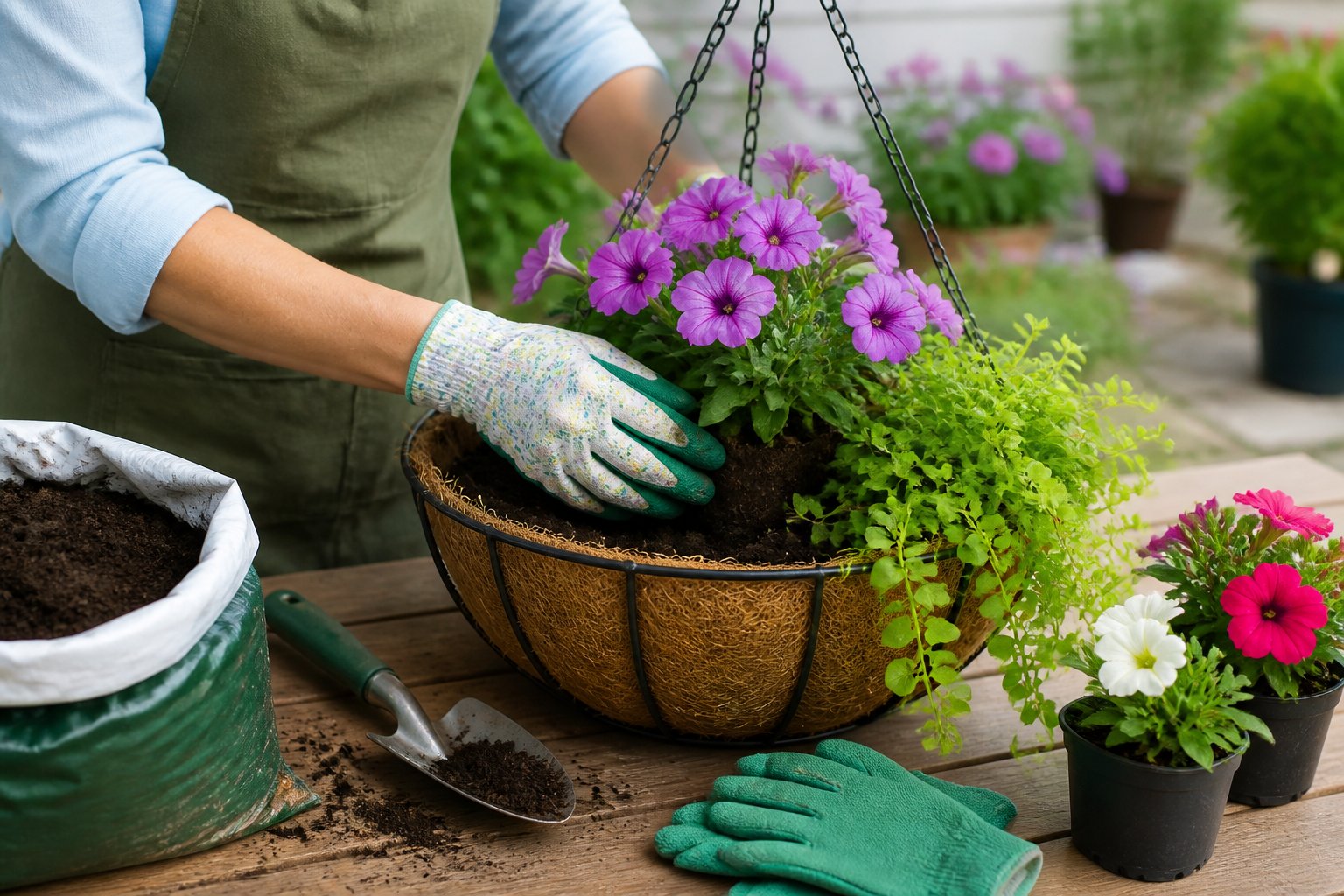
Planting a hanging basket only takes a few simple steps: pick a container, choose your plants, add good soil, and water them in. Once you know the basic order, the process is easy to repeat every season.
This guide walks you through picking the right container and plants, planting your basket the correct way, and keeping it healthy through the growing season. You will also find answers to common questions beginners ask.
Key Takeaways
- Hanging baskets are a simple way to add color to any outdoor space, even without a garden.
- The right container, plants, and soil make a big difference in how your basket grows and looks.
- Regular watering and care will help your hanging basket stay full and healthy all season.
Choosing Containers, Plants, And Supplies
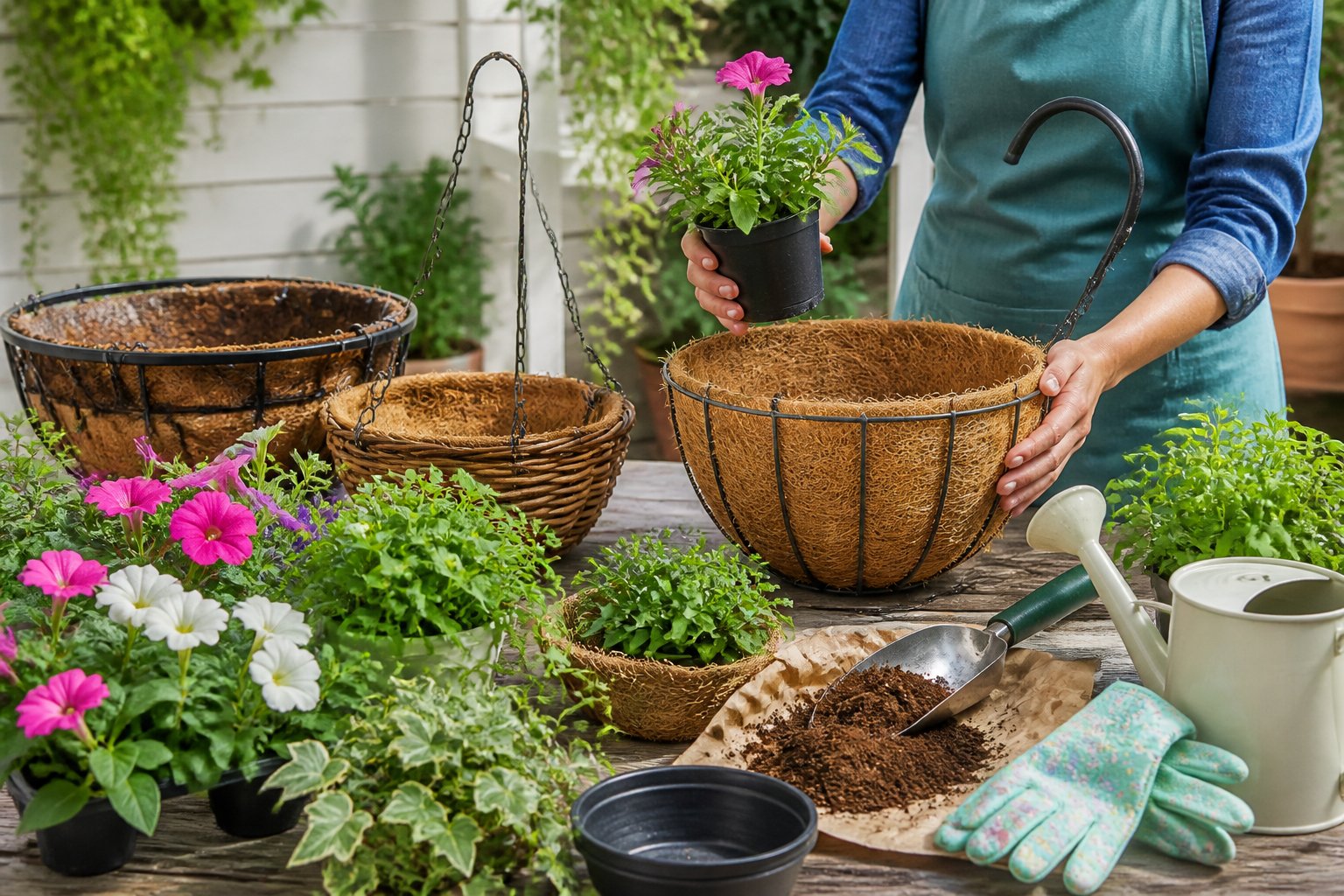
Before you plant anything, you need to pick the right basket, the right plants, and the right supplies. Getting these three things right sets you up for a basket that stays healthy and full all season.
Selecting Basket Types And Sizes
Hanging baskets come in a few common materials, and each one works a bit differently.
- Plastic baskets hold water well and dry out slower.
- Wire baskets need a liner but let roots breathe.
- Coco fiber or moss baskets look natural but dry out faster.
Size matters just as much as material. A basket that's too small will dry out fast and won't give roots enough room to grow.
For most plant combinations, choose a basket that's at least 12 to 14 inches wide. Bigger baskets hold more soil, which means more water and nutrients for your plants.
Check that your basket has proper drainage holes, or drill a few if it doesn't. Also make sure the hanging chain or hook can support the weight of wet soil and mature plants, which can get heavy fast.
Choosing Suitable Plant Combinations
Start by figuring out how much sun your basket's location gets each day. This decides whether you need sun-loving plants or shade-tolerant ones.
A good hanging basket usually combines three types of plants:
- A tall or upright plant for height in the center
- Filler plants to add fullness around the middle
- Trailing plants that spill over the basket's edge
For sunny spots, try petunias, geraniums, or lantana. For shady areas, consider begonias, impatiens, or fuchsia.
Keep plant height under 8 inches when possible, since taller plants can make the basket top-heavy. Also pick plants with similar water needs, so you're not overwatering one plant while underwatering another in the same basket.
Gathering Soil, Liners, And Tools
Use a lightweight potting mix made for containers, not regular garden soil. Garden soil is too heavy and won't drain well in a hanging basket.
If you're using a wire basket, you'll need a liner. Common liner options include:
| Liner Type | Best For |
|---|---|
| Coco fiber | Natural look, good drainage |
| Sphagnum moss | Holds moisture longer |
| Plastic sheeting | Budget-friendly, less breathable |
Beyond soil and liners, gather these basic tools before you start:
- Hand trowel
- Watering can with a narrow spout
- Slow-release fertilizer or water-soluble plant food
- Gloves
Having everything ready before you plant saves time and keeps the process simple. You won't have to stop halfway through to search for a missing tool or ingredient.
Planting And Maintaining Healthy Displays
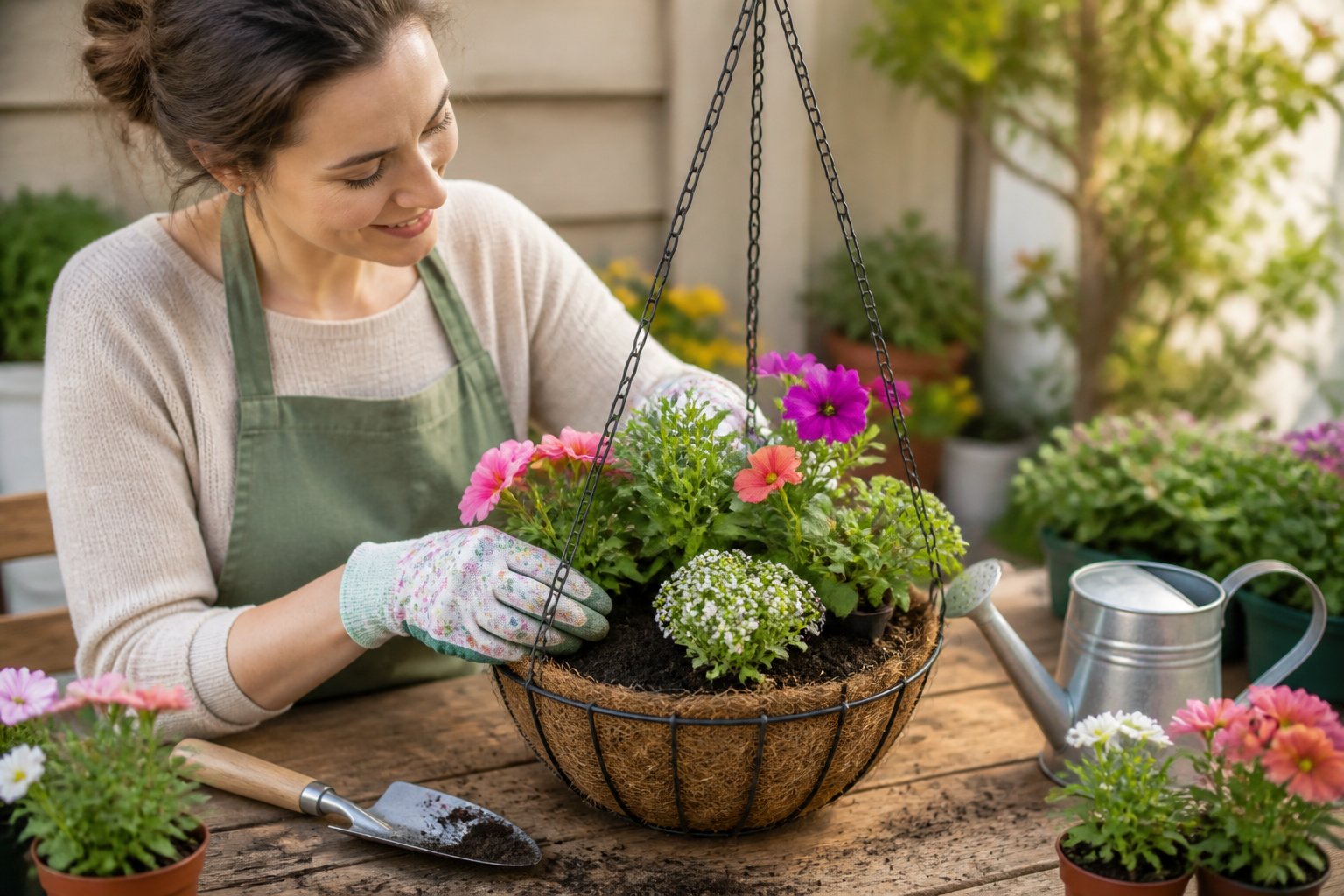
A healthy hanging basket starts with the right container and soil, then depends on smart planting and steady care. Get these steps right, and your basket will stay full and colorful through the growing season.
Preparing The Basket And Soil
Choose a basket that is at least 12 to 14 inches wide. Smaller baskets dry out fast and limit root growth.
Line the basket with coco fiber, sphagnum moss, or a plastic liner. This holds moisture while still letting extra water drain out.
Fill the basket with a lightweight potting mix made for containers. Skip garden soil, since it packs down too tightly and blocks drainage.
Mix in a slow-release fertilizer before planting. This gives your plants steady nutrients for several weeks.
Check that your basket has drainage holes. Without them, roots can sit in water and rot.
Arranging And Planting Flowers
Pick plants with similar light and water needs. This keeps every plant in the basket healthy at the same time.
Use this simple design method:
- Thriller: A tall plant placed in the center for height
- Filler: Bushy plants placed around the thriller to add fullness
- Spiller: Trailing plants placed near the edges to hang over the sides
Space plants close together, since hanging baskets look best when full. Leave about 1 inch between root balls.
Plant at the same depth the plants were growing in their nursery pots. Press soil gently around each plant to remove air pockets.
Water right after planting to help roots settle into the new soil.
Watering, Feeding, And Seasonal Care
Check your basket daily, since hanging baskets dry out faster than ground plants. Stick your finger an inch into the soil; if it feels dry, water it.
Water until it drains from the bottom. This tells you the whole root ball got moisture, not just the top layer.
Feed your basket every one to two weeks with a balanced liquid fertilizer. This replaces nutrients lost through frequent watering.
Trim back leggy stems and remove faded flowers regularly. This encourages new blooms and keeps the shape full.
As the season changes, adjust your care:
| Season | Care Focus |
|---|---|
| Early summer | Light feeding, regular watering |
| Peak summer heat | Daily watering, shade during extreme heat |
| Late summer | Trim spent growth, reduce fertilizer |
Move baskets to a shaded spot during heat waves to reduce stress on the plants.
Frequently Asked Questions
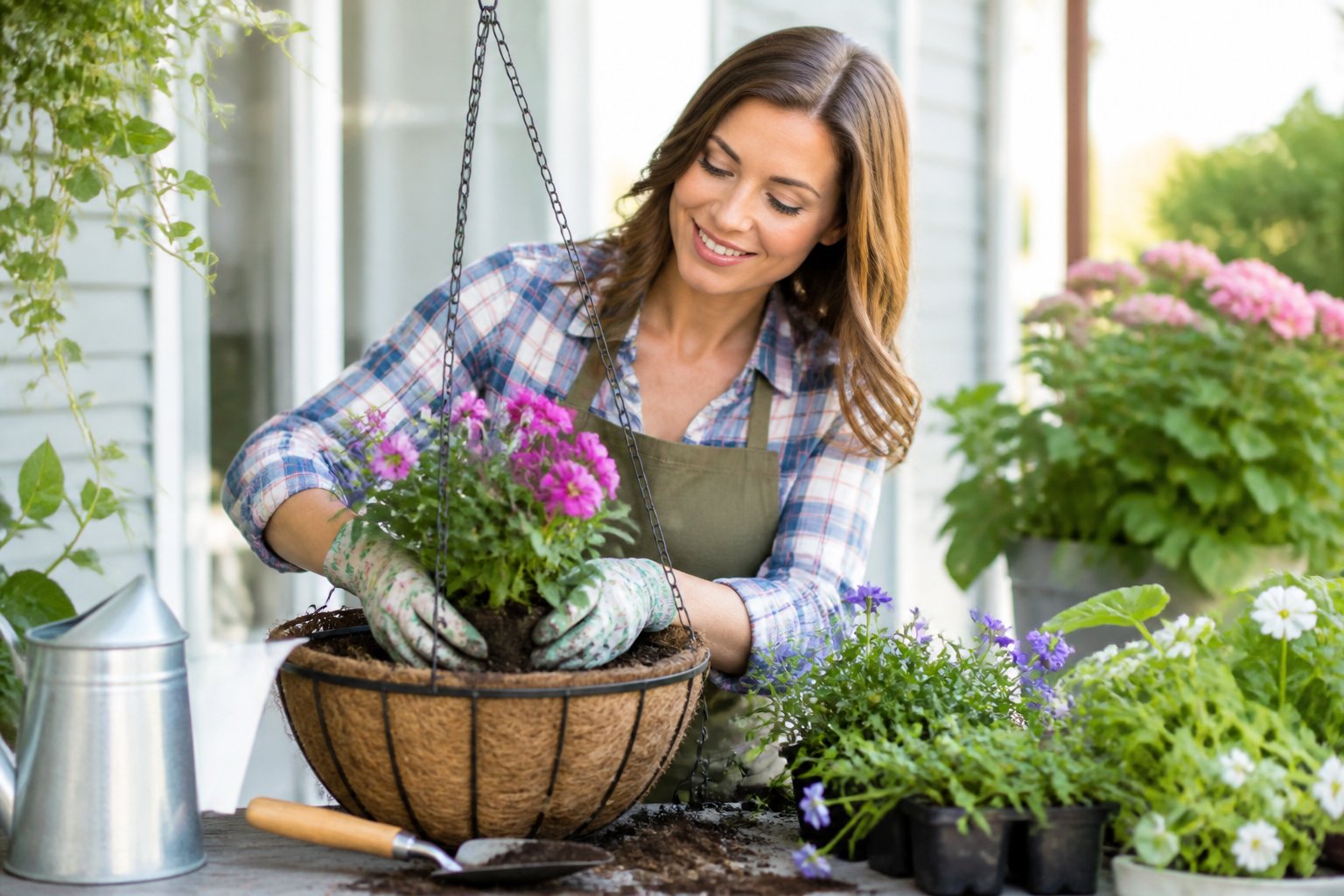
Here are answers to common questions about planting and caring for hanging baskets. These cover timing, plant choices, basic steps, and materials you will need to get started.
What month is best for planting hanging baskets?
Most regions do best with planting in April or May. This gives your plants time to grow strong roots before summer heat arrives.
If you live in a warmer climate, you can plant as early as March. The soil in a hanging basket warms up faster than ground soil, so you have more flexibility with timing.
Check your last frost date before you plant. Cold nights can damage young plants, so wait until the risk of frost has passed.
What are the easiest plants to grow in a hanging basket?
Petunias, geraniums, and impatiens are good choices for beginners. They grow well in baskets and don't need much special care.
Trailing plants like ivy or lobelia also work well. They spill over the edges of the basket and fill in empty spaces quickly.
These plants forgive small mistakes. If you forget to water one day or miss a feeding, they usually bounce back without much trouble.
How do you plant a hanging basket step by step?
Start by lining your basket with moss, coir, or a fabric liner. This holds the soil in place while still letting water drain out.
Add potting soil until the basket is about two-thirds full. Then arrange your plants, placing taller ones in the center and trailing ones near the edges.
Fill in the remaining space with more soil around the roots. Press down gently to remove air pockets, then water thoroughly until water drips from the bottom.
What should you put in the bottom of a hanging basket?
A layer of liner material goes at the bottom first. This can be sphagnum moss, coconut coir, or a pre-made basket liner.
Some gardeners add a small piece of plastic or a coffee filter over the drainage holes. This keeps soil from washing out but still allows water to pass through.
You do not need rocks or gravel at the bottom. This old method actually holds water in the soil and can lead to root rot.
Can you plant directly into a hanging basket without a liner?
You need something to hold the soil in place if your basket has open sides or a wire frame. Without a liner, soil and water will fall straight through.
Solid plastic or ceramic baskets with just drainage holes at the bottom don't need a liner. You can add soil directly into these types of containers.
If you're not sure what type of basket you have, check for gaps along the sides. Any visible openings mean you'll need a liner to keep the soil contained.
What plants grow best in hanging baskets in full sun?
Petunias and calibrachoa handle full sun well and bloom heavily during summer. They need at least six hours of direct sunlight each day to grow their best.
Verbena and lantana also thrive in bright, hot conditions. Both plants tolerate heat and don't wilt easily during dry spells.
Geraniums are another strong choice for sunny spots. They produce steady blooms all season and need less water than some other flowering plants.