



Pantry Organization Ideas for Small Spaces That Work
July 29, 2026
You open the pantry door to grab a can of beans, and a box of pasta slides off the top shelf and lands on your foot. If that sounds familiar, you're not alone — good pantry organization for small spaces comes down to three things: clearing out what you don't use, grouping similar items into zones, and using vertical space with tools like shelf risers, stackable bins, and over-the-door organizers.

We know how frustrating a cramped kitchen can be, especially when you're juggling work, family, and everything in between. The good news is that pantry organization in a small apartment doesn't require knocking down walls or drilling holes in your landlord's shelves.
In this guide, we're sharing small pantry layout ideas and a small pantry makeover DIY approach you can finish in a weekend. From airtight containers that keep flour fresh to budget-friendly small space pantry organization tricks, you'll find options that work with the pantry you already have.
Key Takeaways
- Clear out expired items and group what's left into zones before you buy any storage products.
- Renter-friendly tools like over-the-door organizers, shelf risers, and stackable bins add storage without drilling.
- Airtight containers and a smart shelf layout keep food visible, fresh, and easy to reach.
Why Small Pantries Feel Chaotic (And the Fix)
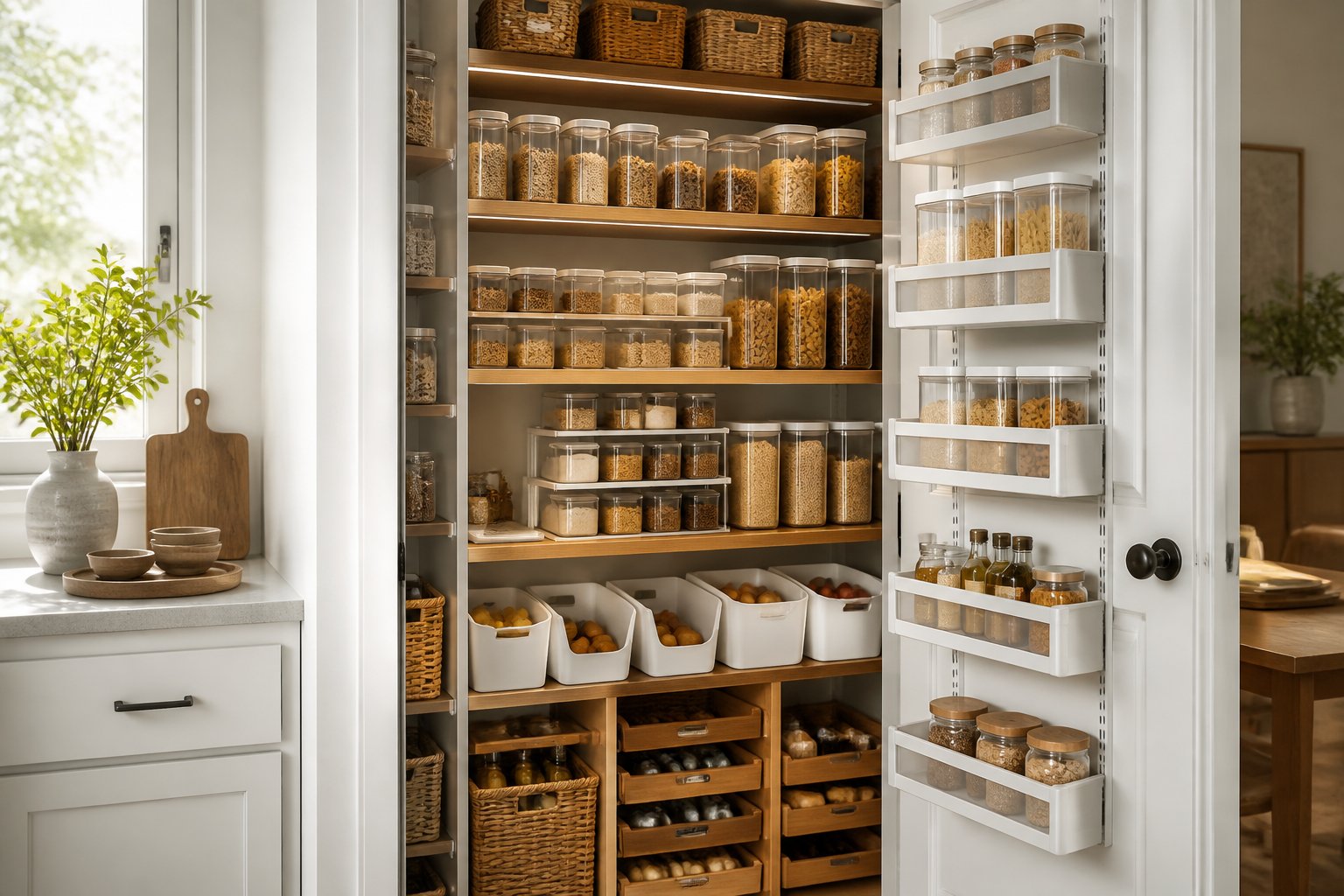
A small pantry rarely gets messy because you own too much food. It gets messy because the shelves are too tall, too deep, or too few for the way you actually cook.
Here's what we see most often in a pantry organization small apartment setup:
- Deep shelves that hide cans in the back row
- Tall gaps between shelves, so vertical space goes unused
- Original packaging in different shapes that won't sit flat or stack
- No zones, so snacks, baking supplies, and dinner staples get mixed together
- An unused door, which is often the easiest storage you already have
The fix is not more space. It's giving every item a spot that matches its size and how often you reach for it.
Start with height. Shelf risers create a second level for short cans and jars, so you can see the back row without moving anything.
Then handle shape. Airtight containers turn floppy bags of rice, pasta, and cereal into flat-topped blocks you can stack, and they keep food fresh longer.
Stackable bins group loose items, like granola bars or tea packets, into one pull-out unit instead of a scattered pile.
Finally, use the door. Over-the-door organizers hook right over the top, so renters can add spice and snack storage with no drilling.
That's the heart of small space pantry organization: work with height, shape, and zones. Most small pantry layout ideas and small pantry makeover diy projects start with those three steps.
Start Here: Declutter and Group by Zone

Before you buy a single bin, empty the shelves. Every box, can, and half-used bag comes out so you can see what you actually have.
Check dates as you go. Toss what's expired, set aside what you'll never eat, and wipe down the shelves while they're bare.
This step matters most in a small pantry, because square footage is limited. We've found that most people free up an entire shelf just by clearing out duplicates and stale snacks.
Next, sort what's left into groups you'll actually use. Zones beat alphabetical order every time.
Try starting with these:
| Zone | What goes here |
|---|---|
| Breakfast | Cereal, oats, coffee, tea |
| Snacks | Bars, crackers, chips |
| Baking | Flour, sugar, spices, extracts |
| Dinner basics | Pasta, rice, canned goods, sauces |
| Overflow | Backup items and bulk buys |
Now match each zone to a spot. Daily items go at eye level, heavy bags go low, and rarely-used things go up high.
This is where small pantry layout ideas start to click. Once zones are set, you'll know exactly what containers you need — stackable bins for snacks, airtight containers for baking staples, shelf risers to double up on canned goods, and an over-the-door organizer for spices and packets.
No drilling required, which keeps any small pantry makeover diy fully renter-friendly.
Labels finish the job. When your family can read where things belong, your pantry organization small apartment system stays put instead of falling apart by week two.
No-Drill Storage Solutions for Renters
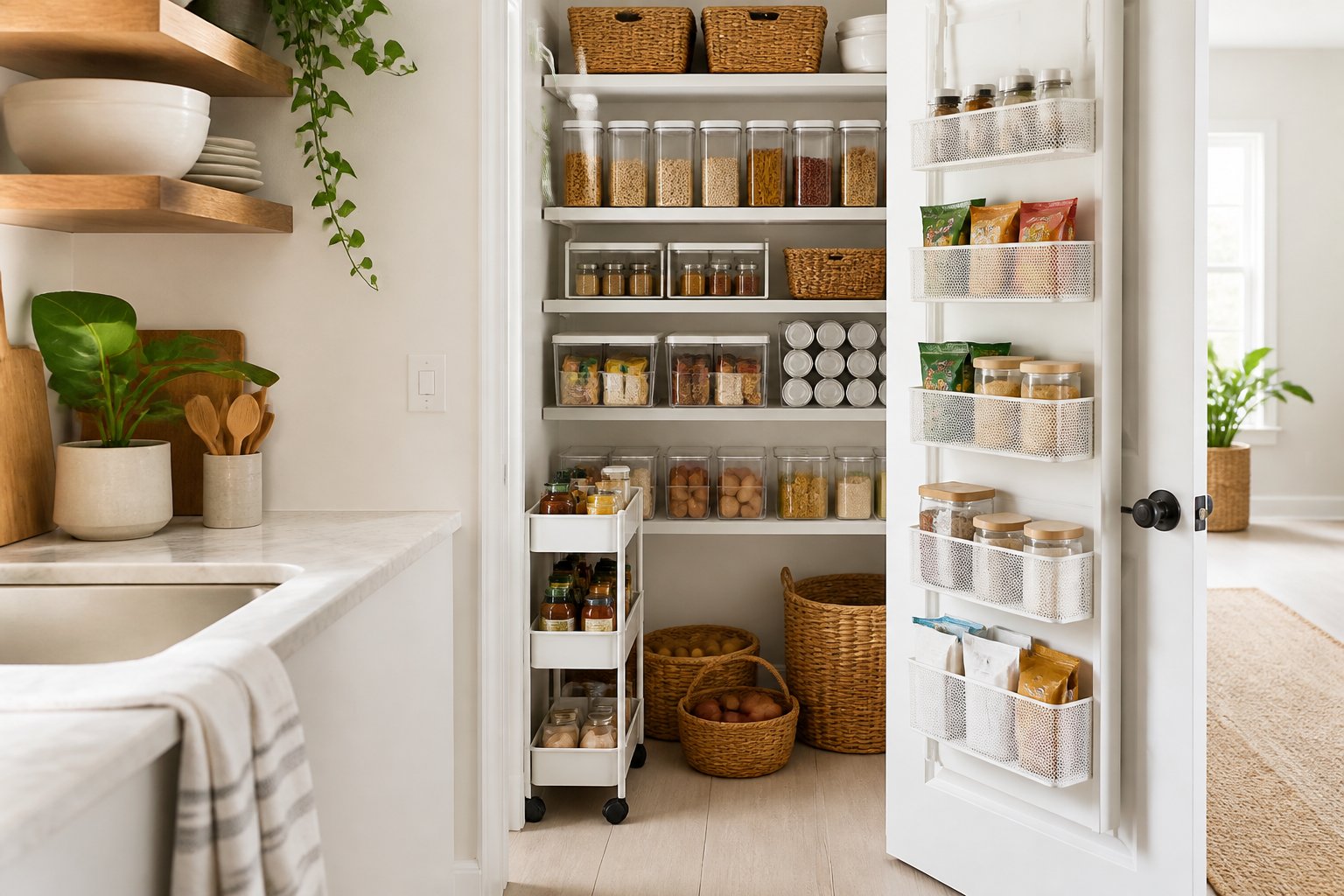
Renting doesn't mean giving up on a functional pantry. You can add storage, change how a shelf works, and still get your deposit back.
We build every small pantry makeover diy around one rule: nothing permanent. Here's where we start.
Over-the-door organizers hook onto the inside of your pantry door and hold spices, packets, and snack boxes. No hardware, no holes.
Shelf risers create a second level on a deep shelf, so cans in the back stay visible. This one change often doubles what a single shelf can hold.
Stackable bins group similar items together and slide out like drawers. Clear ones work best because you can see what's inside without pulling anything down.
Airtight containers keep flour, pasta, and cereal fresh while squaring off the odd shapes that waste space.
A few more damage-free options worth knowing:
| Solution | Best For |
|---|---|
| Tension rods | Dividing tall shelves or hanging light baskets |
| Adhesive hooks | Aprons, measuring cups, reusable bags |
| Under-shelf baskets | Wraps, foil, and small boxes |
| Rolling carts | Filling a narrow gap beside the fridge |
| Freestanding shelf units | Adding storage where no pantry exists |
When you're planning small pantry layout ideas, measure your shelf depth and height first. Most no-drill pieces come in set sizes, and a quick measurement saves you a return trip.
Pantry organization small apartment work goes faster in zones. Keep breakfast items together, baking supplies together, and snacks at a height kids can reach.
Good small space pantry organization is mostly about visibility. If you can see it, you'll use it.
Over-the-Door Pantry Organizers
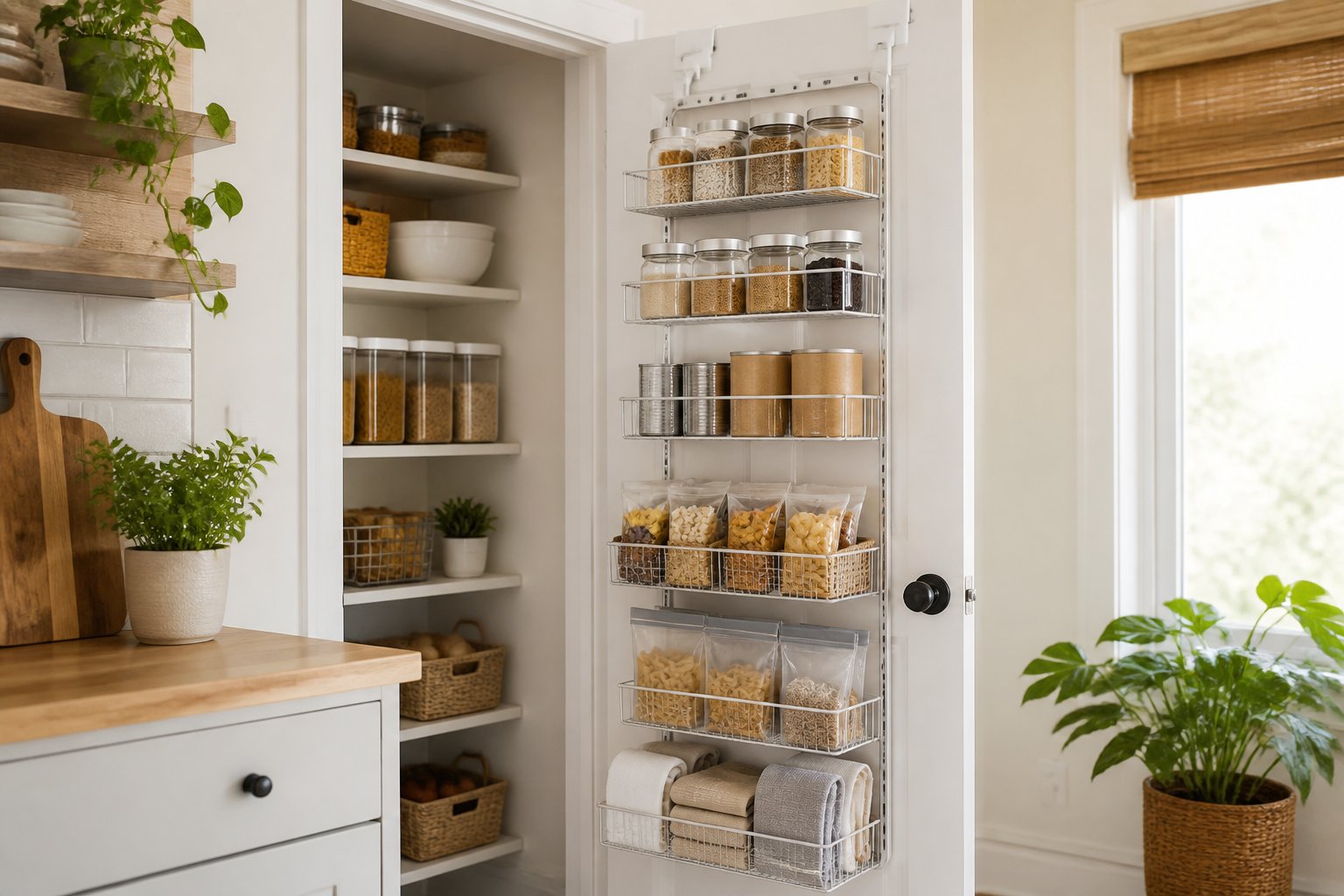
The back of your pantry door is probably the most overlooked spot in your kitchen. We think of it as free real estate, and it costs very little to put it to work.
Most over-the-door organizers hook right over the top of the door. No drilling, no screws, no patching holes later — which matters a lot for renters.
What works well on a door:
- Spice jars and small seasoning packets
- Snack bars, tea bags, and drink mixes
- Foil, plastic wrap, and sandwich bags
- Cleaning cloths and sponges
- Kids' lunchbox items
Keep the heavy stuff off the door. Canned goods and flour bags belong on your shelves, where the weight is better supported.
| Door Organizer Type | Best For |
|---|---|
| Wire rack with baskets | Spices, packets, snacks |
| Fabric shoe pockets | Small bags, wraps, tea |
| Slim adjustable shelves | Jars and short bottles |
| Hooks with hanging bins | Produce, cleaning supplies |
Fabric pocket organizers are a favorite trick in any small pantry makeover diy because they cost a few dollars and hold a surprising amount.
One quick tip: measure the gap between your door and the closest shelf before you buy. If the organizer is too deep, the door won't close.
Doors pair nicely with the rest of your system. Small pantry layout ideas usually combine door storage with airtight containers, shelf risers, and stackable bins so every zone has a clear job.
For pantry organization small apartment setups, this one change frees up a whole shelf. That's real progress in small space pantry organization.
Airtight Containers and Decanting Staples
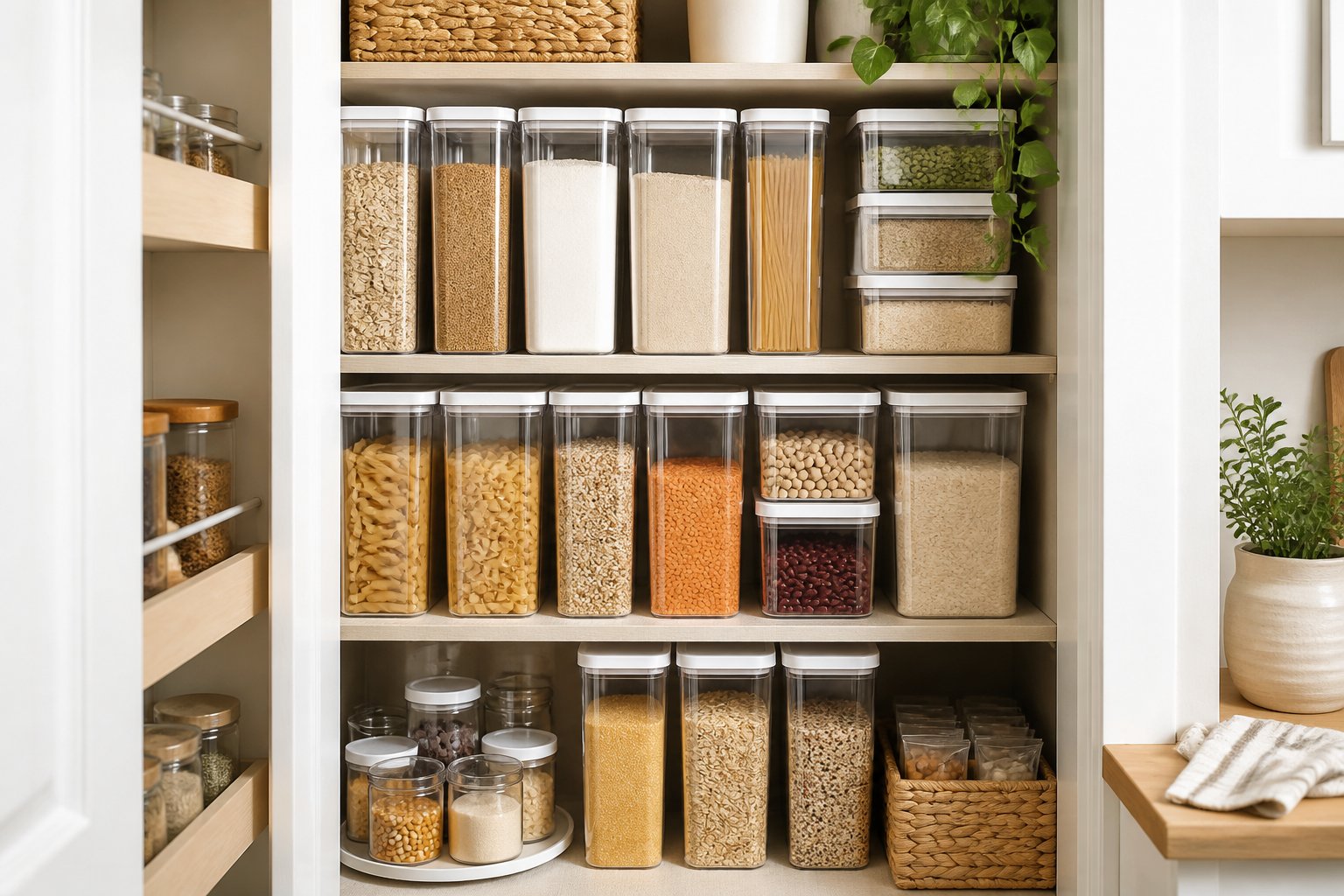
Boxes and bags waste space. They come in odd shapes, tip over, and hide how much you have left.
Moving your staples into airtight containers fixes most of that. We call this decanting, and it's one of the easiest steps in a small pantry makeover diy project.
Here's what works well in a container:
- Flour, sugar, rice, and pasta
- Cereal, oats, and granola
- Coffee beans, tea bags, and sugar packets
- Snacks like crackers, pretzels, and dried fruit
Some items are better left alone. Canned goods, jars, and anything you use up in a week don't need to be moved.
A few tips we come back to often:
| Do this | Why it helps |
|---|---|
| Pick square or rectangular shapes | They sit flush and waste less shelf space |
| Choose clear sides | You can see what's low without opening lids |
| Label with the name and cook time | Saves you from digging for the box you tossed |
| Buy in two or three sizes only | Stacking stays even and steady |
Clear containers pair nicely with shelf risers and stackable bins, since flat lids give you a stable base to build on. That layering is the heart of good small pantry layout ideas.
For pantry organization small apartment setups, keep your most-used jars at eye level. Backups can go higher up or inside an over-the-door organizer.
Start with five containers, not twenty. Small space pantry organization works best when you build it slowly and see what you actually reach for.
Vertical Storage: Shelf Risers and Stackable Bins
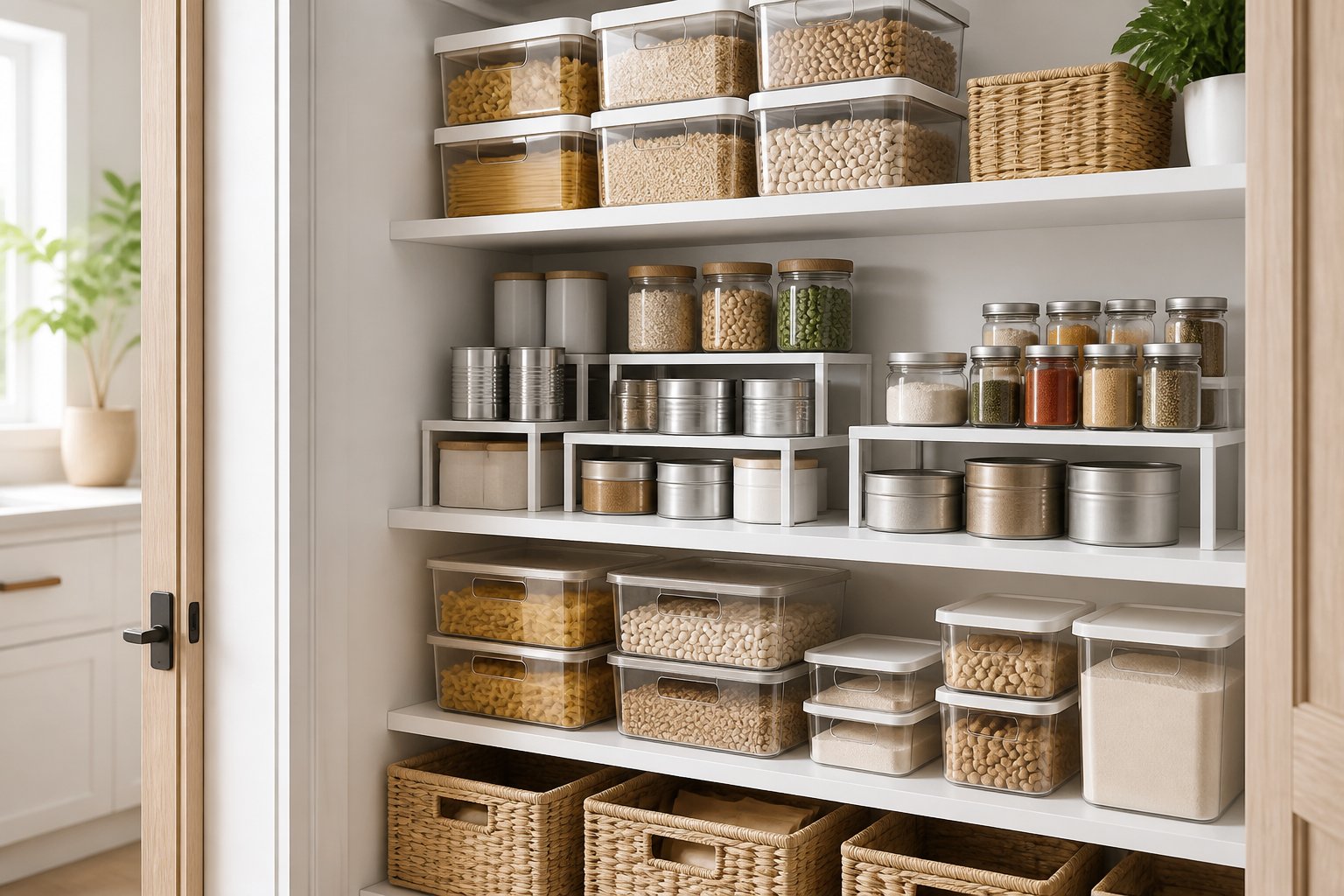
Most small pantries have more room than you think — it's just sitting above your food, unused. That empty air between a can of beans and the shelf overhead adds up fast.
Shelf risers fix that gap. They create a second level on a single shelf, so short jars sit up front and taller items stay visible behind them. We like them for small space pantry organization because they need no drilling and no landlord approval.
Where risers work best:
- Canned goods, so you can read every label at a glance
- Spice jars and small bottles
- Baking supplies like extracts and food coloring
Stackable bins handle the deeper shelves. Look for ones with a front opening, which lets you grab a snack pouch from the bottom bin without unstacking the whole tower.
| Tool | Best For | Renter-Friendly? |
|---|---|---|
| Shelf risers | Cans, spices, short jars | Yes |
| Stackable bins | Snacks, packets, produce | Yes |
| Airtight containers | Flour, rice, pasta, cereal | Yes |
| Over-the-door organizers | Wraps, boxed items, overflow | Yes |
Airtight containers stack neatly and keep dry goods fresh, which makes them a natural fit here. Square shapes waste less space than round ones.
If you're planning a small pantry makeover DIY, measure your shelf height before buying anything. Two inches of clearance can decide whether a riser fits or sits crooked.
For pantry organization in a small apartment, this vertical approach costs less than shelving upgrades. It's also one of the simplest small pantry layout ideas to undo when you move.
Layout Strategies That Maximize Pantry Space
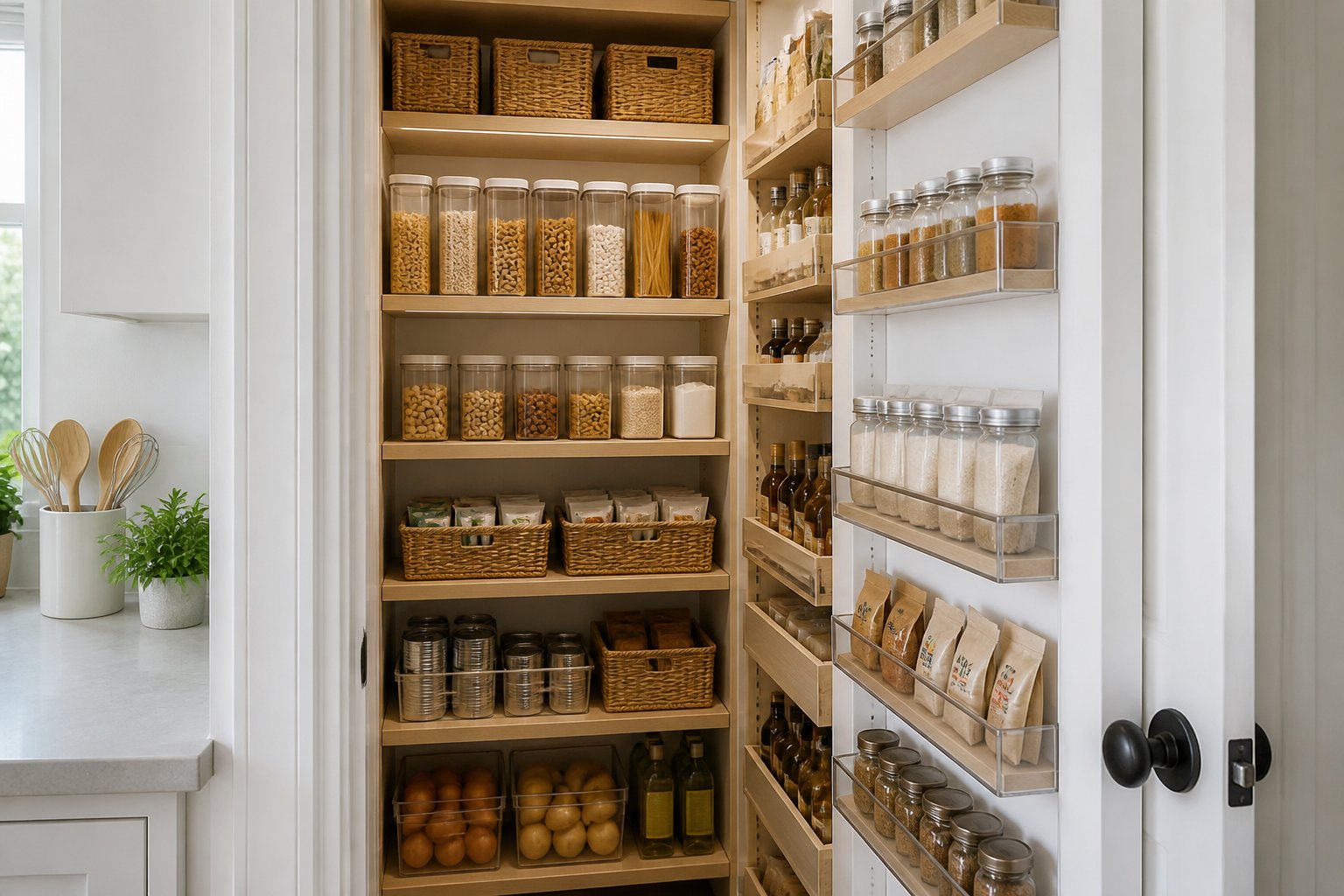
Before you buy a single bin, look at how your pantry is already working. We always start a small pantry makeover diy by clearing everything out and grouping items by how often you reach for them.
That one step tells you where things belong.
Zone your shelves by height:
| Shelf Level | What to Store |
|---|---|
| Top | Backup stock, party supplies, rarely used items |
| Eye level | Daily staples like cereal, coffee, snacks |
| Middle-low | Baking goods, pasta, canned items |
| Floor | Heavy bags, bulk water, small appliances |
Most small pantry layout ideas fail because the vertical space goes unused. A pair of shelf risers doubles your canned goods area without any tools, and stackable bins keep loose packets from tipping over.
Deep shelves need a different fix. Try placing airtight containers in two rows, with taller items in back and shorter ones in front so nothing disappears.
For pantry organization small apartment setups, the door is your extra wall. Over-the-door organizers that hook over the top edge hold spices, foil, and wraps without a single drill hole.
Keep a few inches of empty shelf space open. You need room for grocery runs, and a packed pantry gets messy fast.
We also suggest turning one lower shelf into a landing zone for items you use every single day. Good small space pantry organization means you can grab what you need with one hand.
Small Pantry Makeover: Before and After Tips
Most "before" pantries share the same problems: wobbly wire shelves, half-empty boxes, and food you forgot you owned. The good news is that a small pantry makeover diy project usually takes a weekend, not a renovation budget.
Start by emptying the whole space. We know it looks worse before it looks better, but you can't plan around clutter you can't see.
Your quick before-and-after checklist:
| Before | Simple Fix | After |
|---|---|---|
| Deep shelves hiding cans | Shelf risers | Everything visible at a glance |
| Bags of flour and pasta | Airtight containers | Uniform, sealed storage |
| Loose snack packets | Stackable bins | Grab-and-go zones |
| Empty door | Over-the-door organizers | Spices and wraps in reach |
Next, group like with like. Baking goods together, breakfast items together, snacks on a lower shelf for kids.
When you're thinking through small pantry layout ideas, put daily items at eye level and rarely used appliances up top.
Renters, take note. Tension rods, peel-and-stick liners, and hooks that hang over the door mean no holes and no lost deposit. That's the heart of good pantry organization small apartment planning.
Measure your shelf depth before you buy anything. It's the step people skip, and it's why bins end up sticking out an inch too far.
Finally, label everything. Clear labels keep your small space pantry organization looking the same in six months as it does on day one.
Budget-Friendly Small Pantry Organization
A small pantry makeover diy project doesn't need a big budget. Most of the work is sorting, grouping, and finding a home for each item.
Start by emptying the shelves. Toss expired food, then group what's left into simple categories like breakfast, snacks, baking, and cans.
Where your money goes furthest:
| Item | Why it helps | Rough cost |
|---|---|---|
| Stackable bins | Corral loose packets and pouches | $5–$12 each |
| Shelf risers | Double your usable shelf height | $10–$20 |
| Over-the-door organizers | Add storage with no drilling | $15–$30 |
| Airtight containers | Keep flour, rice, and pasta fresh | $4–$15 each |
We like starting with one shelf instead of the whole space. It's cheaper, and you learn what actually works for your habits.
For pantry organization small apartment setups, hang an over-the-door organizer for spice jars and snack bars. Renters can skip the drill entirely.
A few free tricks:
- Reuse glass jars for dry goods
- Cut cereal boxes into drawer dividers
- Label with masking tape and a marker
- Turn a lazy Susan from another cabinet into a sauce station
Shop your own home first. You may already own baskets, trays, or jars that fit your small pantry layout ideas.
When you do buy, measure your shelf depth and height before ordering. Returns eat up savings fast.
Good small space pantry organization comes down to visibility. If you can see it, you'll use it before it expires.
Conclusion
You don't need a big kitchen or a landlord's permission to build a pantry that works.
Start with what you already have. Clear one shelf, group similar foods together, and see how much room you actually gain before buying a single thing.
When you're ready to add tools, we suggest keeping it simple:
| Problem | What helps |
|---|---|
| Wasted vertical space | Shelf risers to double a single shelf |
| Bags and boxes falling over | Airtight containers with flat lids |
| Small items lost in back | Stackable bins you can pull out like drawers |
| No floor space left | Over-the-door organizers that hang, not drill |
Every one of these comes off the wall when you move out, which matters for pantry organization small apartment setups where holes cost you a deposit.
Your small pantry makeover diy doesn't have to happen in one weekend, either. We'd rather you fix one zone at a time and keep it that way than reset the whole closet every three months.
Pay attention to how you actually cook. The best small pantry layout ideas put your everyday items at eye level and push holiday baking supplies up high.
Label things, even if it feels unnecessary. It saves you from buying a third jar of cumin.
Good small space pantry organization isn't about owning less food. It's about seeing what you have, reaching it easily, and spending your time on the parts of your day that matter more than hunting for the rice.
Frequently Asked Questions
Deep shelves, tight budgets, and rental rules all bring their own challenges when you're trying to sort out a small pantry. Below, we answer the questions we hear most often about zones, categories, and storage that doesn't require a single drill hole.
How can I organize a small pantry with deep shelves?
Deep shelves hide food in the back, which is how you end up with three open boxes of pasta. The fix is to treat the depth like a filing system instead of one big hole.
Place clear pull-out bins on the shelf so you can slide the whole group forward instead of digging. Stackable bins work well here because you can label the front and lift out just what you need.
Shelf risers help too. They lift the back row a few inches higher so you can see cans and jars behind the front ones.
For very deep shelves, put items you use weekly in front and backups behind them. Rotating a few boxes forward each week keeps older food from getting lost.
What are the best budget-friendly pantry organization ideas for small spaces?
Start with what you already have. Shoeboxes, baskets from other rooms, and glass jars from finished sauces can hold snacks and dry goods until you're ready to buy matching containers.
A small pantry makeover diy usually costs less than people expect. Tension rods, peel-and-stick labels, and a set of stackable bins from a discount store cover most needs.
Here's where we suggest spending first:
- Airtight containers for flour, sugar, rice, and cereal, since these go stale fastest
- A single over-the-door organizer to add shelf space without touching your walls
- Two or three shelf risers for canned goods and short jars
Skip the full container set at the start. Buy a few, use them for a month, then add more once you know what sizes you actually reach for.
How should I arrange pantry items by category and frequency of use?
Group like with like first. Baking supplies together, canned goods together, snacks together, breakfast items together.
Then think about height. Eye level and the shelf just below it should hold what you grab daily, such as coffee, cereal, and lunch supplies.
Put heavy items like flour bins and large jars on lower shelves. This keeps you from lifting weight overhead and makes the space safer if kids reach in.
The top shelf is for things you touch once a month or less. Holiday baking pans, extra paper goods, and party supplies belong up there.
If you have young kids, save one low bin for their snacks so they can help themselves without climbing.
What are the seven essential pantry organization zones?
Most small pantry layout ideas come down to seven groups. Assigning each one a set spot means you stop hunting for the olive oil.
- Daily grab-and-go — coffee, tea, breakfast items, lunch snacks
- Baking — flour, sugar, baking powder, extracts, sprinkles
- Canned and jarred goods — soups, beans, tomatoes, sauces
- Dry goods and grains — pasta, rice, oats, lentils
- Snacks — chips, crackers, granola bars, kid-level bin
- Backstock — extra bottles and boxes you bought on sale
- Non-food overflow — paper towels, foil, trash bags, water bottles
You don't need seven full shelves. In a very small pantry, two zones can share one shelf as long as each has its own bin or basket.
What are the most common mistakes to avoid when organizing a small pantry?
Buying containers before you declutter is the big one. You end up with bins that don't fit the shelf depth or the amount of food you actually keep.
A few others we see often:
- Skipping labels. Clear containers still need names and dates, especially for flours that look alike.
- Stacking too high. If you have to move three things to reach one, the system will fall apart within a week.
- Ignoring the door. In pantry organization small apartment setups, the back of the door often holds spices, wraps, and packets you'd otherwise stack loose.
- Storing food in the original bags. Half-open cracker sleeves take more room than a square airtight container and go stale faster.
- Forgetting expiration dates. Check them twice a year so backstock doesn't turn into waste.
How can I create extra storage in a small pantry without built-in shelves?
Renters have more options than they think, and none of them require a drill. Freestanding wire or plastic shelf units fit inside a closet pantry and lift out when you move.
Look for ones with adjustable shelves so you can size the gaps to your tallest items, like cereal boxes or a stand mixer. Use the walls and door next. Over-the-door organizers hook over the top edge and hold spices, wraps, and snack packets, while tension rods can divide a tall gap or hang light baskets.
Then build upward on the shelves you do have. Shelf risers add a second level for cans and jars, and stackable bins turn one deep shelf into pull-out storage you can lift out like a drawer. Start with one or two of these, live with it for a week, and add more only where you still feel cramped.
That slow approach is the heart of good small space pantry organization — you keep what works and skip what doesn't.