

How to Organize a Small Kitchen Without Adding Cabinets: Smart Storage Solutions for Maximum Space
February 8, 2026
A small kitchen without cabinets might seem like a challenge, but you can create an organized and functional space with the right approach. Many people face this situation in apartments, rental homes, or kitchens with limited built-in storage. The good news is that you don't need to install expensive cabinets to keep everything neat and accessible.
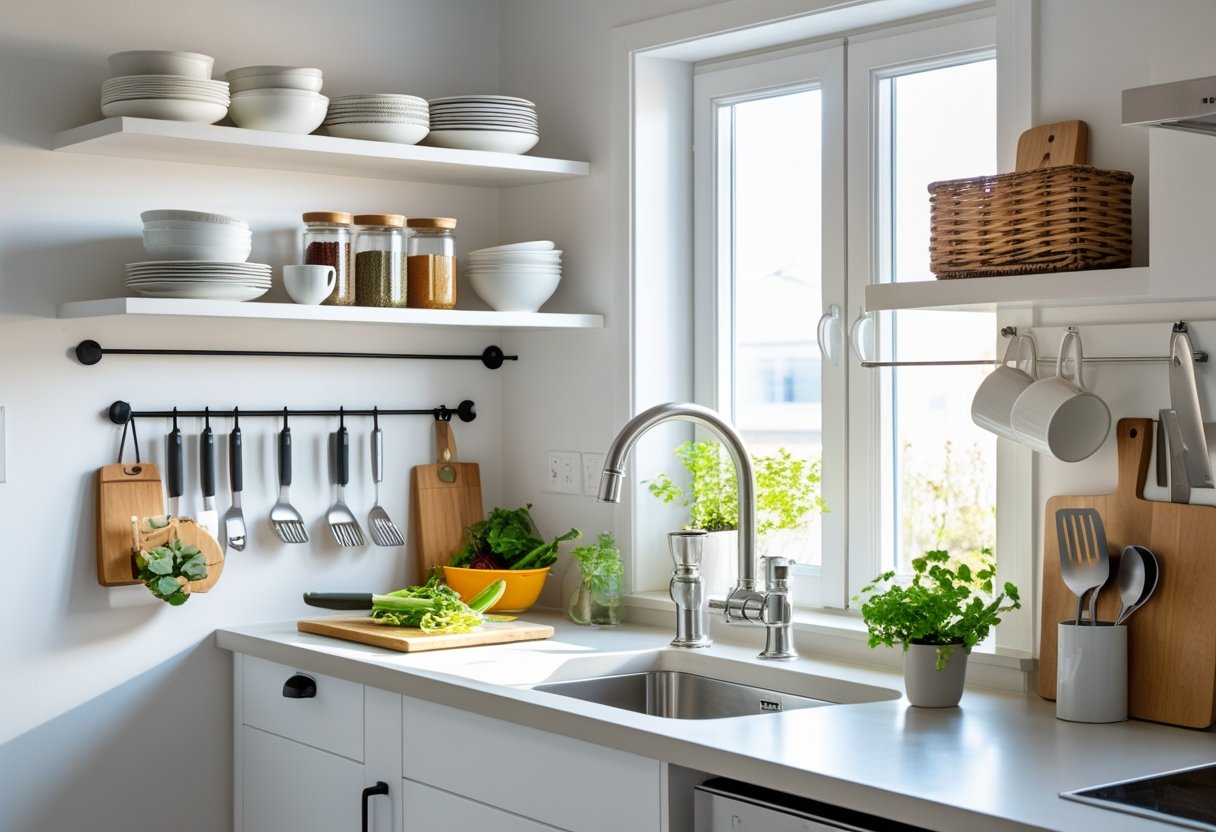
You can organize a small kitchen without cabinets by using vertical storage solutions like wall-mounted shelves and pegboards, along with portable options such as rolling carts and hooks to keep your countertops clear and your items easy to reach. These methods work well because they take advantage of unused wall space and give you flexibility to adjust your storage as your needs change.
This guide will show you practical ways to maximize your storage, reduce clutter, and maintain an organized kitchen. You'll learn specific solutions that work in tight spaces and answer common questions about living without traditional cabinet storage.
Maximizing Storage and Organization in Small Kitchens
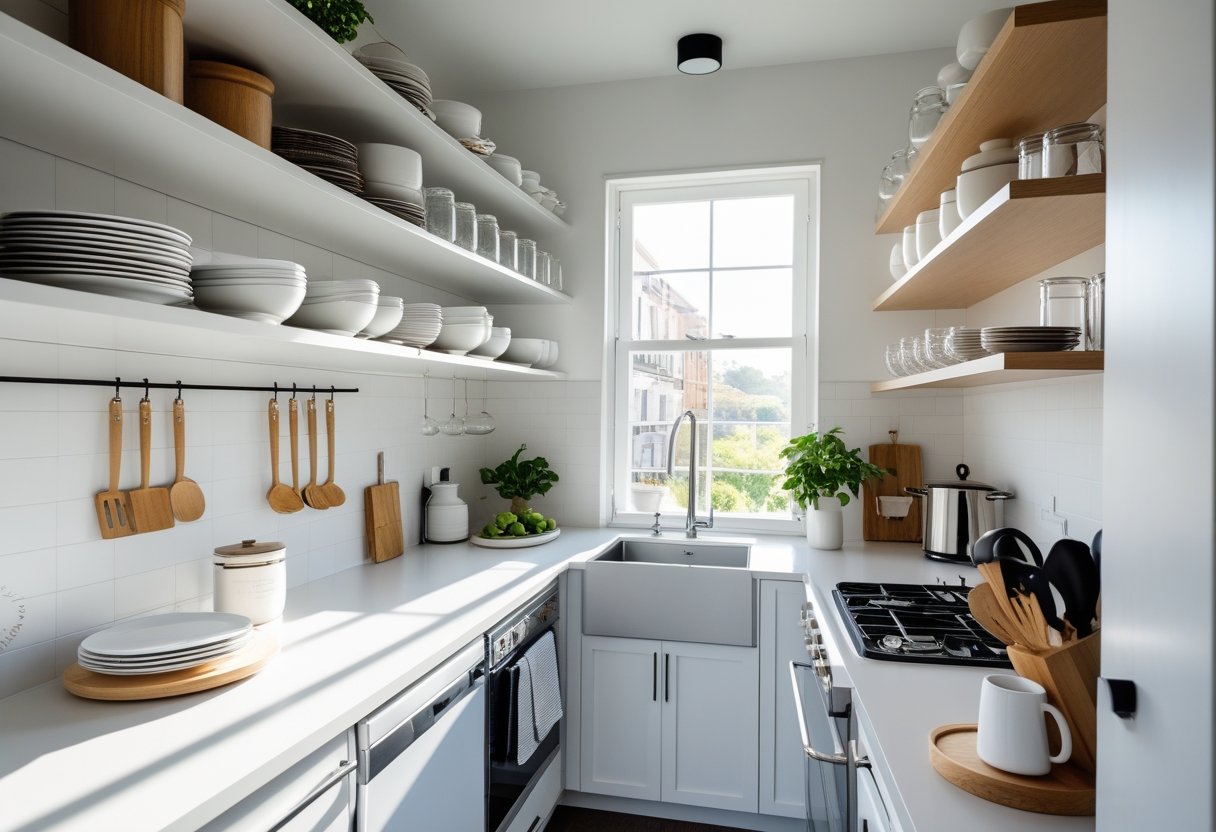
Small kitchens demand smart storage solutions that work within your existing layout. You can add significant storage capacity by using vertical space, organizing drawers and pantries efficiently, arranging open shelves strategically, and selecting compact furniture and appliances.
Utilizing Vertical Space Effectively
Your walls offer valuable storage space that often goes unused. Install hooks or a pegboard system to hang pots, pans, and cooking utensils. This keeps your most-used items within reach while freeing up cabinet and counter space.
Wall-mounted magnetic knife strips hold your knives securely and save drawer space. You can also mount magnetic strips for metal spice containers or small tools. Hanging rails with S-hooks work well for cups, ladles, and whisks.
Stack items vertically inside cabinets using shelf risers or stackable organizers. This creates multiple levels within a single shelf space. Install adhesive hooks inside cabinet doors to hang measuring cups, pot lids, or small cutting boards.
Consider adding floating shelves above your counter or near the ceiling. These work best for items you don't need daily, like serving platters or seasonal dishes. Keep the items you use regularly at eye level and arm's reach.
Implementing Drawer and Pantry Organizers
Drawer dividers transform messy drawers into organized spaces. Use adjustable dividers to create custom sections for utensils, gadgets, and tools. This prevents items from sliding around and makes everything easy to find.
For deeper drawers, try stackable bins or tiered organizers. Store similar items together—baking supplies in one section, food storage containers in another. Clear containers let you see contents at a glance, which saves time when cooking.
Pantry organizers maximize shelf space efficiently. Use the following solutions:
- Lazy Susans for oils, vinegars, and condiments
- Clear bins to group similar items like snacks or baking supplies
- Can racks that display labels and use vertical space
- Over-the-door organizers for spices, packets, or cleaning supplies
Label containers and bins so family members know where items belong. This system maintains organization over time.
Making the Most of Open Shelving
Open shelves require intentional organization since everything stays visible. Group items by category and use matching containers for a clean look. Store everyday dishes and glasses on lower shelves for easy access.
Place taller items in back and shorter items in front to see everything clearly. Use small baskets or bins on shelves to contain loose items like tea bags, snack bars, or napkins. This prevents clutter while keeping things accessible.
Display attractive items like colorful dishes or glassware on eye-level shelves. Store less attractive but necessary items like food storage containers in uniform bins or boxes. This creates visual appeal while maintaining function.
Limit what you keep on open shelves to items you use regularly. This prevents overcrowding and makes cleaning easier. Wipe shelves weekly since they collect dust and cooking residue faster than closed cabinets.
Choosing Space-Saving Furniture and Appliances
Compact appliances free up significant counter and storage space. Choose a slim toaster, a smaller coffee maker, or a mini food processor if you don't need full-size versions. Measure your available space before purchasing any appliance.
Consider these space-saving furniture options:
| Item | Benefit |
|---|---|
| Rolling cart | Provides mobile storage and extra prep surface |
| Drop-leaf table | Expands when needed, folds flat when not in use |
| Fold-down wall table | Creates workspace without permanent footprint |
| Nesting bowls and measuring cups | Stack compactly in minimal space |
A narrow rolling cart fits between appliances or in tight corners. Use it for frequently used items, extra prep space, or as a mobile serving station. Move it out when you need the floor space.
Look for appliances with multiple functions. A toaster oven can replace both a toaster and a small oven. An Instant Pot combines a pressure cooker, slow cooker, and rice cooker in one unit. These choices reduce the number of appliances you need to store.
Store small appliances you rarely use outside the kitchen if possible. Keep only what you use weekly on your counters or in easily accessible cabinets.
Decluttering and Maintaining a Tidy Small Kitchen
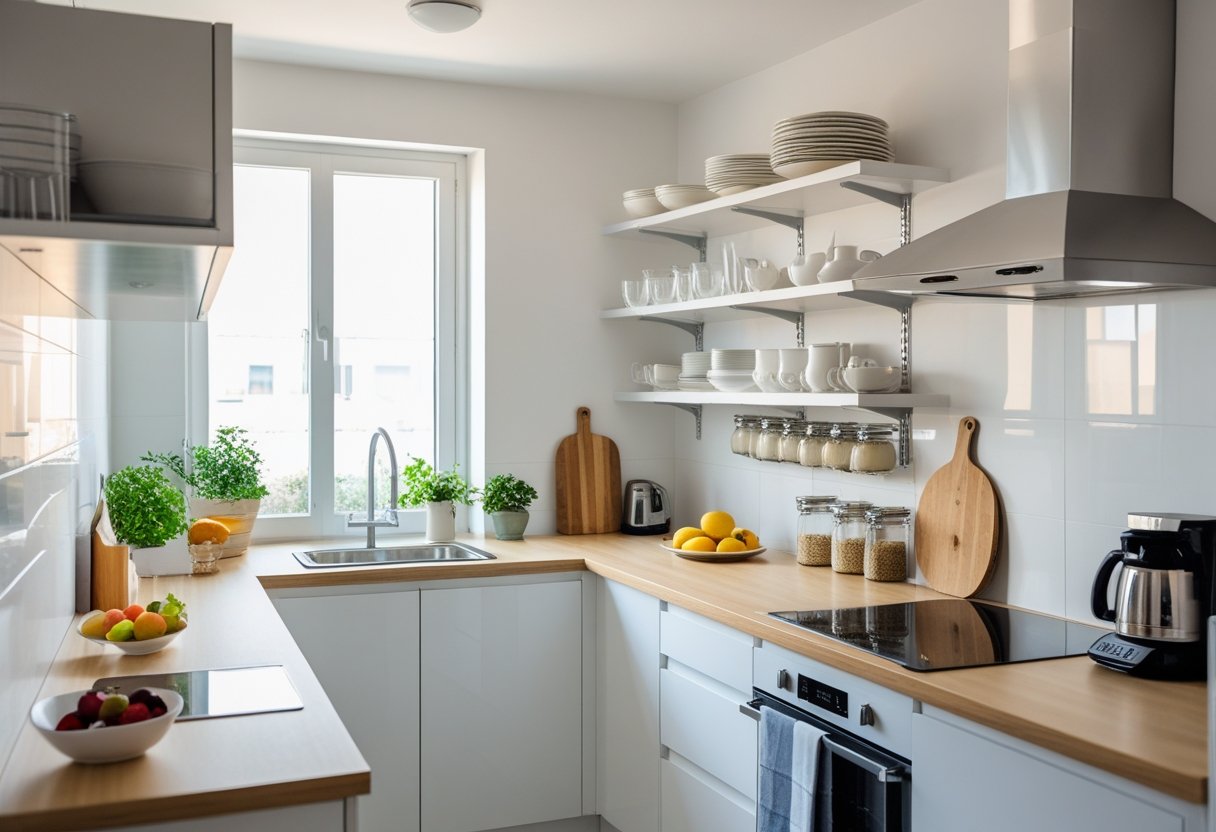
A clutter-free small kitchen starts with keeping only what you need and putting everything in its proper place. Regular upkeep prevents messes from building up again.
Streamlining Essential Kitchen Items
Start by removing duplicate tools from your kitchen. You don't need three can openers or five wooden spoons taking up valuable space.
Keep one good-quality version of each tool you actually use. Put items you haven't touched in six months into a box and store it elsewhere for 30 days. If you don't reach for anything in that box, donate or discard those items.
Items to keep:
- One chef's knife and one paring knife
- Basic pots and pans (one large pot, one small pot, one skillet)
- Essential utensils you use weekly
- Dishes for your household size plus two extras
Items to remove:
- Specialty appliances used once a year
- Broken or damaged tools
- Expired pantry items
- Duplicate measuring cups or mixing bowls
Move seasonal items and special occasion dishes to storage outside your kitchen. This frees up daily-use space for the tools you reach for most often.
Establishing Efficient Kitchen Zones
Group similar items together based on where you use them. Store coffee mugs, filters, and grounds near your coffee maker. Keep cooking oils, spices, and utensils within arm's reach of your stove.
Create a prep zone near your cutting board with knives, peelers, and mixing bowls. Your cleaning zone should include dish soap, sponges, and towels under or beside the sink. This setup reduces the steps you take while cooking and cleaning.
Place items you use daily at eye level or in the most accessible spots. Put things you rarely need on higher shelves or in back corners. Heavy items belong on lower shelves for safety and easier access.
Maintaining an Ongoing Organization Routine
Clean as you cook to prevent messes from piling up. Wipe counters after each meal and put ingredients back immediately after using them.
Set aside 10 minutes each evening to reset your kitchen. Put away clean dishes, clear the sink, and return items to their designated zones. This daily habit keeps clutter from accumulating.
Do a quick inventory check once a week. Toss expired food, consolidate open packages, and wipe down shelves. Schedule a deeper decluttering session every three months to reassess what you're keeping and using. Mark this time on your calendar so you don't skip it.
Frequently Asked Questions
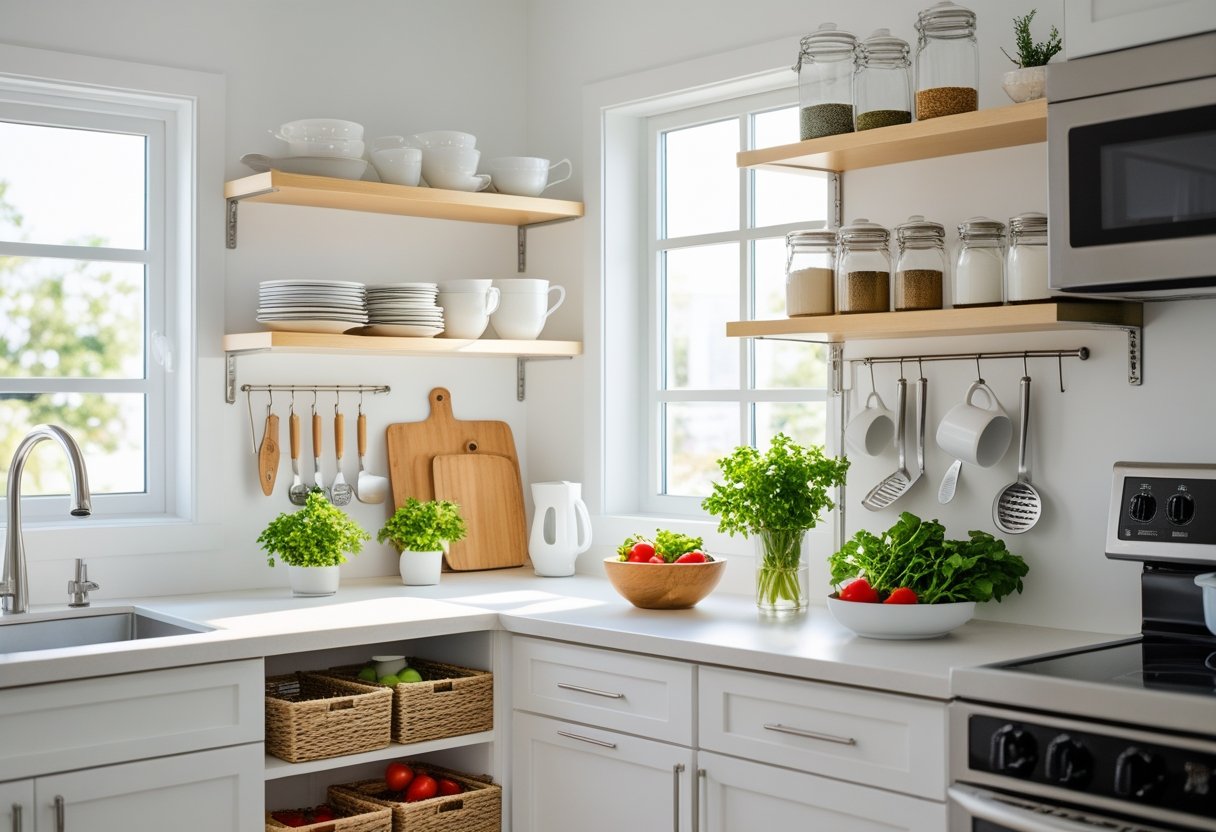
Organizing a small kitchen without adding cabinets requires creative use of walls, drawers, and vertical spaces while keeping countertops clear and functional.
What are the best storage solutions for maximizing space in a small kitchen?
Open shelving provides accessible storage while keeping items visible and easy to reach. You can install floating shelves on empty wall areas to hold plates, bowls, and glasses. These shelves work well because they don't take up floor space.
Rolling carts offer portable storage that you can move around as needed. They fit in tight spots and give you extra prep space when necessary.
Pegboards let you customize your storage by moving hooks and small shelves around. You can hang pots, pans, utensils, and cooking tools on them.
Stackable containers help you make the most of drawer and shelf space. Clear containers work best because you can see what's inside without opening them.
How can I utilize wall and vertical space effectively for kitchen organization?
Magnetic strips mounted on walls hold knives, metal utensils, and small tools. You can place them at eye level for easy access. This keeps your drawers free for other items.
Hanging racks attached to walls or ceilings store pots and pans overhead. These racks use space that normally goes unused. They also make your cookware easier to grab while cooking.
Wall-mounted baskets or bins hold produce, dish towels, or cleaning supplies. You can hang them at different heights to use all available wall space.
Over-the-door organizers add storage without taking up wall space. They work on pantry doors, cabinet doors, or even the main kitchen door.
What are the top organization tips for decluttering countertops in a limited kitchen area?
Keep only daily-use items on your counters. Coffee makers, knife blocks, and dish soap can stay out if you use them every day. Everything else should go in drawers or on shelves.
Use tiered stands or lazy susans to group items vertically instead of spreading them across the counter. This creates more usable prep space.
Store small appliances in lower cabinets, drawers, or on rolling carts. Pull them out only when you need them. This simple change can clear half your counter space.
A utensil crock or jar holds spatulas, spoons, and cooking tools in one spot. Place it near your stove for easy access while cooking.
Can you suggest ways to organize kitchen utensils and appliances without additional cabinetry?
Drawer dividers separate utensils into categories and prevent them from getting mixed together. You can find adjustable dividers that fit different drawer sizes.
Hooks screwed into the underside of shelves hold mugs, measuring cups, or small pots. This uses the empty space between shelf levels.
Freestanding units like baker's racks provide multiple shelves for appliances and dishes. These units don't require installation and you can move them if needed.
Small baskets on open shelves keep similar items together. Label each basket so you know where things belong.
What are smart strategies for utilizing under-sink space in a small kitchen layout?
Pull-out bins or sliding drawers make it easier to reach items stored in the back. You can install these yourself with basic tools.
Stackable shelves create two or three levels of storage under the sink. This doubles or triples your storage capacity in that area.
Door-mounted racks attach to the inside of cabinet doors and hold cleaning supplies, sponges, or trash bags. These racks use space that would otherwise be wasted.
Tension rods placed vertically create dividers for storing flat items like cutting boards and baking sheets. You can adjust the spacing based on what you need to store.
How do I keep a small kitchen functional and orderly without increasing storage footprint?
Put items away immediately after using them. This habit prevents clutter from building up on counters and tables.
Group items by how often you use them. Keep daily items within easy reach and store occasional-use items in harder-to-access spots.
Use vertical space before looking for horizontal space. Stacking items up instead of out keeps your kitchen from feeling cramped.
Regularly sort through your kitchen items and donate or discard things you don't use. Fewer items means less storage space needed.