



DIY Tree Shelves: Build Custom Storage That Brings Nature Indoors
January 2, 2026
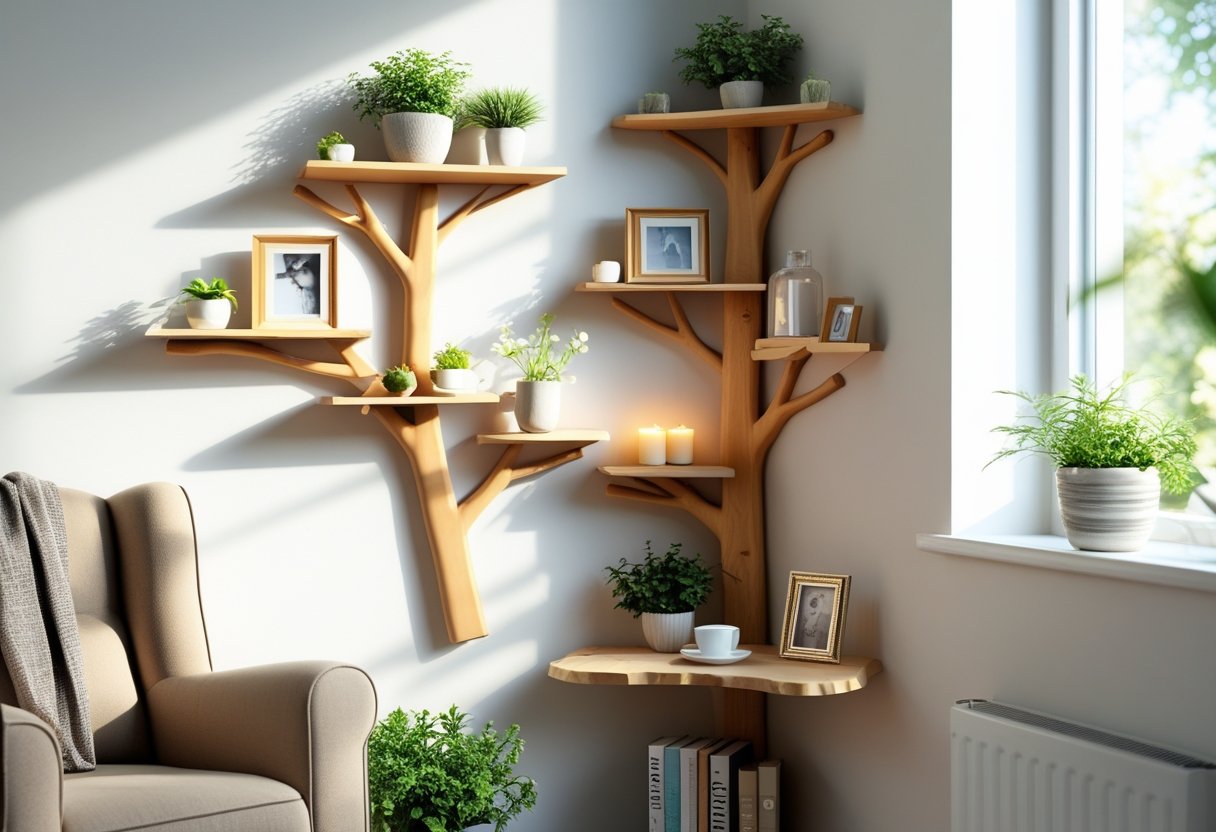
Tree shelves bring a touch of nature into your home while giving you a creative way to display books, plants, and decorations. These unique storage pieces mimic the branching shape of real trees, with shelves extending outward like branches from a central trunk. You can mount them on walls or build them as freestanding units.

Building your own tree shelves is a straightforward weekend project that requires basic woodworking skills, simple materials like wood boards and brackets, and tools you likely already own. The design works well in any room, from children's bedrooms to living spaces where you want to add character.
This guide walks you through everything you need to know about creating tree shelves. You'll learn how to plan your design, choose the right materials, and put together a finished piece that fits your space and style.
Planning Your DIY Tree Shelves

Successful tree shelf construction starts with selecting durable materials, sketching a design that fits your space, and gathering the right tools while prioritizing safety measures.
Choosing the Right Materials
Wood is the primary material you'll need for building tree shelves. Plywood works well for most projects because it's affordable and easy to cut into branch shapes. You can use ¾-inch thick plywood for sturdy shelves that will hold books without sagging.
Solid hardwoods like oak, maple, or walnut create more durable shelves but cost more and require stronger tools to cut. Pine offers a middle ground with decent strength at a lower price point.
You'll also need wood glue, screws, and wall anchors for mounting. L-brackets or French cleats provide the strongest support for heavier loads. Sand the wood with 120-grit and 220-grit sandpaper for a smooth finish.
Recommended materials:
- Plywood or solid wood boards
- Wood screws (2-3 inches)
- Heavy-duty wall anchors
- Wood glue
- Sandpaper
- Paint or wood stain
- Polyurethane sealer
Designing the Tree Shelf Structure
Start by measuring your wall space and deciding how tall and wide you want your tree to be. Sketch your design on paper first, including the trunk and all branch positions where books will sit.
Keep branches between 8-12 inches deep to hold standard books. Space the branches 10-15 inches apart vertically so you have enough room for books of different heights.
Draw your tree design on the wood using your sketch as a guide. Use a pencil so you can erase and adjust before cutting. Make sure the trunk is wide enough to support the weight of all the branches and books.
Plan where you'll attach the tree to the wall. Mark mounting points along the trunk at studs for maximum strength. Your design should balance visual appeal with structural stability.
Essential Tools and Safety Tips
A jigsaw is the most important tool for cutting curved branch shapes from your wood. You'll need a drill with various bits for making pilot holes and driving screws. A level ensures your tree hangs straight on the wall.
Wear safety glasses whenever you cut or drill wood. Use a dust mask when sanding to avoid breathing wood particles. Keep your work area well-lit and clear of clutter.
Secure your wood pieces with clamps before cutting to prevent shifting. Always cut away from your body and keep your hands clear of the blade path. Unplug power tools when changing blades or bits.
Essential tool list:
- Jigsaw with wood-cutting blades
- Power drill and drill bits
- Circular saw or handsaw
- Clamps
- Level
- Measuring tape
- Pencil
- Stud finder
Building and Styling Tree Shelves

Building a tree shelf requires careful planning of your design, proper material preparation, and secure installation methods. The finishing touches and decorating choices will determine how well the shelf fits your space.
Step-by-Step Construction Guide
Start by sketching your tree design on paper with measurements. Decide if you want a realistic branch pattern or a simplified geometric tree shape. Transfer your design to plywood or solid wood boards using a pencil.
Cut out your tree trunk and branch pieces using a jigsaw or scroll saw. Sand all edges smooth with 120-grit sandpaper to remove splinters and rough spots. Create shelf supports by cutting small blocks or using metal brackets that attach to the back of each branch.
Assemble the pieces on the floor before mounting. Attach branches to the trunk using wood screws driven from the back side where they won't be visible. Add wood glue to joints for extra strength. Pre-drill holes to prevent splitting.
Test fit your shelf pieces to ensure branches align at the correct angles. Adjust spacing between shelves based on what you plan to display. Books typically need 10-12 inches of vertical clearance while small decorative items need less space.
Finishing Techniques and Paint Options
Apply wood stain for a natural look that shows the grain pattern. Dark walnut or espresso stains create dramatic contrast while lighter honey or natural finishes keep things simple. Let stain dry for 24 hours between coats.
Paint offers more color flexibility for your tree shelf. Use acrylic or latex paint in colors that match your room. White and black are popular choices that work with most decor styles. Apply primer first if painting over dark wood or stain.
Add a protective topcoat of polyurethane or clear sealer. This protects against scratches and makes cleaning easier. Choose matte finish for a natural look or semi-gloss for easier cleaning in high-traffic areas. Apply 2-3 thin coats instead of one thick coat to avoid drips.
Installation Tips and Wall Mounting
Locate wall studs using a stud finder before drilling. Mark stud locations with painter's tape. Your tree shelf needs to anchor into at least two studs for safe weight support.
Use heavy-duty wood screws that are 3 inches long to penetrate through drywall into studs. Install a mounting board across multiple studs first, then attach your tree shelf to this board. This distributes weight evenly.
For smaller shelves or decorative pieces, use heavy-duty wall anchors rated for at least 50 pounds each. Space anchors 16-24 inches apart along the back of your tree trunk. Double-check that the shelf sits level before tightening all screws completely.
Decorating and Organizing Ideas
Group books by size or color on different branches to create visual interest. Stack books horizontally on some shelves and vertically on others. Leave some branches empty to avoid a cluttered appearance.
Small potted plants work well on tree shelves because they complement the natural theme. Choose low-maintenance varieties like succulents or air plants that don't need frequent watering. Keep plants on lower branches to make watering easier.
Display framed photos, candles, or small decorative objects on upper branches. Use the shelf as a coat hanger by adding hooks to branch ends near your entryway. During holidays, hang ornaments from branches or wrap string lights around the trunk for seasonal decoration.
For smaller accessories and office supplies near your DIY tree shelves, add a compact organizer like the 3-Tier Desk Organizer. Its tiered design works perfectly on a tabletop beneath a tree shelf or mounted on a lower branch to keep stationery, small tools, or decorative accents tidy without detracting from the organic look of your shelves.
Frequently Asked Questions
Building tree shelves requires choosing the right materials, understanding basic construction methods, and knowing how to safely install your project. These answers cover the most common questions about creating tree-style shelving units.
How can I create tree shelves with basic woodworking skills?
You can build tree shelves with just a few fundamental skills and tools. Start by drawing your tree design on plywood, then use a jigsaw to cut out the trunk and branch shapes. Sand all edges smooth to prevent splinters.
Connect the pieces using wood glue and screws for stability. Pre-drill holes before inserting screws to avoid splitting the wood. You don't need advanced techniques to create an attractive tree shelf.
Paint or stain your finished shelf before mounting it to the wall. This approach works well for beginners who have basic familiarity with power tools.
What type of wood should I use for constructing durable tree shelves?
Pine works well for lightweight tree shelves that hold decorative items or small books. It's affordable and easy to cut with basic tools. Oak offers more durability if you plan to store heavier items.
Maple and cherry provide excellent strength for shelves that need to support substantial weight. These hardwoods resist warping and last longer than softer woods. Plywood is another good option that combines strength with cost-effectiveness.
Your wood choice depends on what you plan to store and your budget. Thicker wood (at least 3/4 inch) provides better support regardless of the type you select.
Where can I find a template for a DIY tree bookshelf?
You can search online for free tree bookshelf templates and patterns. Many woodworking websites and DIY blogs offer downloadable designs in various styles and sizes. Print these templates at your desired scale and trace them onto your wood.
You can also create your own template by sketching a tree design on large paper. This gives you complete control over the size and branch placement. Transfer your design to the wood using carbon paper or by cutting out the paper template and tracing around it.
How do I securely mount a tree bookshelf to the wall?
Locate wall studs using a stud finder and mark their positions. Drill pilot holes through your tree shelf's trunk section where it will align with the studs. Use heavy-duty wood screws (at least 3 inches long) to attach the shelf directly into the studs.
If studs aren't positioned where you need them, use toggle bolts or heavy-duty wall anchors rated for the weight you plan to store. Install at least three attachment points spread vertically along the trunk for proper weight distribution.
Check that your shelf is level before fully tightening all screws. Add L-brackets behind the trunk for extra support if you plan to store heavy items.
Is it more cost-effective to build tree shelves myself than to purchase pre-made ones?
Building your own tree shelves typically costs $30 to $80 in materials, depending on wood type and size. Pre-made tree bookshelves usually sell for $150 to $400 or more. You save money by doing the work yourself.
Your main expenses are wood, screws, sandpaper, and finish. You'll save the most if you already own basic tools like a jigsaw and drill. Factor in your time when calculating true cost savings.
Custom-built shelves let you choose exact dimensions and wood quality for your space. This customization isn't available with store-bought options at any price.