



Decorative Tapestry for Wall: Stylish Ideas & Buying Guide
December 31, 2025
Wall tapestries are an easy way to change how a room looks. These fabric hangings add color, texture, and style to any space. They come in many sizes, patterns, and materials to fit different tastes.
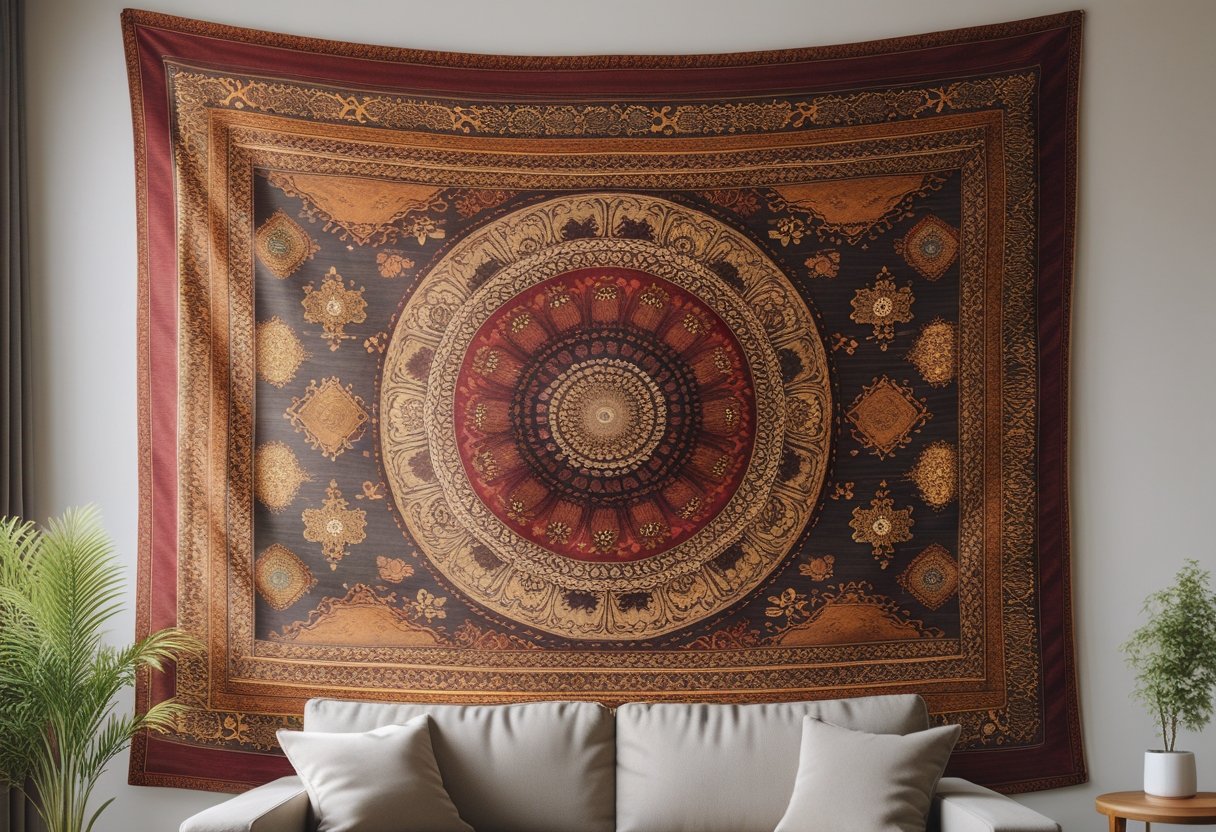
A decorative tapestry for wall is a fabric piece you hang to make a room more interesting and cozy. Unlike framed art, tapestries can cover large areas and hide wall marks. They add warmth and work well in bedrooms, living rooms, and dorms.
This guide explains what to look for when you buy a wall tapestry. You will learn about styles, materials, sizes, and simple ways to hang them. Whether you want a small accent or a big focal piece, these tips will help you choose and display a tapestry that fits your room.
What Is a Decorative Tapestry for Wall?
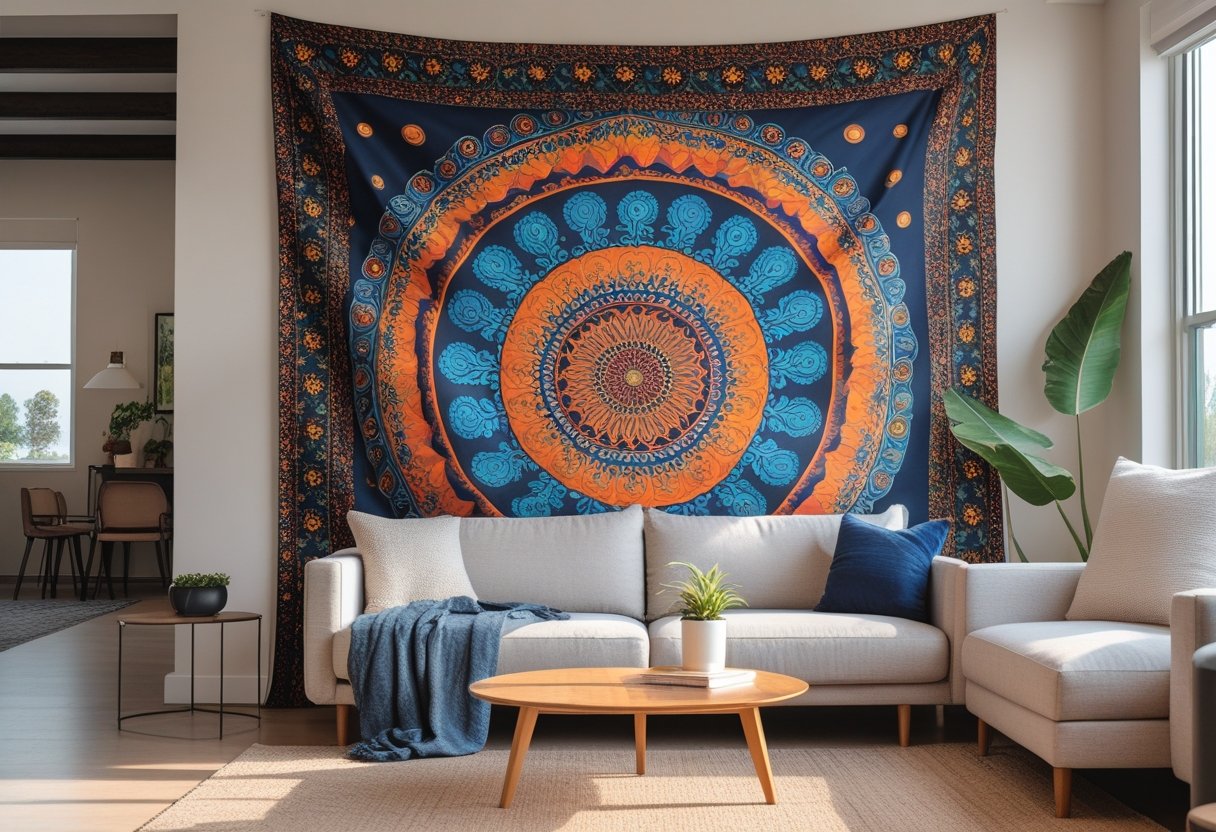
A decorative tapestry for wall is a piece of fabric made to hang on a wall and make a room look nicer. It can have pictures, patterns, or scenes printed or woven into the cloth.
Defining Wall Tapestries
Wall tapestries are fabric art that you hang on the wall to draw attention or change how a room feels. Traditional tapestries are woven on a loom, with threads crossed to make detailed images. Modern tapestries can be woven or printed on fabric.
People use wall tapestries for different reasons. They add color and texture to empty walls. They can also help reduce echo and make a room feel warmer. Tapestries come in many sizes, from small pieces to large ones that cover a whole wall.
These fabric pieces are different from normal wall art because they are soft and made of cloth. That softness can make a room feel more cozy and inviting.
Types of Tapestry Wall Hangings
Historical styles include medieval and Renaissance tapestries that tell stories, Gothic designs with religious scenes, and Baroque pieces with dramatic images. These older styles often show detailed scenes and rich pictures.
Cultural varieties include Oriental tapestries with dragons and flowers, Pre-Columbian geometric patterns, and tribal designs with bold colors. Each culture uses its own symbols and weaving skills.
Modern options offer contemporary and abstract designs that match today’s home decor. Art Nouveau shows flowing plant shapes, while Arts and Crafts focuses on handmade looks and natural patterns. Modern fiber art can mix materials and use new ideas.
Digital tapestries are a newer type made by printing images or computer designs on fabric. They can look like photos and can show many different patterns.
Popular Materials and Weaving Techniques
Wall tapestries are made from common materials. Cotton is cheap and easy to care for. Polyester is strong and keeps bright colors. Wool is traditional, feels nice, and helps keep heat. Silk is a luxury choice with a smooth feel and deep colors.
Traditional weaving uses a loom. Vertical threads (warp) and horizontal threads (weft) are crossed. Weavers change thread colors to make pictures, row by row.
Modern production uses other methods. Digital printing puts a design directly on fabric for photo-like images. Screen printing makes bold shapes and solid colors. These newer methods make tapestries cheaper and let makers create many kinds of designs.
How to Choose and Display a Decorative Tapestry for Wall
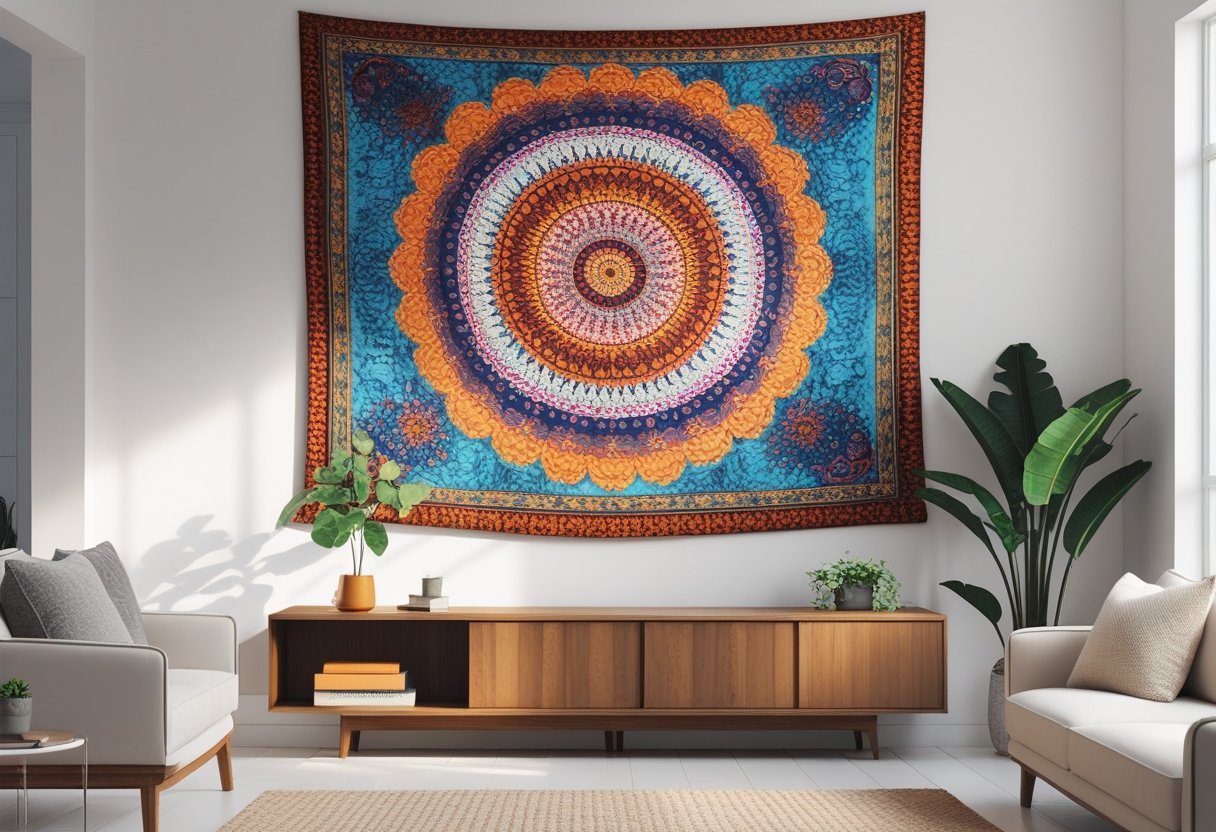
Picking the right decorative tapestry for wall means thinking about size, style, and how you will hang it. How you display a tapestry can change the look and feel of a room.
Selecting the Right Size and Style
Measure the wall space before you buy a tapestry. Small tapestries work well above a desk or nightstand. Large tapestries fit better above a sofa or bed. Leave about 6–8 inches of space on each side of furniture so it looks balanced.
Choose a tapestry style that matches the room. Modern rooms look good with simple shapes or geometric patterns. Traditional rooms suit nature scenes or classic designs. Check the colors of the tapestry to make sure they match your furniture and wall paint.
Think about the tapestry material and weight. Lightweight cotton is easy to hang and move. Heavy woven tapestries need stronger support. Different fabrics also add texture and interest to the wall.
Easy Installation Tips for Tapestry Wall Hanging
Light tapestries can be hung with push pins or small nails in the corners. This works for tapestries under 2 pounds and usually won’t damage the fabric.
Medium-weight tapestries need more support. Use a curtain rod through a rod pocket or clip-on curtain rings along the top. Space the clips evenly so the tapestry does not sag.
Heavy tapestries need a wooden board or frame. Screw the board into wall studs through the rod pocket. For brick or concrete walls, use strong adhesive velcro strips that match the tapestry weight.
Renter-friendly options:
- Command strips (follow the weight limits)
- Removable adhesive hooks
- Tension rods between walls
- Quilt hanger clips
Use a level to make sure your decorative tapestry for wall hangs straight. Step back and check the position before you make any permanent holes.
Ideas for Using a Decorative Tapestry for Wall Decor
Make a headboard by hanging a large tapestry behind your bed. Nail the bottom corners lightly so it stays flat against the wall.
Use a tapestry as a room divider by draping it over a freestanding frame. This gives privacy in studio apartments or open rooms.
Hang matching or similar tapestries in a gallery-style layout. Try different sizes to make the display more interesting.
Put a tapestry above a sofa to fill empty wall space and add color. Leave about 6–10 inches between the bottom edge and the furniture.
Room-specific places to hang a tapestry:
- Living room: Above the couch or over a fireplace
- Bedroom: Behind the bed as a focal point
- Home office: As a background for video calls
- Dining room: On the largest wall to help absorb sound
Layer a tapestry with simple wall items like mirrors or floating shelves. Keep other pieces plain so the tapestry stays the focus.
Frequently Asked Questions
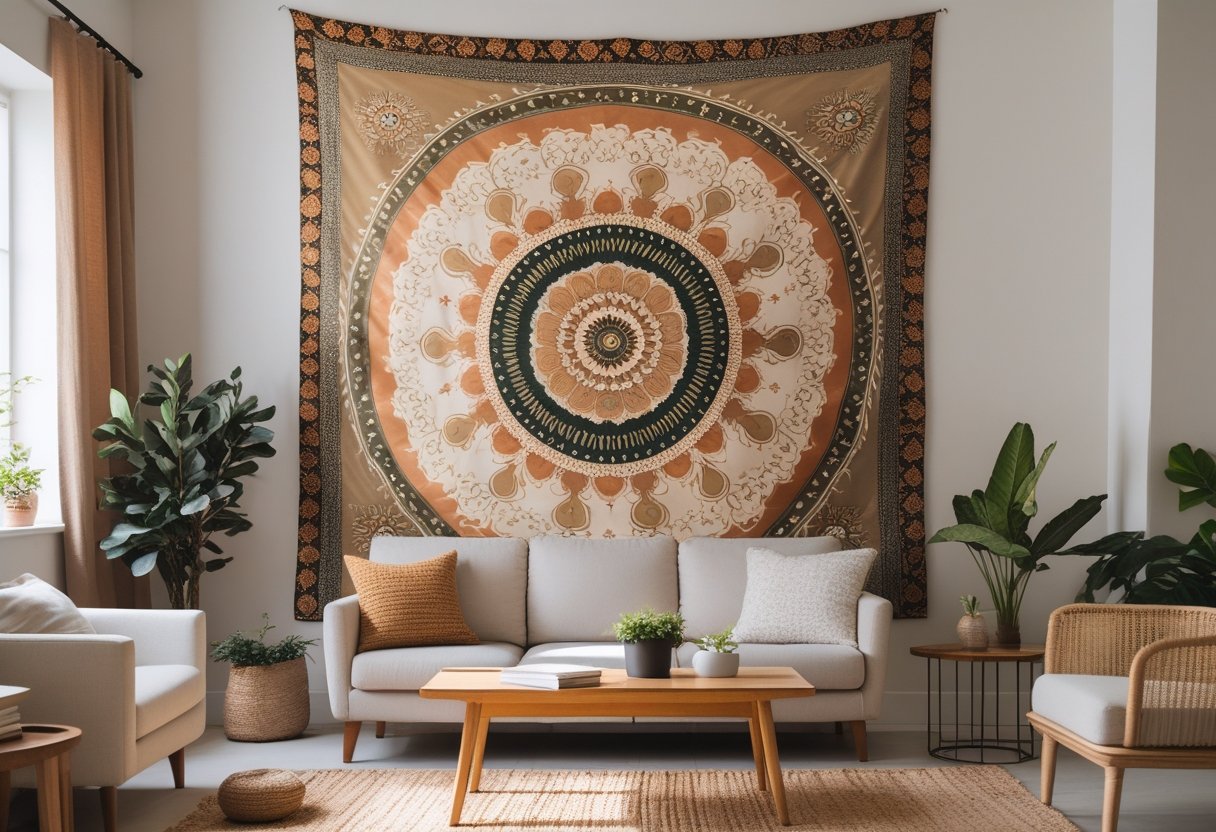
Choosing the right tapestry means checking the size, material, and how you will hang it. The common questions below help with choosing, hanging, and caring for your wall tapestry.
How do I choose the right size tapestry for my wall space?
Measure the wall space before you buy a tapestry. Leave about 6 to 12 inches of empty space around the tapestry so it does not look crowded.
If the tapestry hangs above furniture, try to cover about two-thirds of the furniture's width. A small tapestry will look lost on a big wall, and a very large one can overpower a small room.
Also think about ceiling height. For normal 8-foot ceilings, tapestries that are 4 to 6 feet tall usually look good.
What are the best materials for a wall tapestry if I want it to last?
Cotton tapestries are strong and keep color well. They can last a long time and feel softer with care.
Wool tapestries last the longest and keep their texture for many years. Wool stands up well to wear and humidity changes.
Polyester blends are cheaper and resist wrinkles, but they can fade faster in direct sunlight. Tapestries with a canvas backing hold their shape and do not sag as much.
Can you suggest some effective methods for hanging a tapestry without damaging the wall?
Command strips work for light tapestries. Follow the package weight limit and press the strip to the wall for 30 seconds.
Push pins make small holes that are easy to fix later. Space pins every 6 to 8 inches along the top edge to share the weight.
Velcro strips stick to both the wall and the tapestry and do not need nails. This is helpful on brick or cement where drilling is hard.
Clip-on curtain rings with a tension rod avoid wall damage. Set the rod between two walls and clip the tapestry to the rings.
What are some popular design trends for wall tapestries in bedrooms?
Natural and plant designs with leaves, flowers, or landscapes are popular because they make the room feel calm.
Celestial themes with moons, stars, and suns add interest without being too bold. Neutral colors like beige, cream, and soft gray match many styles.
Simple geometric patterns give a modern look. Mandala designs are also popular for their balance and peaceful feel.
Where can I find vintage-style wall tapestries online?
Etsy offers handmade and vintage tapestries from independent sellers worldwide. You can filter searches by era, size, and specific design elements.
eBay provides access to authentic vintage pieces and reproductions. Check seller ratings and read descriptions carefully to verify age and condition.
Novica features handcrafted tapestries from artisans in different countries. Each piece includes information about the maker and traditional techniques used.
What maintenance is required to ensure the longevity of a decorative tapestry for wall?
Vacuum your tapestry once a month using a low-suction upholstery tool. Hold the tool about an inch away so you do not pull threads.
Keep the tapestry out of direct sunlight to stop colors from fading. If it must get some sun, turn it every few months so one side does not fade more than the other.
If something spills, clean the stain right away with cold water and mild soap. Blot the spot gently instead of rubbing to protect the weave.
Have a professional clean delicate or old tapestries every 2 to 3 years. Some fabrics, like wool, may also benefit from occasional steam cleaning to refresh the fibers.